The Complete Snagging Checklist for Dubai Properties (2026)
A snagging checklist is the backbone of every professional property inspection in Dubai. It is the systematic, point-by-point framework that separates a casual walkthrough from a thorough technical assessment. Without a structured snagging checklist, defects get missed, reports lack detail, and developers have room to push back on repair requests.
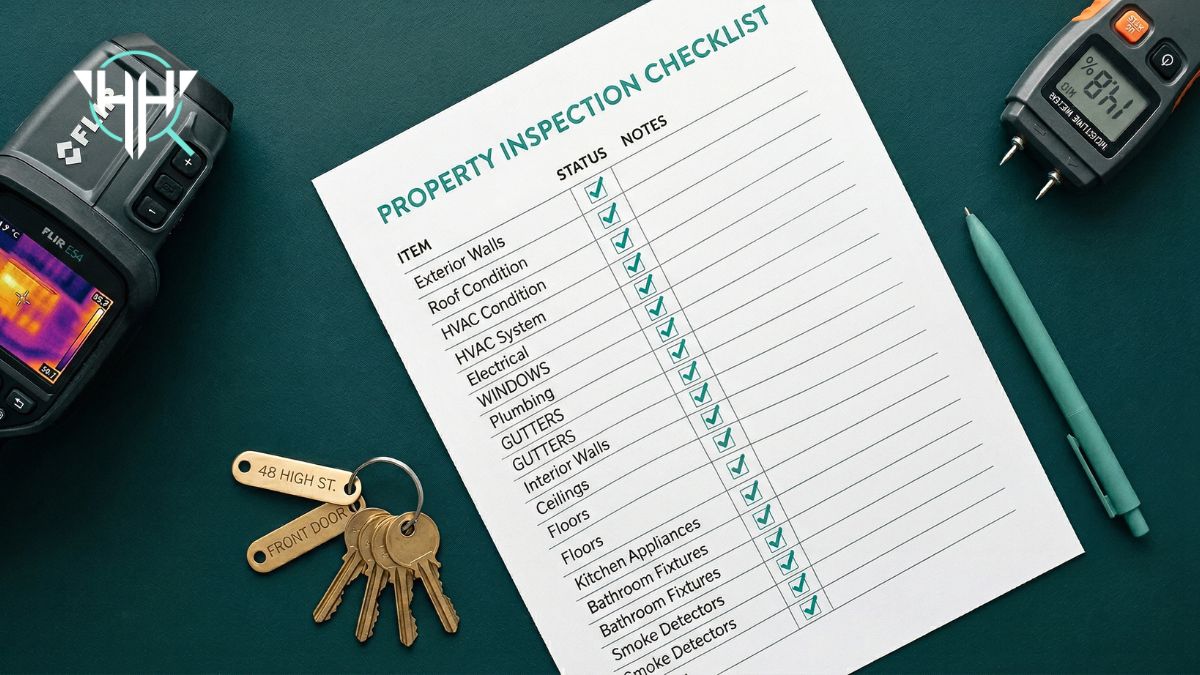
In this guide, we break down the full 200+ point snagging checklist used during a professional Dubai property inspection. Whether you are preparing for a new handover, approaching your DLP expiry, or buying a resale property, this is exactly what your inspector should be checking.
Why a Professional Snagging Checklist Matters in Dubai
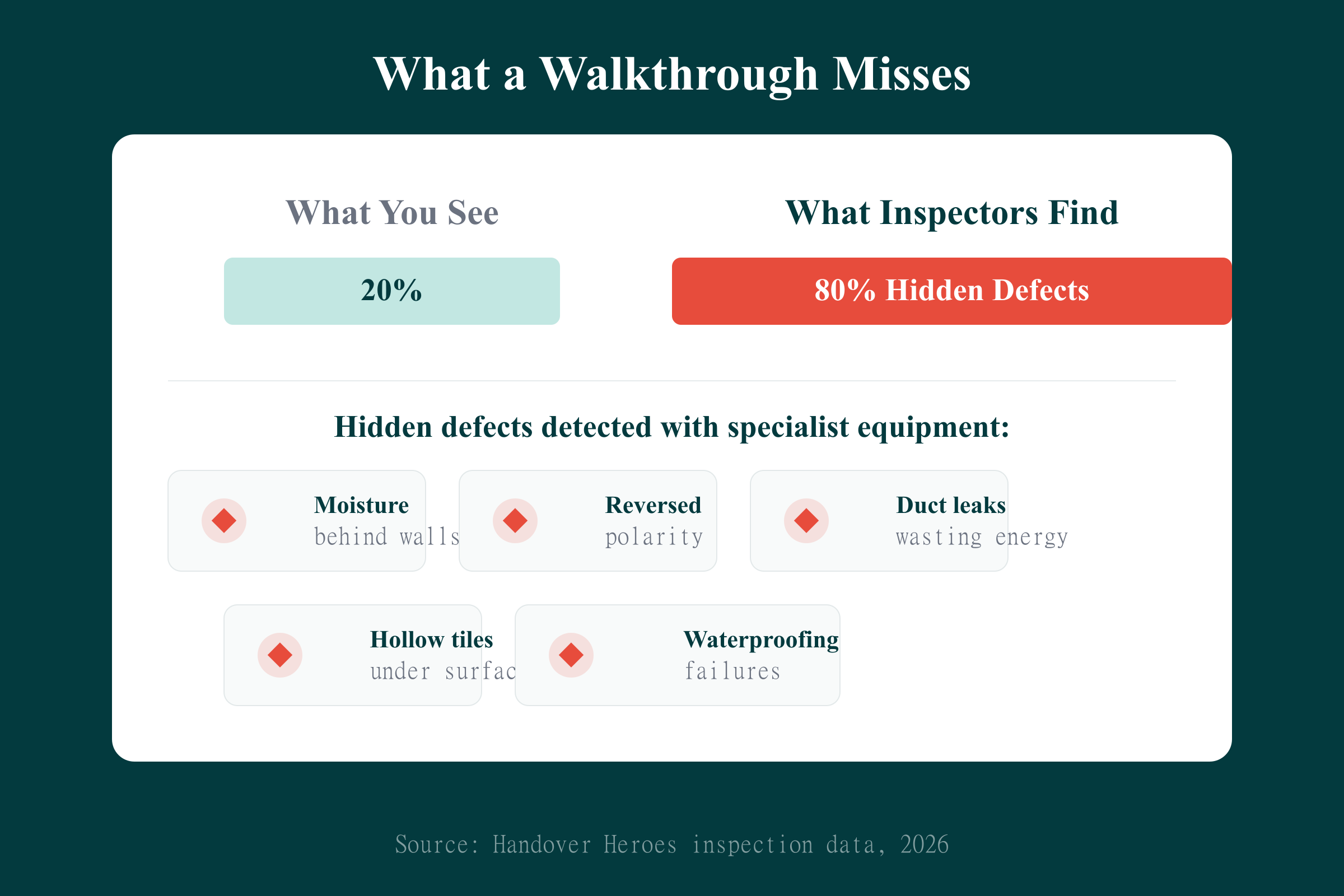
Most buyers walk through their new property and see clean walls, shiny tiles, and working lights. Everything looks fine. But a visual walkthrough misses up to 80% of defects because many issues are hidden behind walls, underneath flooring, inside ductwork, or only detectable with specialist equipment.
A professional snagging checklist eliminates guesswork. Every room, every system, and every surface is inspected in a fixed sequence. Nothing is skipped because the inspector “felt it looked okay.” The checklist creates a repeatable, documented process that produces a legally useful defect record. When you submit that record to the developer, they cannot dismiss it as subjective opinion because every item is photographed, annotated, and cross-referenced against building standards set by the Dubai Land Department.
This is why a proper snagging checklist is not just a quality tool. It is your legal leverage during the Defect Liability Period.
Structural Integrity Checklist
Structural checks form the foundation of any snagging checklist in Dubai. These address the core building elements that affect safety, durability, and long-term property value.
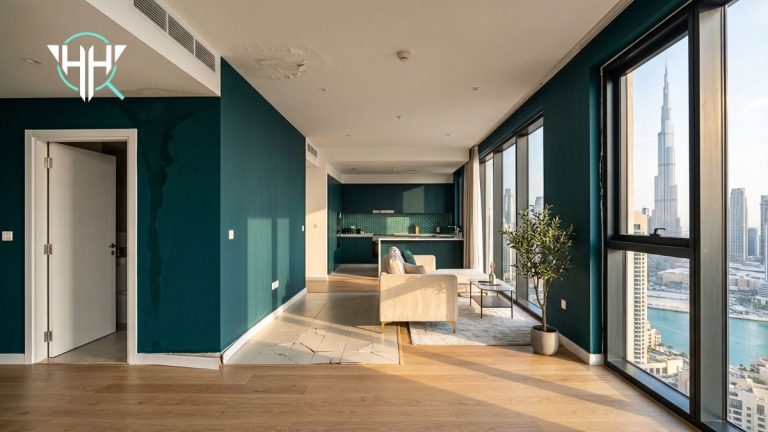
Walls: Inspectors check every wall for cracks (hairline and structural), alignment (plumb and straight), damp patches or water stains, uneven plaster, and bulging or hollow areas. Walls are assessed using both visual inspection and, where needed, thermal imaging to detect moisture trapped behind the surface.
Ceilings: Every ceiling is inspected for levelness, cracks, sagging, water stains, and poor plaster finishing. Ceiling defects often indicate issues above, such as a leaking pipe from the unit upstairs or poor waterproofing on the roof.
Floors: Floor inspections include levelness checks, hollow tile testing (tap test across every tiled surface), grout quality assessment, tile alignment verification, and identification of cracked, chipped, or loose tiles. Hollow tiles are one of the most common defects in Dubai properties and will crack under furniture weight or foot traffic if not identified.
Columns and beams: Visible structural columns and beams are checked for cracking, misalignment, exposed reinforcement, and surface defects.
Balconies: Balcony inspections cover waterproofing integrity, floor slope (water must drain away from the building, not toward it), railing stability, drainage outlet function, and glass balustrade condition.
Electrical Systems Checklist
Electrical defects are among the most dangerous issues a snagging checklist can catch. They are also among the most commonly found in Dubai properties.
Socket testing: Every socket in the property is tested for function, correct polarity, and proper grounding. Reversed polarity is a common defect that is invisible to the eye but can damage appliances and create electrocution risk.
Light switches and dimmers: Each switch is tested for responsiveness and correct wiring. Two-way switches (common in bedrooms and corridors) are verified to work from both positions.
Light fittings and fixtures: All installed light fittings are checked for secure mounting, correct function, and consistent colour temperature.
Circuit breaker panel: The panel is inspected for proper labeling (each breaker should be clearly marked to its corresponding circuit), correct sizing, and function. Breakers are tested to confirm they trip correctly under fault conditions.
Doorbell and intercom systems: Wiring, audio quality, and video feed (where applicable) are all tested.
Smoke detectors and fire alarm connectivity: Every detector is tested for function and connectivity to the building’s fire alarm system.
Smart home controls: In properties with home automation, lighting scenes, smart thermostats, motorized blinds, and access control systems are all tested for responsiveness, calibration, and integration.
Plumbing and Water Systems Checklist
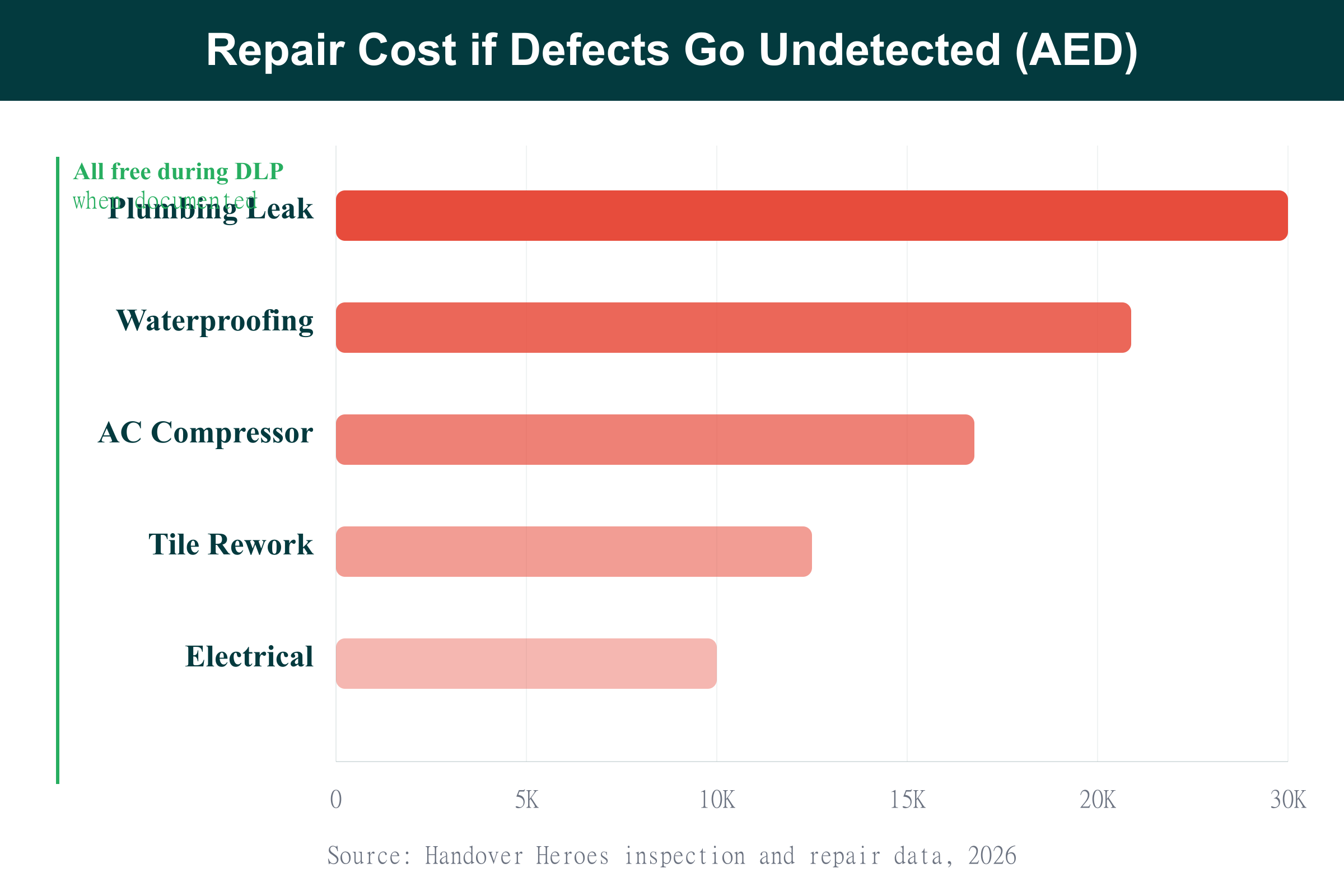
Plumbing defects are the single most expensive category of defects when they go undetected. A hidden water leak can cause tens of thousands of dirhams in damage before it becomes visible.
Tap testing: Every tap in the property is tested for water flow rate, pressure, hot and cold function, and drip-free shut-off. Both kitchen and bathroom taps are run simultaneously to check for pressure drops.
Drain testing: Every drain (sinks, showers, bathtubs, floor drains) is tested for flow rate. Slow drains often indicate installation blockages or incorrect pipe gradients.
Toilet mechanisms: Flush and fill mechanisms are tested for function, leak-free operation, and refill speed.
Water heater: The water heater is checked for function, temperature output, and correct installation. Inspectors verify that hot water reaches all taps within a reasonable time.
Under-sink connections: All accessible pipe connections under sinks and vanities are visually inspected for leaks, corrosion, and secure joints. This is a common area for slow leaks that go unnoticed for months.
Washing machine and dishwasher connections: Water supply valves, drainage connections, and power points for laundry and kitchen appliances are tested.
Visible pipe runs: Any visible pipe runs (in utility rooms, balconies, or ceiling voids) are inspected for corrosion, poor joints, and incorrect routing.
Balcony and terrace drainage: Drainage outlets are tested for flow rate and correct installation. Blocked balcony drains cause water pooling, which leads to waterproofing failure and interior leaks.
HVAC and Air Conditioning Checklist
In Dubai’s climate, air conditioning runs for the majority of the year. An AC defect is not just an inconvenience. It is a daily cost in wasted energy and discomfort.
AC function per room: Every AC unit is turned on and tested for cooling performance. Inspectors measure the temperature differential between supply and return air to verify the system is performing to specification.
Thermostat calibration: Thermostats are tested to confirm they respond accurately and that the set temperature matches the actual room temperature within a reasonable tolerance.
Airflow volume and distribution: Inspectors check that air is flowing evenly from all vents and that no vents are blocked, disconnected, or improperly sized.
Duct condition: Using thermal imaging, inspectors check duct runs for leaks, disconnections, and insulation failures. A leaking duct wastes energy and reduces cooling efficiency dramatically.
Condensate drain: The AC condensate drain is checked for proper flow. A blocked condensate drain causes water to back up and drip from the indoor unit, damaging ceilings and walls.
Filter condition: AC filters are inspected for cleanliness and correct installation. Dirty or missing filters reduce air quality and strain the compressor.
Noise levels: Unusual vibrations, rattling, or buzzing from AC units are noted. These often indicate loose components, failing bearings, or incorrect mounting.
Fresh air intake: Where applicable, fresh air systems are tested for function and airflow.
Doors and Windows Checklist
Doors and windows affect security, energy efficiency, and everyday comfort. Defects in this category are common and frequently overlooked during casual walkthroughs.
Opening and closing: Every door and window is opened and closed to check for smooth operation, proper alignment, and absence of sticking, rubbing, or dragging.
Locks and handles: All locks, handles, and latches are tested for secure function. Front door locks receive particular attention as they are the primary security feature.
Seals and weatherstripping: Door and window seals are inspected for gaps, compression, and proper adhesion. Failed seals let dust, heat, and noise into the property and reduce AC efficiency.
Glass quality: Every pane of glass is inspected for scratches, chips, cracks, and double-glazing seal failures (visible as condensation or fogging between panes).
Hinges and closers: Door hinges are checked for alignment and smooth operation. Hydraulic closers (on fire doors and main entry doors) are tested for correct tension and closing speed.
Sliding door tracks: Sliding doors to balconies and terraces are tested for smooth travel, clean tracks, and secure locking.
Balcony door water tightness: The seal between balcony doors and the interior is checked for water tightness, particularly important in Dubai’s occasional heavy rainstorms.
Kitchen Checklist
The kitchen contains the highest concentration of systems in a small area: plumbing, electrical, gas (in some properties), cabinetry, and appliances. Each requires its own set of checks.
Cabinetry: Every cabinet door, drawer, and shelf is tested for alignment, smooth operation, and soft-close function. Gaps between doors, uneven alignment, and loose hinges are common defects.
Countertops: Worktop surfaces are inspected for chips, scratches, stains, uneven joints, and secure installation. Stone countertops are checked for cracks and edge quality.
Sink installation: The sink is tested for secure mounting, proper sealing to the countertop, drain function, and leak-free connections underneath.
Splash back: Tiling behind the countertop is inspected for alignment, grout quality, and adhesion.
Under-cabinet lighting: Where installed, under-cabinet lights are tested for function and even coverage.
Bathroom Checklist
Bathrooms are the highest-risk area for water damage. Every element in the snagging checklist related to bathrooms is designed to verify that wet areas are properly waterproofed and that all plumbing is functioning correctly.
Tiling quality: All bathroom tiles are inspected for alignment, grout consistency, hollow spots (tap test), and chips or cracks. Hollow tiles in bathrooms are especially problematic because they can allow water to penetrate behind the tile surface.
Shower enclosure: Glass panels, hinges, seals, and drainage are tested. Water is run at full pressure to confirm the enclosure contains water properly and that the floor drain handles the flow without pooling.
Vanity and countertop: Vanity units are checked for secure mounting, drawer and door function, countertop condition, and basin sealing.
Mirror and accessory mounting: Mirrors, towel rails, and accessories are tested for secure installation.
Exhaust fan: Bathroom exhaust fans are tested for function, airflow, and noise. A non-functioning exhaust fan leads to condensation, mould growth, and paint deterioration.
Silicone sealing: Every silicone seal around basins, bathtubs, shower trays, and wall junctions is inspected for continuous coverage, adhesion, and quality of application.
Paint, Finishing, and Cosmetic Checklist
Cosmetic defects are the most visible category and the easiest for homeowners to spot. However, a systematic snagging checklist catches far more cosmetic issues than a casual look because inspectors use angled lighting and close-range inspection techniques.
Wall paint: Every wall is inspected for paint runs, drips, uneven coats, colour inconsistencies, missed spots, roller marks, and brush marks. Inspectors use raking light (angled light from a torch) to reveal surface imperfections invisible under normal lighting.
Ceiling paint: Ceilings are checked for even coverage, patch marks, and consistency with wall colour.
Skirting boards: Alignment, gaps between skirting and wall, gaps between skirting and floor, mitred corner quality, and paint finish are all inspected.
Cornice and coving: Where installed, ceiling cornice is checked for straight alignment, clean joints, and gap-free installation.
Tiling grout: Grout lines across all tiled areas are inspected for consistency, cleanliness, colour uniformity, and absence of cracks or gaps.
Joinery and millwork: All built-in wardrobes, shelving, and millwork are inspected for finish quality, alignment, and hardware function.
External and Common Area Checklist (Villas and Townhouses)
For villas and townhouses, the snagging checklist extends beyond the interior to cover all external areas that fall within the property boundary.
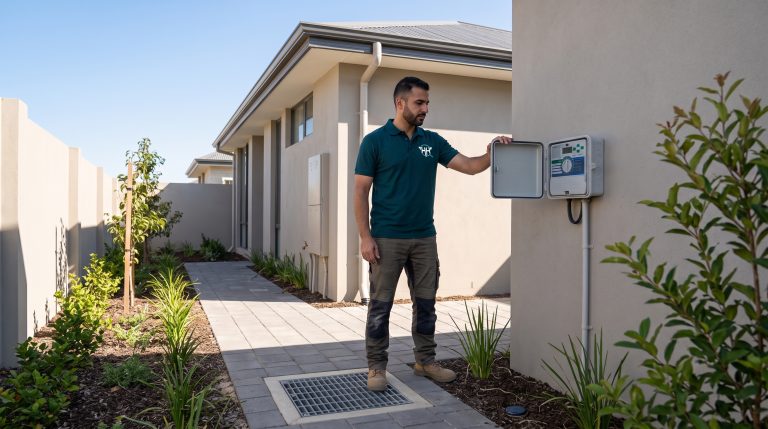
Exterior walls and facade: Inspected for cracks, paint quality, rendering condition, and water stain patterns that indicate drainage issues.
Roof: Where accessible, the roof is inspected for waterproofing membrane condition, drainage outlet function, and any visible damage or ponding.
Garden walls, pathways, and paving: Boundary walls are checked for structural integrity and finish. Pathways and paving are inspected for levelness, drainage, and cracking.
Garage door: Automatic garage doors are tested for smooth operation, safety sensor function, and remote control responsiveness.
Pool equipment (if applicable): Pool filtration systems, pumps, heating, and chemical dosing equipment are inspected for function and correct installation.
Perimeter fencing and gates: Security fencing and gates are tested for stability, locking mechanisms, and alignment.
Driveway: Surface condition, drainage, and slope are assessed.
What Happens After the Snagging Checklist Is Completed?
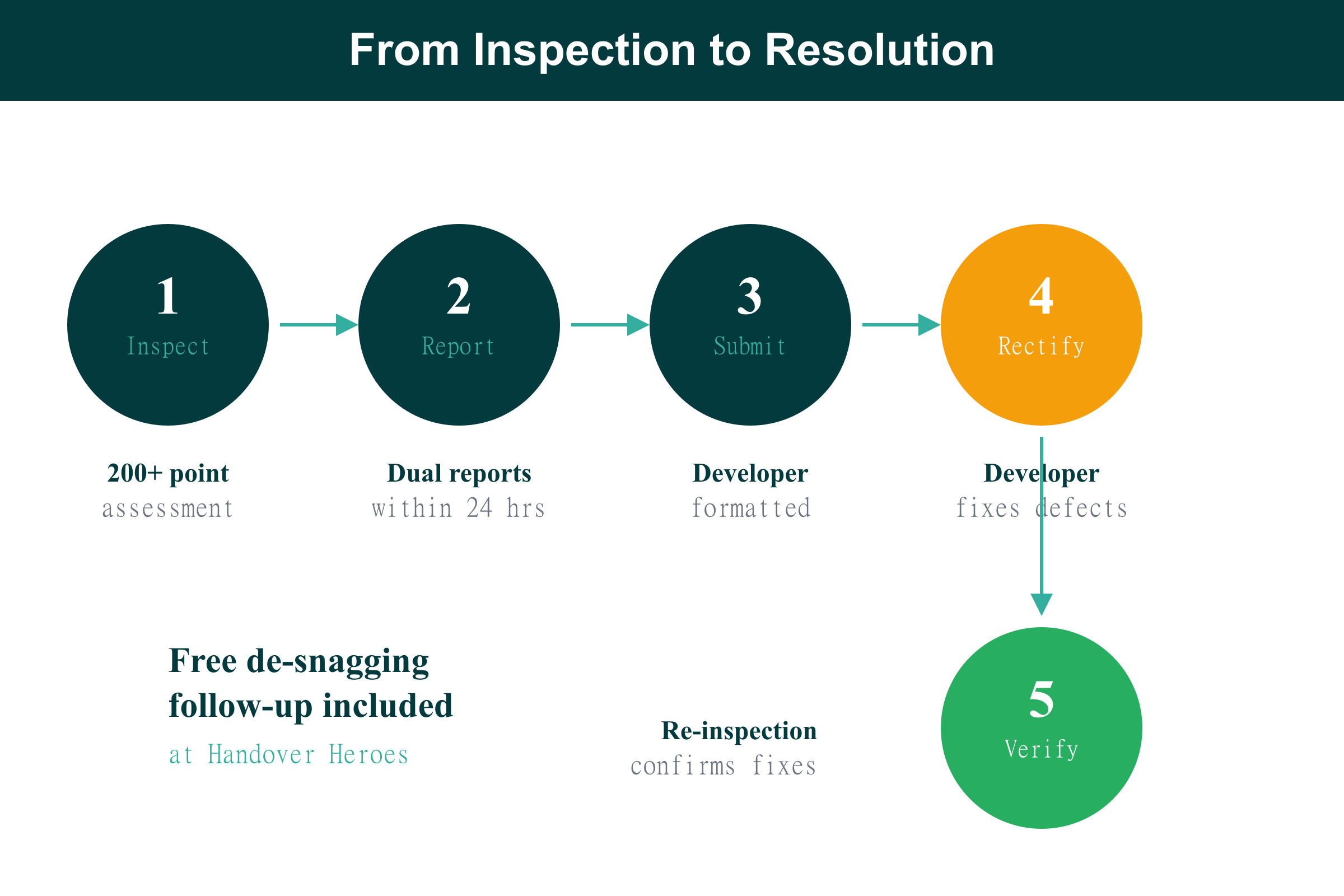
Once every item on the snagging checklist has been assessed, the inspector compiles a comprehensive report. At Handover Heroes, this includes a detailed client report with high-resolution photographs and annotations for every identified defect, delivered within 24 hours. A separate developer-formatted report is also prepared, structured specifically for submission to the developer so they can begin rectification immediately.
You also receive a free walkthrough video of the property and complimentary de-snagging support, meaning we follow up with the developer on your behalf until every defect is resolved.
If needed, a re-inspection can be arranged after the developer completes repairs to verify that all items have been properly addressed.
For a detailed breakdown of inspection pricing, see our guide to property snagging cost in Dubai.
Learn more about our pre-handover inspection service or book a free consultation on WhatsApp.
Frequently Asked Questions About Snagging Checklists in Dubai
How many checkpoints are in a professional snagging checklist?
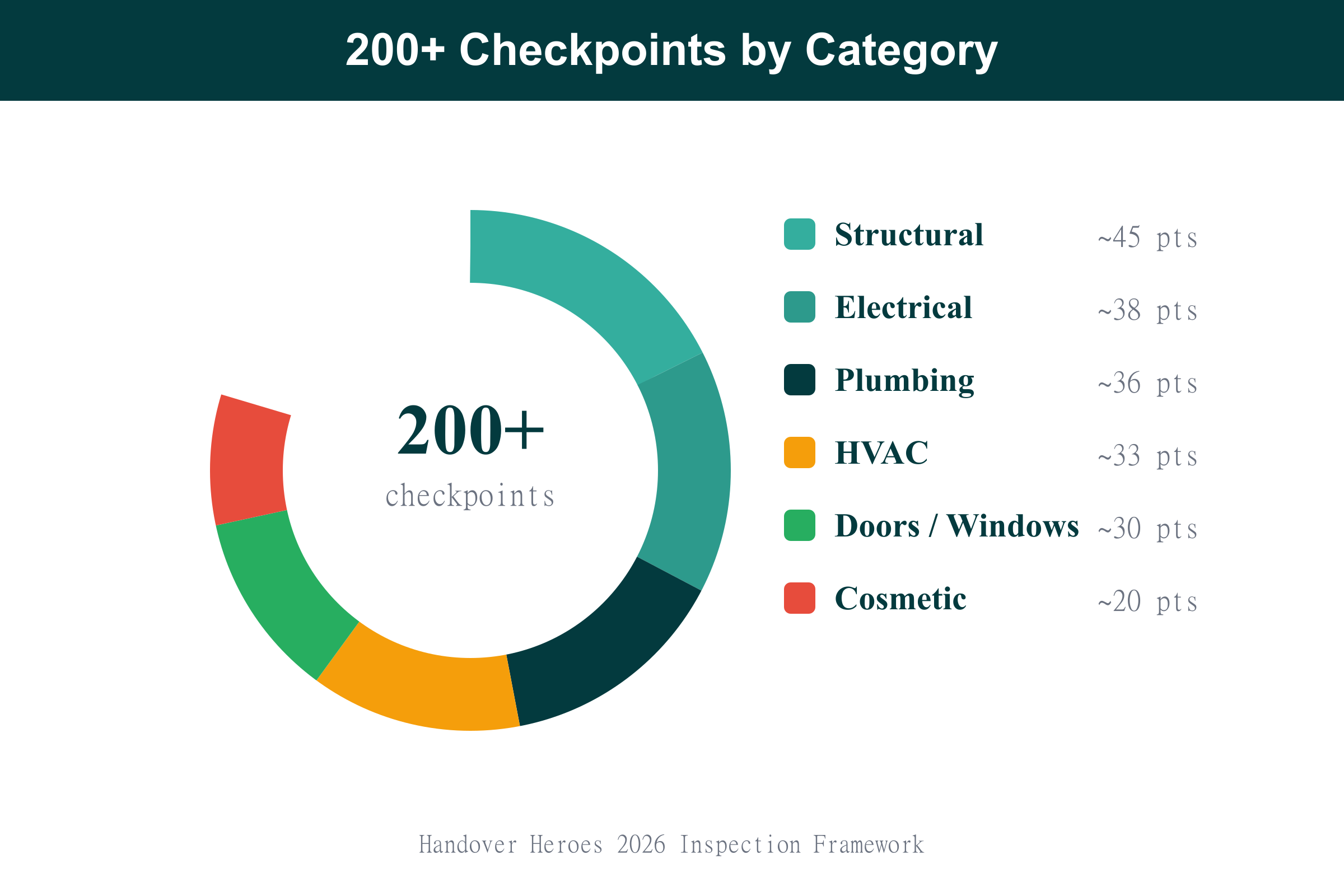
A professional snagging checklist for Dubai properties covers 200+ individual checkpoints across six main categories: structural, electrical, plumbing, HVAC, doors and windows, and cosmetic finishing. Each checkpoint is inspected, photographed, and documented. The exact count varies based on property type, with villas requiring more points than apartments.
What are the most common defects found during snagging in Dubai?
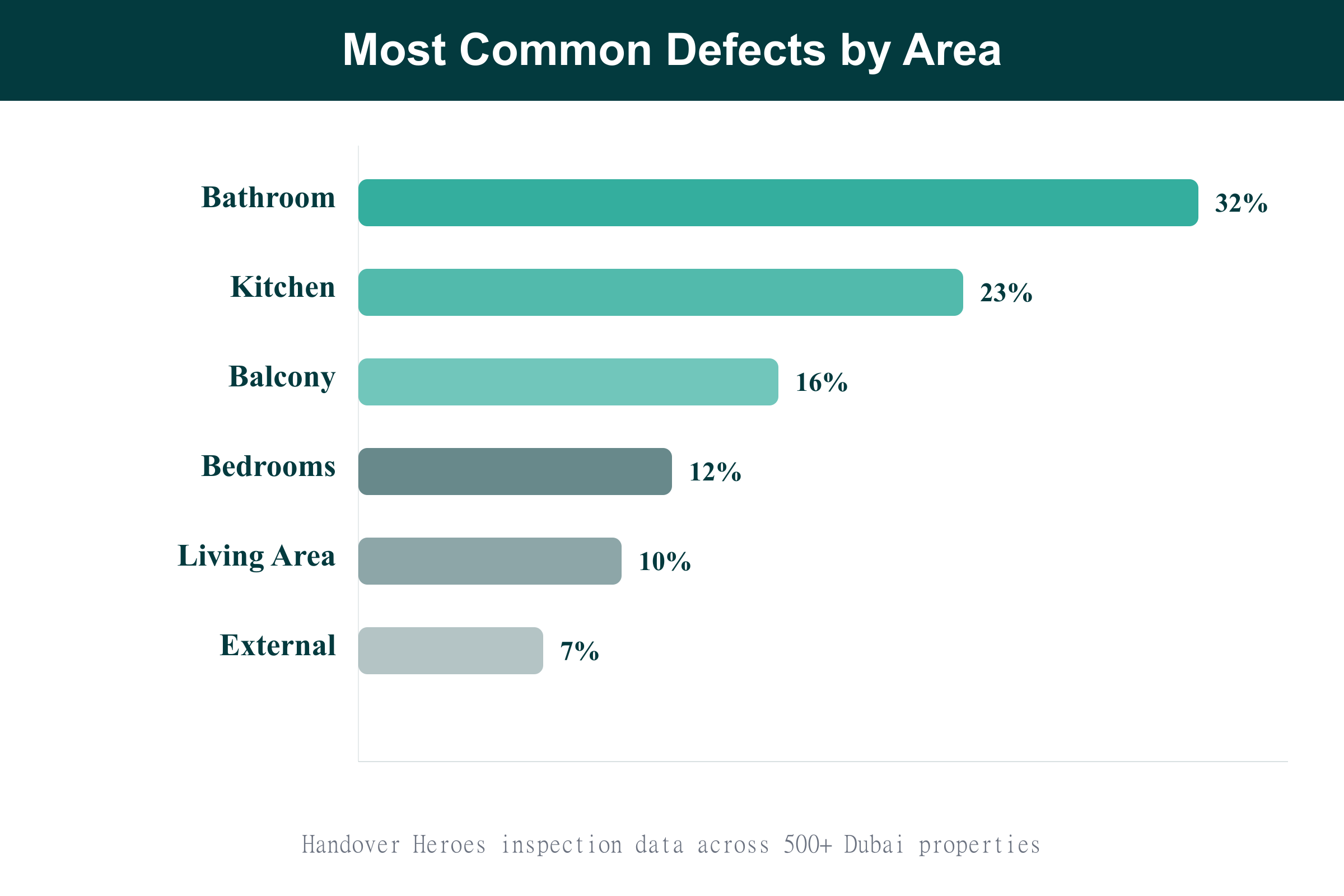
The most frequently identified defects in Dubai properties include hollow tiles, paint imperfections, plumbing leaks under sinks, reversed electrical polarity, poorly sealed bathroom fittings, AC temperature inconsistencies, and misaligned doors or windows. Hollow tiles alone account for a significant proportion of all defects found during typical inspections.
Can I use a DIY snagging checklist instead of hiring a professional?
A DIY checklist can catch visible cosmetic defects like paint issues and scratched surfaces. However, up to 80% of defects are hidden and require specialist equipment such as thermal imaging cameras, electrical testers, and moisture meters to detect. Professional inspectors also produce developer-formatted reports that carry more weight during the Defect Liability Period.
How long does a full snagging inspection take in Dubai?
A professional snagging inspection using a complete 200+ point checklist typically takes 2 to 3 hours for a studio or 1-bedroom apartment, 3 to 4 hours for a 2 or 3-bedroom apartment, and 4 to 6 hours for villas. The time depends on property size, number of wet areas, and the complexity of installed systems.
Get the Full 200+ Point Inspection for Your Property
This snagging checklist covers what professional inspectors check across every property type in Dubai. But reading about it and having it done are two different things. A trained engineer with thermal imaging equipment, electrical testers, and years of experience will catch defects that no checklist alone can replace.
If you want every one of these 200+ points assessed on your property by a certified inspection team, book your inspection with Handover Heroes. We inspect every inch so you sign your handover with confidence.