Hidden Costs of Skipping Snagging in the UAE: The Real 2026 Repair Bill
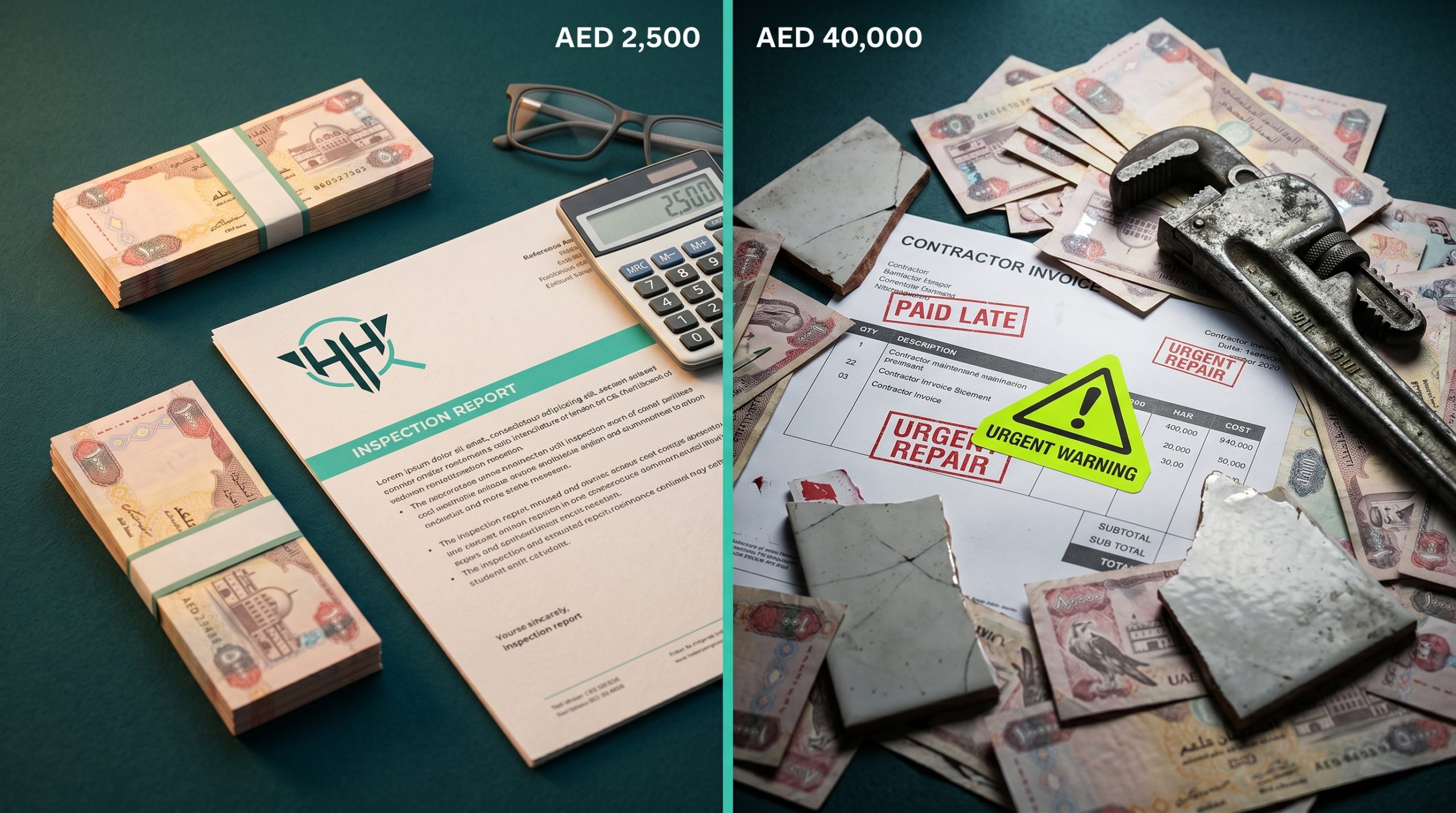
The hidden costs of skipping snagging in the UAE turn what feels like a clever AED 2,500 saving into a AED 40,000 repair bill within twelve months. A professional property snagging inspection in the UAE costs between AED 1,500 and AED 5,000. Skipping it is one of the most expensive decisions a UAE property buyer can make.
This article walks through the actual hidden costs of skipping snagging in the UAE: not theoretical figures, but the real repair bills, lost developer coverage, and long-term financial consequences we see every week across Dubai, Abu Dhabi, Sharjah, and Ras Al Khaimah.
The Core Problem: Free Repairs You Will Never Claim
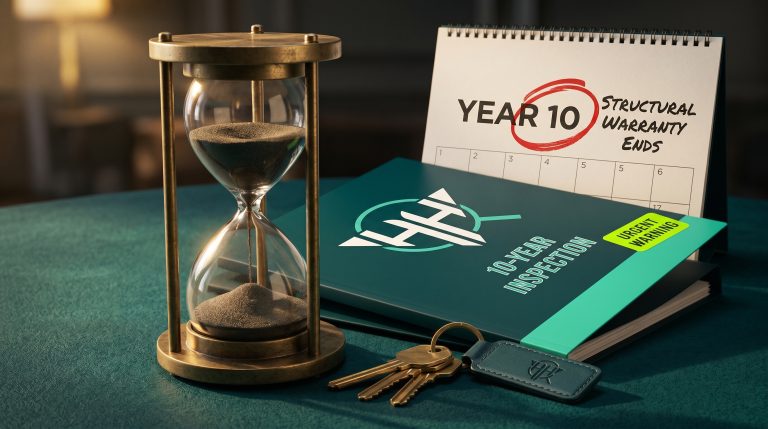
Under UAE Law No. 6 of 2019, developers are legally required to fix construction defects at their own cost during the Defect Liability Period. For MEP and finishing defects, this coverage lasts 12 months. For structural defects, it lasts 10 years.
This is a huge financial protection. But it only applies if the defects are documented and formally reported to the developer. If you move into your property without an inspection and discover a leak six months later, you have two options: report it and hope the developer responds, or pay for the repair yourself.
Most buyers who skip snagging end up paying for repairs themselves. Not because the developer refuses, but because they never submitted a formal report. By the time they notice the defect, they have already forgotten the process, lost the paperwork, or let the warranty lapse.
The hidden costs of skipping snagging in the UAE are not just the repair bills. They are the entire warranty coverage you paid for in your purchase price but never activated.
What It Actually Costs to Skip Snagging in the UAE
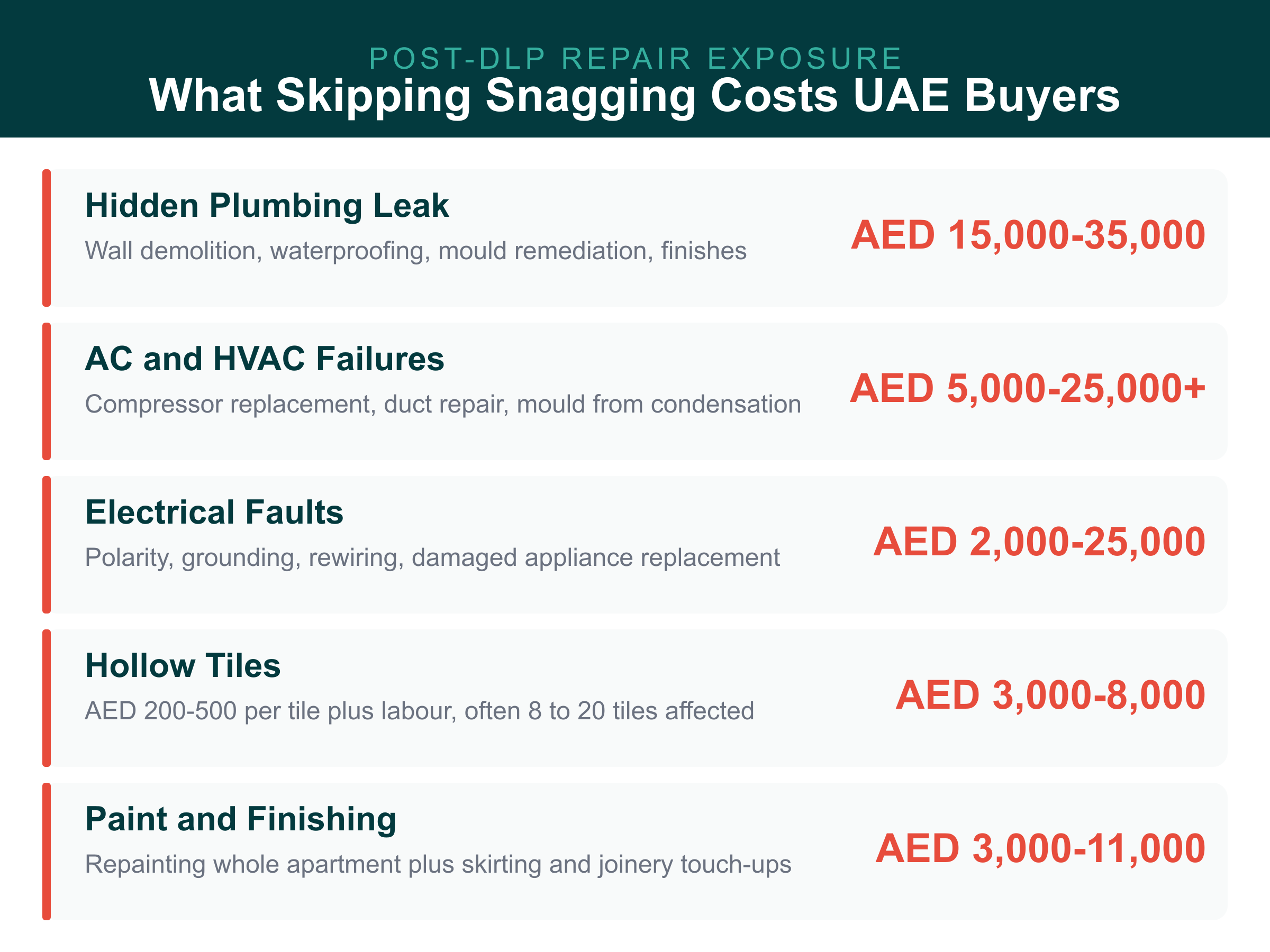
Let us break down the most common defects we find and what they cost UAE homeowners who discover them after their DLP has expired or without formal documentation.
Hidden Plumbing Leaks
Plumbing leaks behind walls or under floors are the most expensive defect category. They start small: a slow drip behind the guest bathroom wall, or a pinhole in a cold water pipe behind the kitchen sink.
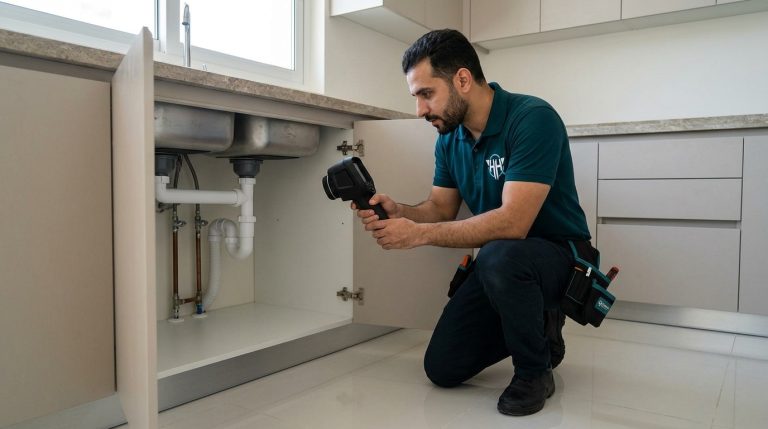
These leaks are invisible for months and undetectable without thermal imaging or moisture meters. By the time the leak shows as a water stain on your ceiling or wall, the damage is already done.
The repair typically includes wall demolition to access the pipe, plumbing replacement, waterproofing reapplication, re-tiling, paint restoration, mould remediation, and sometimes furniture or flooring replacement.
Total cost for a hidden leak discovered after DLP expiry in the UAE: AED 15,000 to AED 35,000. A thermal imaging inspection would have caught this on day one.
AC and HVAC Failures
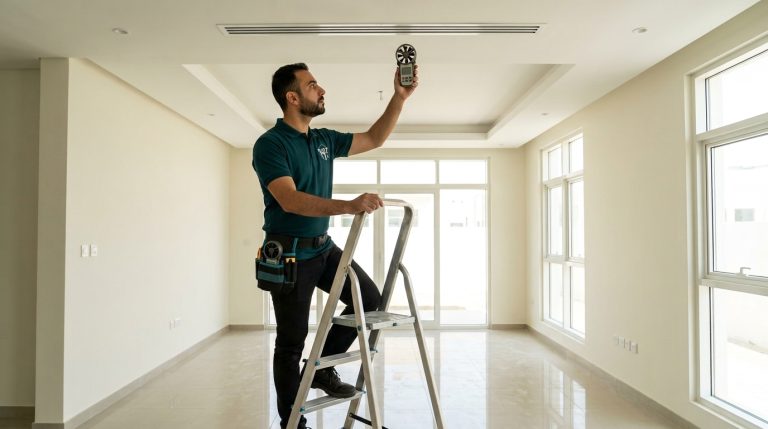
Air conditioning is the most-used system in any UAE home. It runs 8 or more months per year and is responsible for a significant portion of your DEWA bill. When AC systems are improperly commissioned or have hidden duct leaks, the consequences include reduced cooling efficiency, hidden condensation causing mould in ceilings, compressor failure due to overwork, and early component replacement.
A failed AC compressor costs AED 10,000 to AED 20,000 to replace outside of warranty. Duct repairs can cost AED 3,000 to AED 15,000.
Commissioning corrections run AED 2,000 to AED 5,000. Mould remediation from condensation can exceed AED 10,000. Total exposure for AC and HVAC defects is AED 5,000 to AED 25,000+, all of which falls under the hidden costs of skipping snagging in the UAE.
Electrical Faults
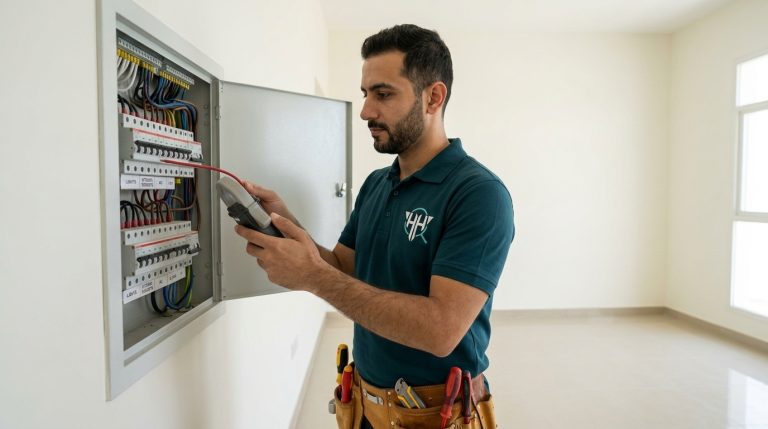
Reversed polarity sockets, missing grounding, loose connections, and overloaded circuits are common defects in Dubai property. Most buyers have no idea these issues exist because the sockets still power appliances. The problem shows up later as damaged appliances, electrocution risk, flickering lights, tripped breakers, or fire hazard.
Electrical corrections and rewiring for safety compliance cost AED 2,000 to AED 15,000. Damaged appliance replacement due to electrical faults can reach AED 10,000 or more. A socket tester during snagging identifies these issues in seconds.
Hollow Tiles and Tiling Defects
Hollow tiles look identical to properly bonded tiles. You cannot see the difference.
The only way to detect them is to tap every tile with a specialised tool, and most developer walkthroughs skip this step entirely. That tap test is one of the simplest ways to avoid the hidden costs of skipping snagging in the UAE on tiled surfaces.
Hollow tiles crack under furniture weight or foot traffic within 3 to 12 months. Replacement costs run AED 200 to AED 500 per tile plus labour, which adds up quickly across a kitchen, bathroom, or hallway. A typical 2-bedroom apartment with 12 hollow tiles costs AED 3,000 to AED 8,000 to repair after DLP expiry.
Paint and Finishing Defects
Paint runs, uneven patches, skirting gaps, and rough plaster are the most visible defects but also the easiest to dismiss during a quick walkthrough. They become obvious the moment you move in.
Repainting a single room costs AED 500 to AED 1,500. Repainting an entire apartment costs AED 3,000 to AED 8,000. Re-finishing skirting and joinery adds AED 1,000 to AED 3,000 on top of that.
The Real Numbers: Total Cost of Skipping Snagging
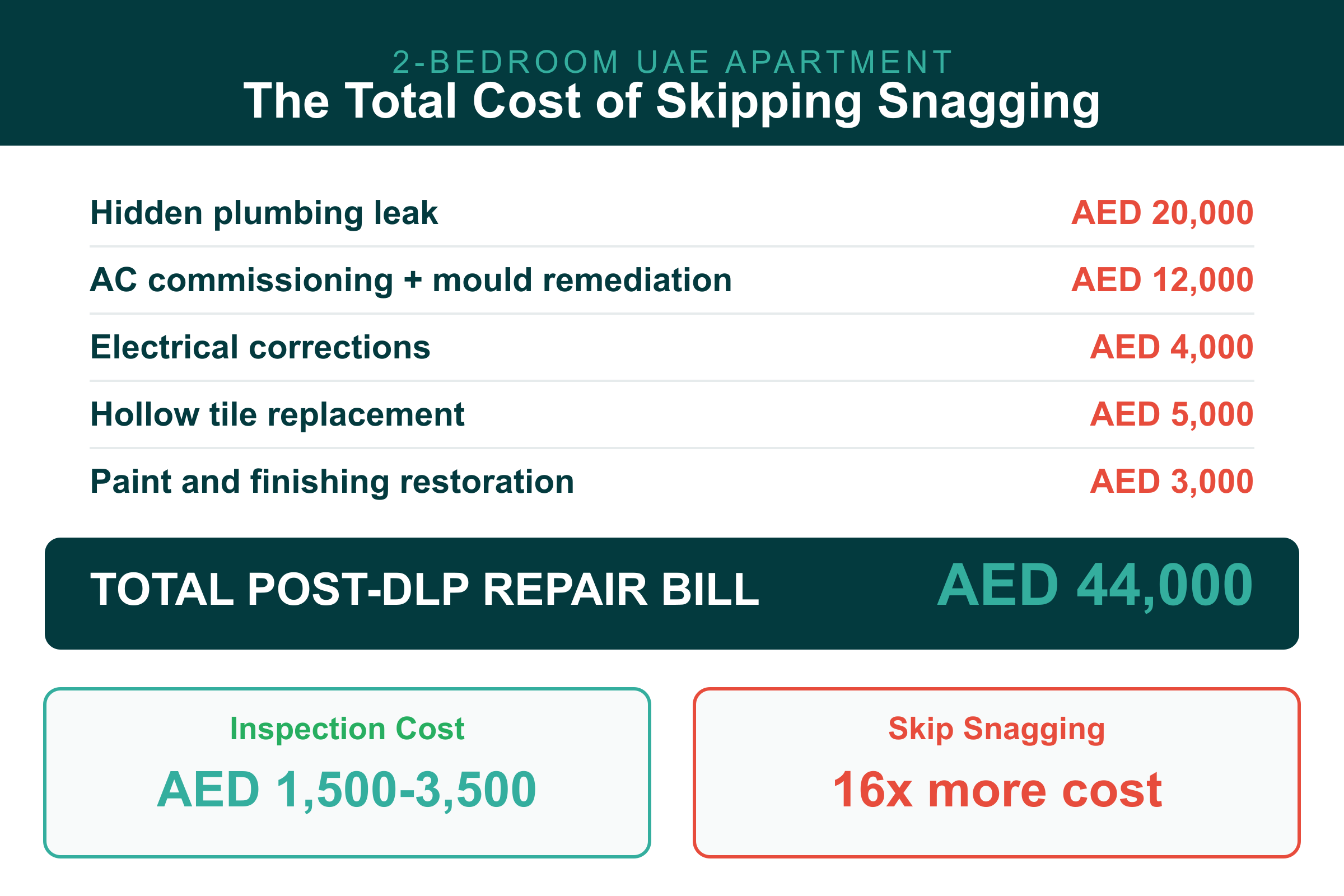
Let us add up the typical total exposure for a 2-bedroom UAE apartment where the buyer skipped a professional snagging inspection.
Hidden plumbing leak: AED 20,000. AC commissioning correction and mould remediation: AED 12,000. Electrical polarity and grounding corrections: AED 4,000.
Hollow tile replacement: AED 5,000. Paint and finishing restoration: AED 3,000. Combined total: AED 44,000 in hidden costs of skipping snagging in the UAE.
This is not a worst-case scenario. This is a typical outcome for a buyer who signed a handover acceptance form without an independent inspection and discovered issues too late to claim under the Defect Liability Period.
The snagging inspection that would have caught every one of these issues costs between AED 1,500 and AED 3,500. For a full pricing breakdown, see our guide to property snagging cost in Dubai. The developer would have fixed everything at zero cost during the DLP.
The Less Visible Hidden Costs
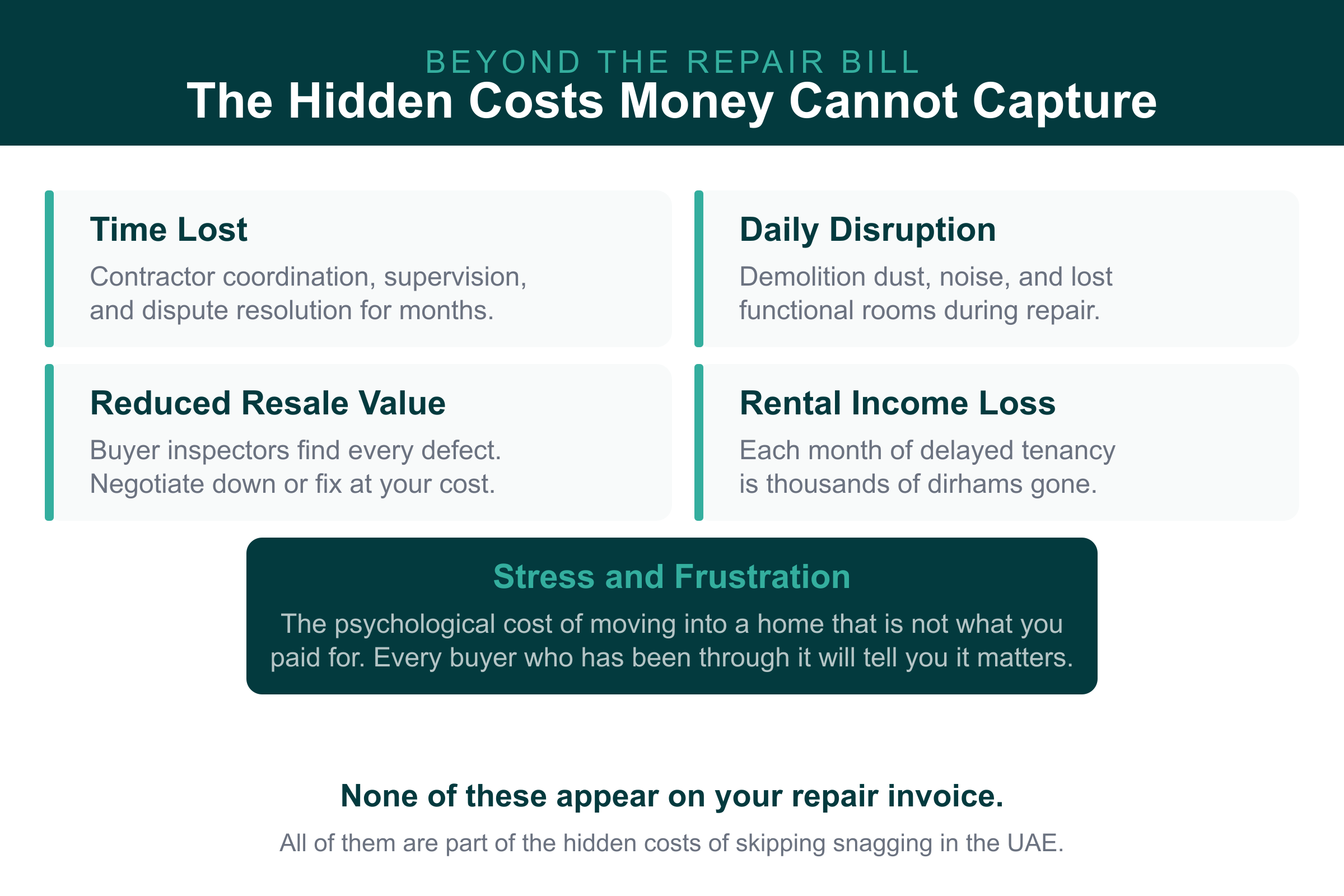
The repair bills are the visible cost. There are others that are harder to quantify but just as real.
Time lost dealing with repairs. Hiring contractors, coordinating access, supervising work, and resolving disputes eats into your weekends and holidays for months.
Disruption to daily life. Demolition work, dust, noise, and the loss of functional rooms while repairs happen. Families with young children or elderly parents feel this particularly acutely.
Reduced property value for resale. When you sell, a buyer’s inspector will find every defect. You will either negotiate a price reduction or fix issues at your cost to close the deal. Either way, the hidden costs resurface at sale time.
Rental income loss. If you planned to rent your property, unresolved defects delay tenancy. Every month of delay is thousands of dirhams in lost rental income.
Stress and frustration. The psychological cost of moving into a home that is not what you paid for is impossible to put a number on, but every buyer who has been through it will tell you it matters.
Why Most Buyers Skip Snagging Anyway
Despite the clear math, many UAE buyers still skip professional snagging. The three most common reasons we hear:
“The property looked fine during the walkthrough.” Most defects are invisible without professional equipment. A casual look is not an inspection.
“The developer is reputable, they will not deliver a defective property.” Every developer in the UAE delivers properties with defects. Reputable developers typically have fewer issues per property, but even they cannot achieve zero defects at scale.
“I wanted to save money.” This is the costliest excuse. Saving AED 2,500 on a snagging inspection to later spend AED 40,000 on repairs is not saving money. It is paying 16 times more than you needed to.
How to Avoid the Hidden Costs of Skipping Snagging in the UAE
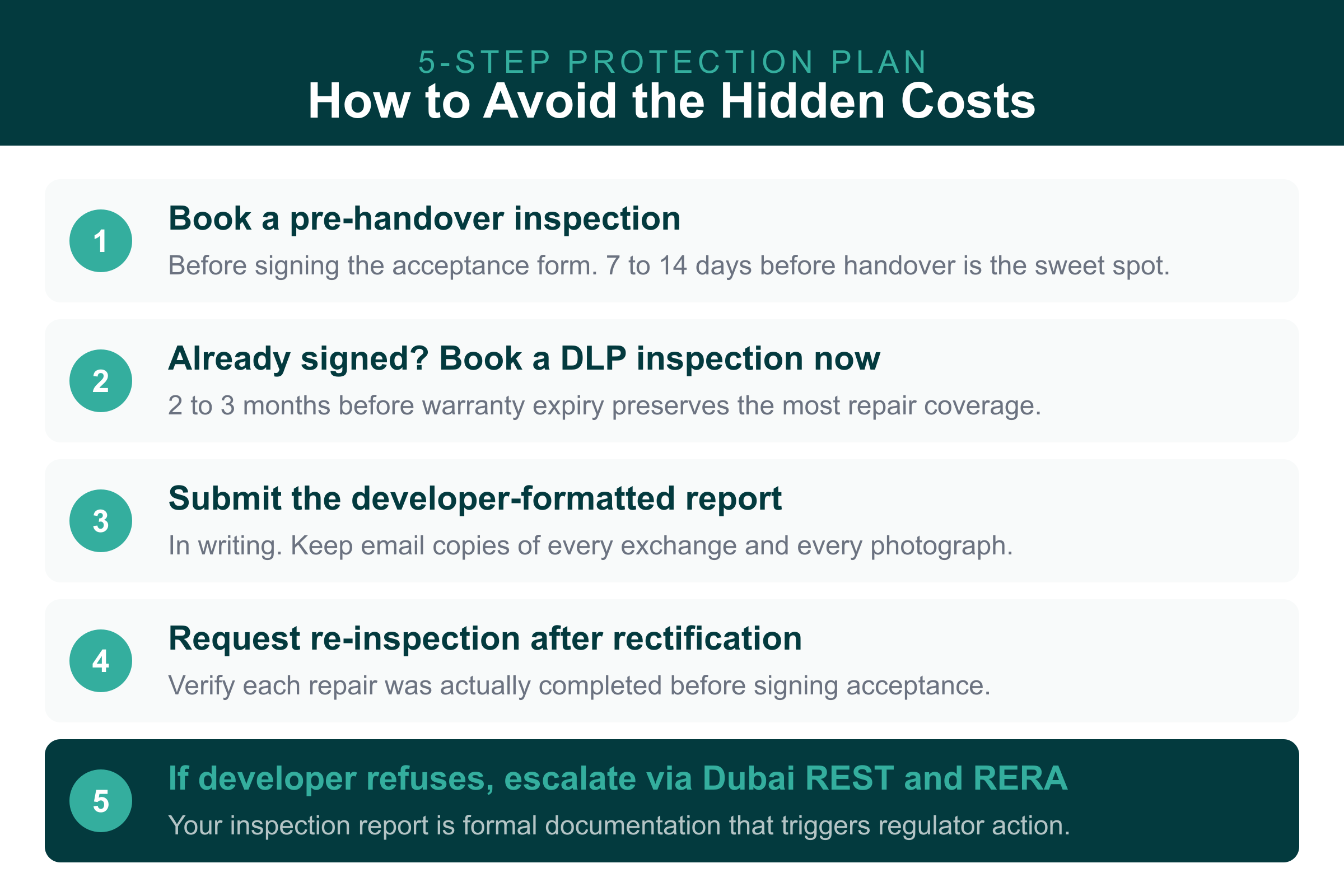
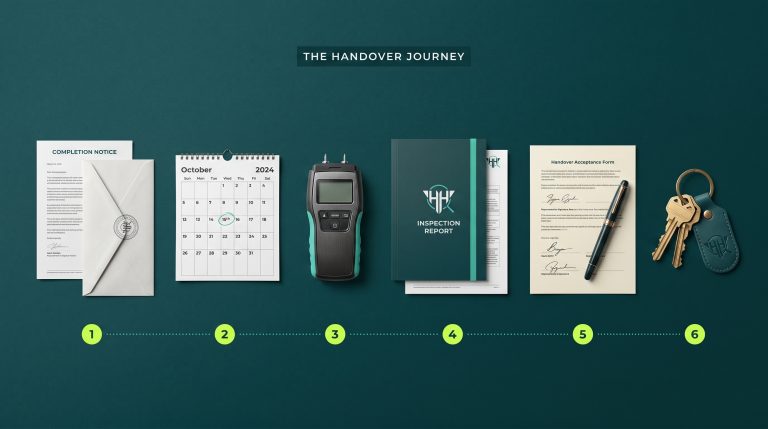
The solution is straightforward. Book a professional pre-handover inspection before you sign the acceptance form. If you have already signed, book a DLP inspection immediately, ideally at least 2 to 3 months before your warranty expires.
Get a detailed report with annotated photographs. Submit the developer-formatted report in writing and keep copies of all correspondence. Request a re-inspection to verify the developer has actually completed the repairs. If the developer refuses, escalate via the Dubai REST app to RERA.
A professional inspection is not an expense. It is the activation of a warranty you already paid for. For inspection timing, read our complete guide to pre-handover inspections in the UAE. For what happens when DLP expires, see our DLP expiry guide.
Frequently Asked Questions
Is there any case where skipping snagging makes sense?
Honestly, no. Even if your property looks perfect, the cost-benefit analysis always favours inspection. The only narrow exception is when you are buying a property already being re-inspected as part of a resale transaction, in which case you can use the seller’s recent inspection report as your starting point and negotiate from there.
What if I already signed my handover without an inspection?
Book a DLP inspection immediately. Your Defect Liability Period is still active, and you can still document defects for developer rectification at no cost to you. The sooner you act, the more of your warranty window you preserve, and the more of the hidden costs of skipping snagging in the UAE you avoid paying.
How long does a snagging inspection actually take?
A thorough inspection for a 2-bedroom apartment typically takes 3 to 4 hours. For villas, it can take 4 to 6 hours. Considering that a single hidden leak can cost AED 35,000 to repair after DLP expiry, the few hours you spend on inspection day are the highest-leverage hours of the entire handover process.
Can I just rely on the developer’s own quality check?
The developer’s quality check is not an independent inspection. It is a presentation focused on getting your signature on the acceptance form. An independent engineer with thermal imaging and moisture meters finds defects the developer’s walkthrough is not designed to surface, which is exactly why the hidden costs of skipping snagging in the UAE are so high.
Don’t Pay for What the Developer Owes You
Your developer is legally required to fix construction defects at zero cost to you during the Defect Liability Period. The only way to claim that coverage is with a professional inspection report.
Book your inspection on WhatsApp or visit our pre-handover inspection service page to get a transparent quote in 60 seconds and avoid the hidden costs of skipping snagging in the UAE entirely.