Off-Plan Property Handover in the UAE: A Step-by-Step Guide for First-Time Buyers
Off plan property handover in the UAE is exciting. After months or years of construction, you finally get to walk through your new home and collect the keys. It is also a moment of significant financial risk. The decisions you make in the off plan property handover UAE window determine whether your new property is the investment you expected or a source of costly surprises.
This guide walks through the entire off plan property handover UAE process step by step. What happens before handover, what to do during the inspection and walkthrough, how to handle the signing process, and what to do after you receive your keys. If this is your first UAE off-plan handover, start here.
Before You Receive the Off Plan Property Handover UAE Notice
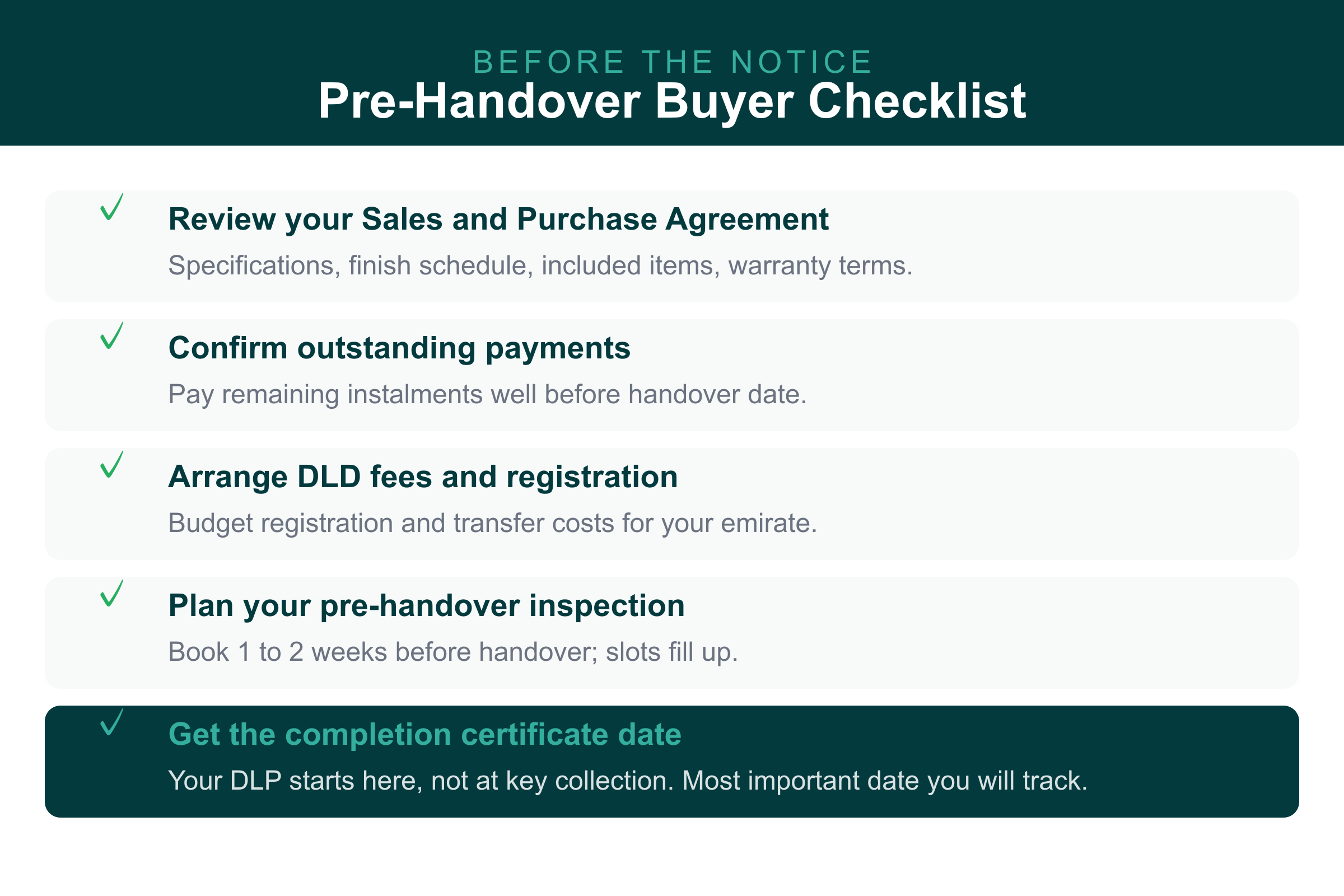
Most buyers focus on the handover itself, but the weeks before matter just as much.
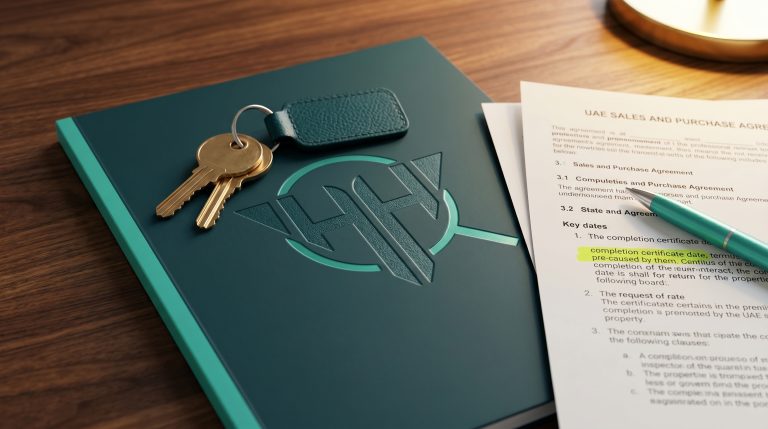
Review your Sales and Purchase Agreement (SPA). Pull out your SPA and read it carefully. Pay attention to the specifications, finish schedule, included items, warranty terms, and handover obligations. You will need this as your reference document during inspection.
Confirm your outstanding payments. Most off-plan contracts require final payments to be made before handover. Confirm with your developer exactly what is due and ensure payment is processed well before the handover date.
Arrange your DLD fees and registration. Registration fees and transfer costs need to be budgeted. For Dubai properties, registration is through the Dubai Land Department. For Abu Dhabi, through the Department of Municipalities and Transport.
Plan your inspection. Book your pre-handover inspection at least 1 to 2 weeks before your expected handover date. Slots fill up during busy handover periods. For more, read our pre-handover inspection guide.
Understand your DLP timeline. Your Defect Liability Period starts from the building completion certificate date, not your key collection date. Ask the developer for the completion certificate date so you know when your DLP actually starts. This is the single most important date for long-term protection.
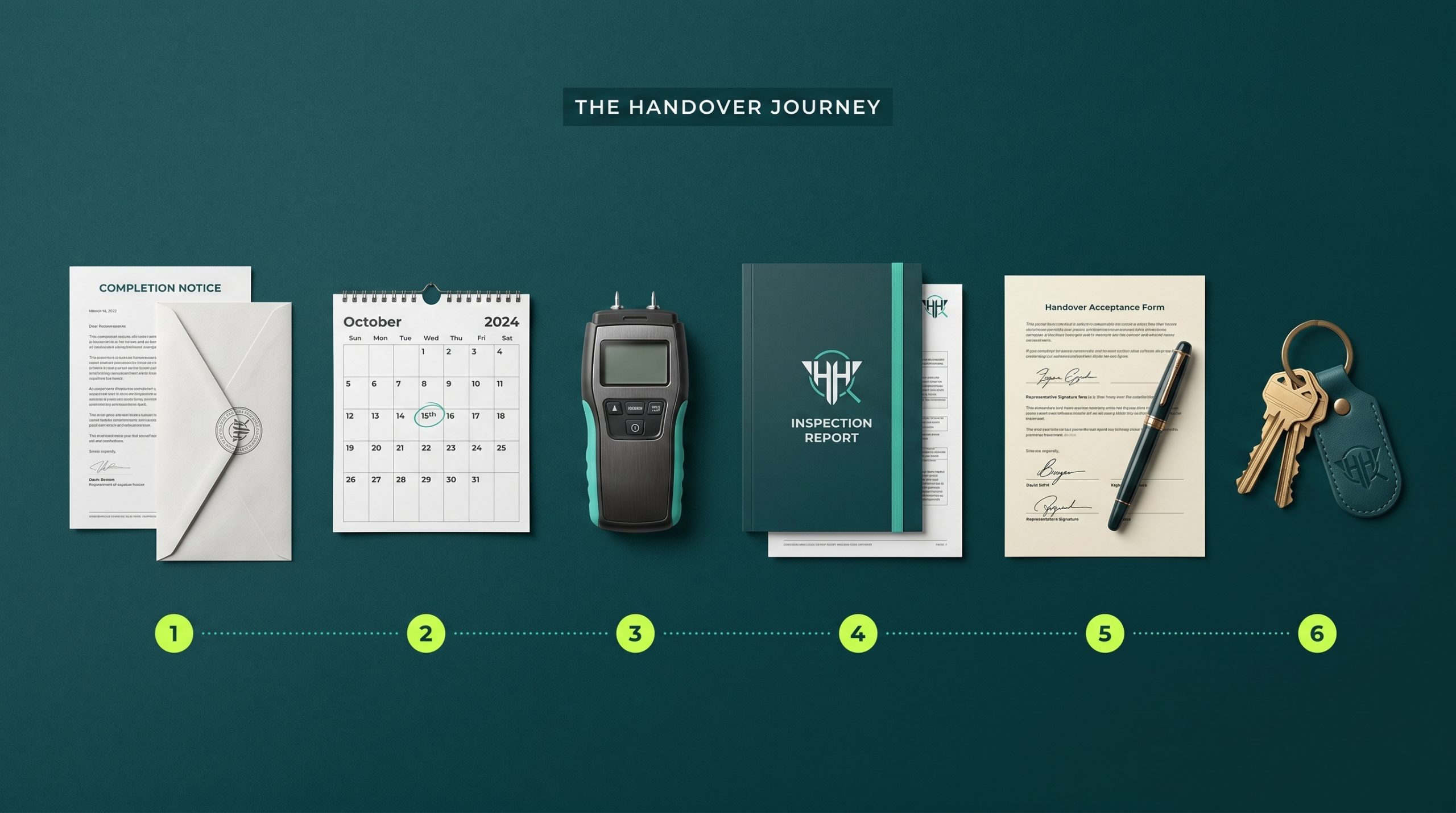
Step 1: You Receive the Handover Notice
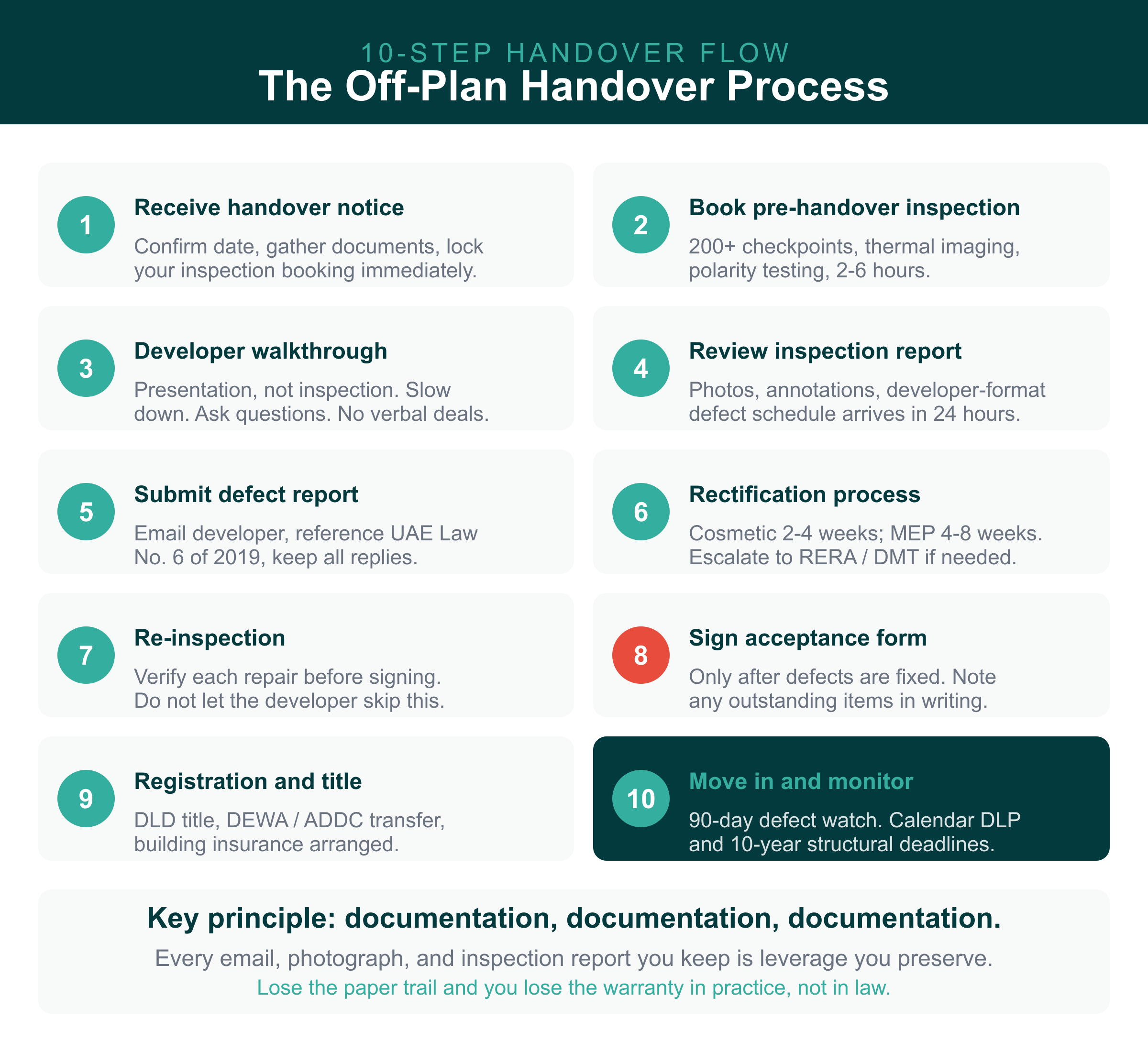
When construction is complete and the building receives its completion certificate, your developer will issue a handover notice. This typically comes via email and includes the scheduled handover date, the documentation you need to bring, the outstanding payments (if any), and the process for the walkthrough and key collection.
At this point, do two things immediately. Confirm your inspection booking for a date before or on the handover day. Review the developer’s handover documentation requirements and gather all required papers.
Step 2: Book Your Pre-Handover Inspection
This is the step most buyers skip in their off plan property handover UAE process. It is also the most important.
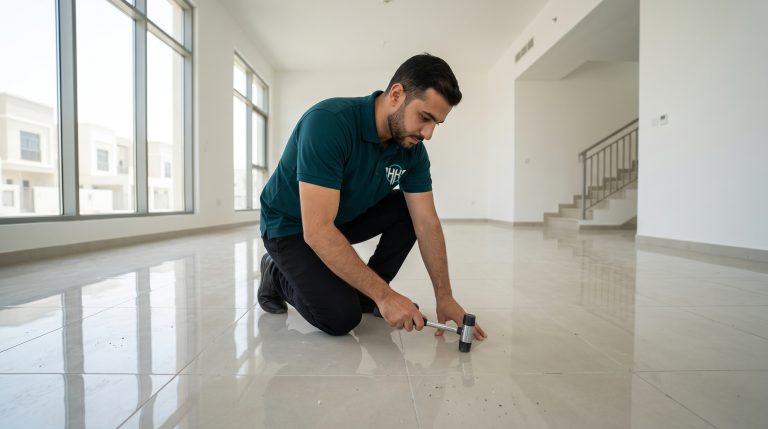
A pre-handover inspection is carried out by a qualified engineer who works for you, not the developer. They check 200+ points across every system and surface in the property to identify construction defects, commissioning failures, safety issues, and finishing problems. The inspection typically takes 2 to 6 hours depending on property size.
The cost ranges from AED 1,500 to AED 5,000 depending on property type and size. This is one of the best investments you will make in your property. For detail, see our property snagging cost guide. Schedule the inspection either on the same day as your developer walkthrough or in the days before.
Step 3: The Developer Walkthrough
On handover day, you will meet a developer representative at the property for a walkthrough. This is the developer’s formal presentation of the completed property. The representative will show you around, point out main features, explain systems, and answer questions. The walkthrough typically takes 30 to 60 minutes.
Here is what most buyers do wrong at this stage in the off plan property handover UAE process.
They treat the walkthrough as the inspection. It is not. The walkthrough is a presentation. The inspection is a technical assessment. These are different activities with different purposes.
They rush through because they are excited. Slow down. Ask questions. Take your time.
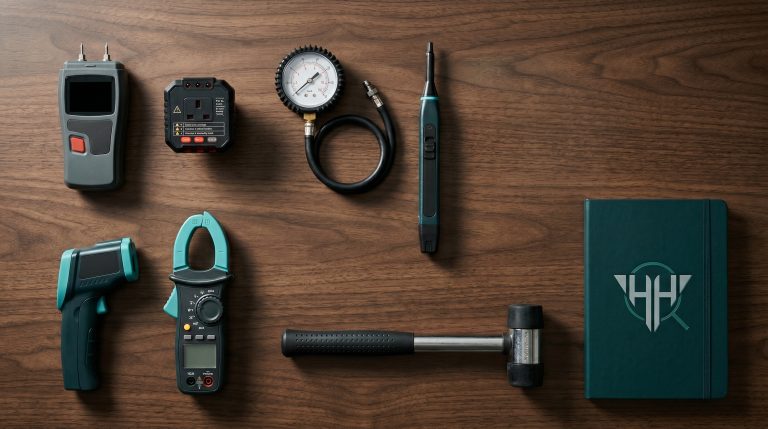
They point out only obvious issues. If you have not had a professional inspection, you will miss 80% of the defects that actually exist. A thermal imaging camera and moisture meter reveal what the eye cannot see.
They accept verbal commitments. If the developer agrees to fix something, get it in writing. Ask for an email confirmation before you leave the property.
Step 4: Review Your Inspection Report
Your professional inspection report arrives within 24 hours of the inspection. It includes a detailed list of every defect identified (categorised by room and system), photographs with annotations showing the exact location and nature of each defect, a developer-formatted version ready for email submission, and recommendations for prioritisation.
Take the time to understand the report before moving to the next step. Do not sign the handover acceptance form until you have reviewed the findings. If you have questions, contact your inspection provider directly.
Step 5: Submit the Defect Report to the Developer
Once you have your inspection report, attach the developer-formatted version to an email addressed to the developer’s handover coordinator. State clearly in the email that you expect each defect to be rectified under the Defect Liability Period. Keep copies of the email and any responses. Request a specific timeline for rectification of each defect category.
This formal written submission is critical. It creates the documentation trail that protects your rights. Under UAE Law No. 6 of 2019 enforced by RERA, developers are legally required to fix construction defects during the DLP, and your formal report is the activation of that protection.
Step 6: The Rectification Process
After submission, the developer will typically acknowledge receipt of the defect list, schedule teams to address each defect, provide status updates as repairs are completed, and invite you to re-inspect before final acceptance.
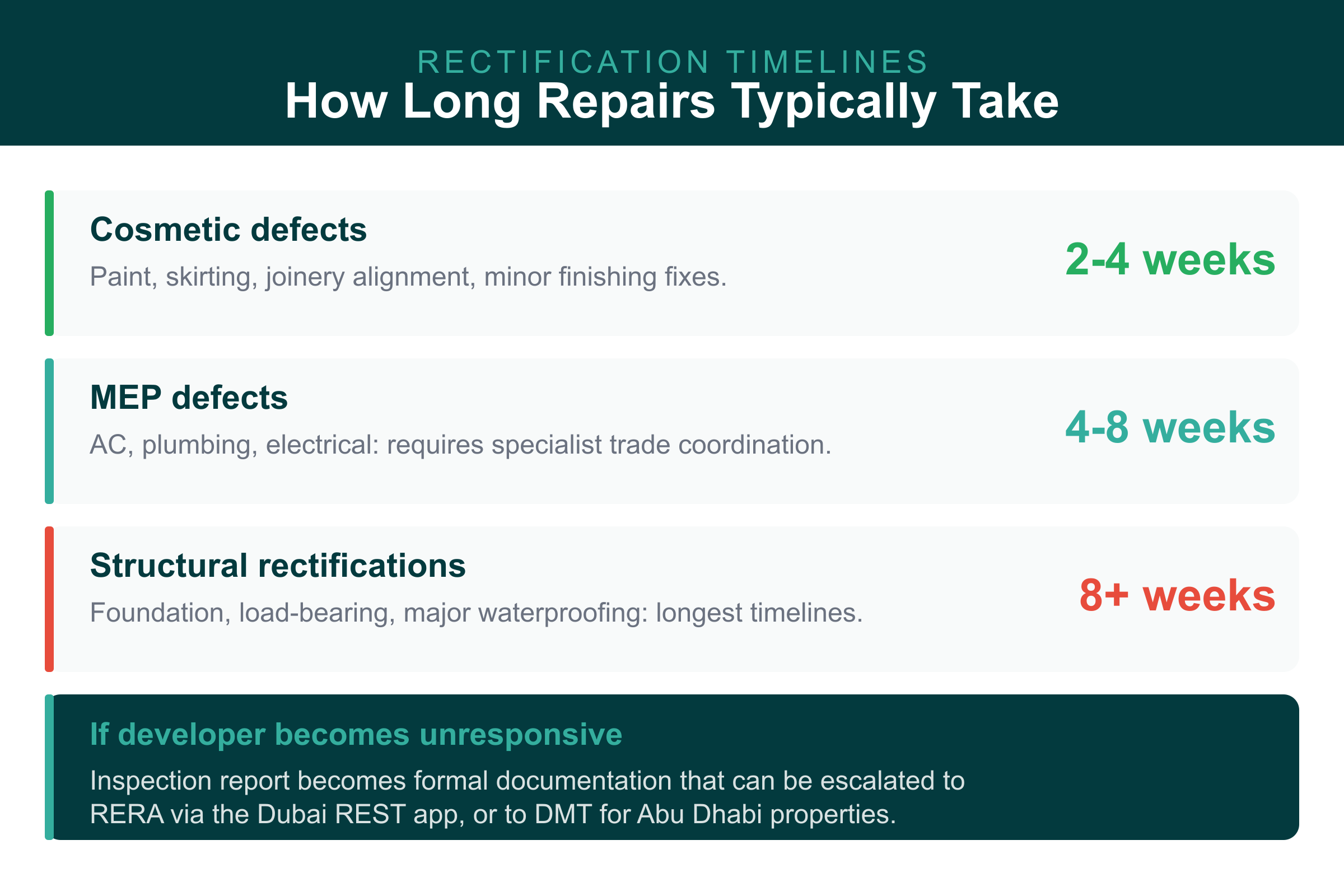
Timelines vary. Cosmetic defects are often resolved within 2 to 4 weeks. MEP defects can take 4 to 8 weeks due to the need to coordinate specialist trades. Complex structural rectifications take longer. Follow up in writing if you do not receive updates on the expected schedule. If a developer becomes unresponsive, your inspection report serves as formal documentation that can be escalated to RERA in Dubai or DMT in Abu Dhabi.
At Handover Heroes, we handle the follow-up for you through our complimentary de-snagging service. We chase the developer on your behalf until every defect is fixed.
Step 7: The Re-Inspection
Before you formally accept the property as defect-free, request a re-inspection. This confirms each reported defect has actually been rectified, the rectification work meets quality standards, no new issues have been introduced during the repair work, and nothing has been missed or overlooked.
The re-inspection is shorter than the original inspection (typically 1 to 3 hours) but just as important. Many developers will attempt to skip this step. Do not let them. If defects have not been properly fixed, you need to know before you sign acceptance.
Step 8: Sign the Handover Acceptance Form
Only after you are satisfied that defects have been rectified should you sign the handover acceptance form. This is the document where you formally confirm that you accept the property as delivered.
Once signed, your leverage to compel rapid rectification drops. You can still report defects during the DLP, but the dynamic changes. Do not sign under pressure. Developers sometimes create urgency to accelerate the process. You have the right to refuse until you are satisfied.
If significant issues remain unresolved, note them on the acceptance form before signing. Some developers provide a space for this. If not, reference the outstanding defect report and submit a supplementary email confirmation. Keep a copy of the signed acceptance form for your records.
Step 9: Property Registration and Title Transfer
With the acceptance form signed, the next step in the off plan property handover UAE process is formal property registration. This involves paying any outstanding fees to the developer, registering the title deed with the Dubai Land Department or Abu Dhabi equivalent, receiving your title deed document, transferring utility accounts (DEWA in Dubai, ADDC in Abu Dhabi) into your name, and arranging property insurance.
Your developer or real estate agent can guide you through the specific registration requirements in your emirate. You can also check the Dubai REST app for property registration and ownership status updates.
Step 10: Move In and Monitor
Once you have completed registration and received your keys, monitor the property during the first 90 days. Some defects (particularly relating to air conditioning, plumbing, and electrical) only emerge under normal use. Document any new issues immediately. Photographs with timestamps create an evidence trail.
Submit new defects via email to the developer’s handover team, referencing your original inspection report and the ongoing DLP. Calendar your DLP deadlines: mark the 12-month MEP and finishing expiry date, and the 10-year structural warranty UAE expiry date. Plan to book a DLP inspection 2 to 3 months before the 12-month deadline.
For more on DLP timing and rights, see our DLP warranty vs developer guarantee article.
Common Mistakes First-Time UAE Buyers Make at Handover
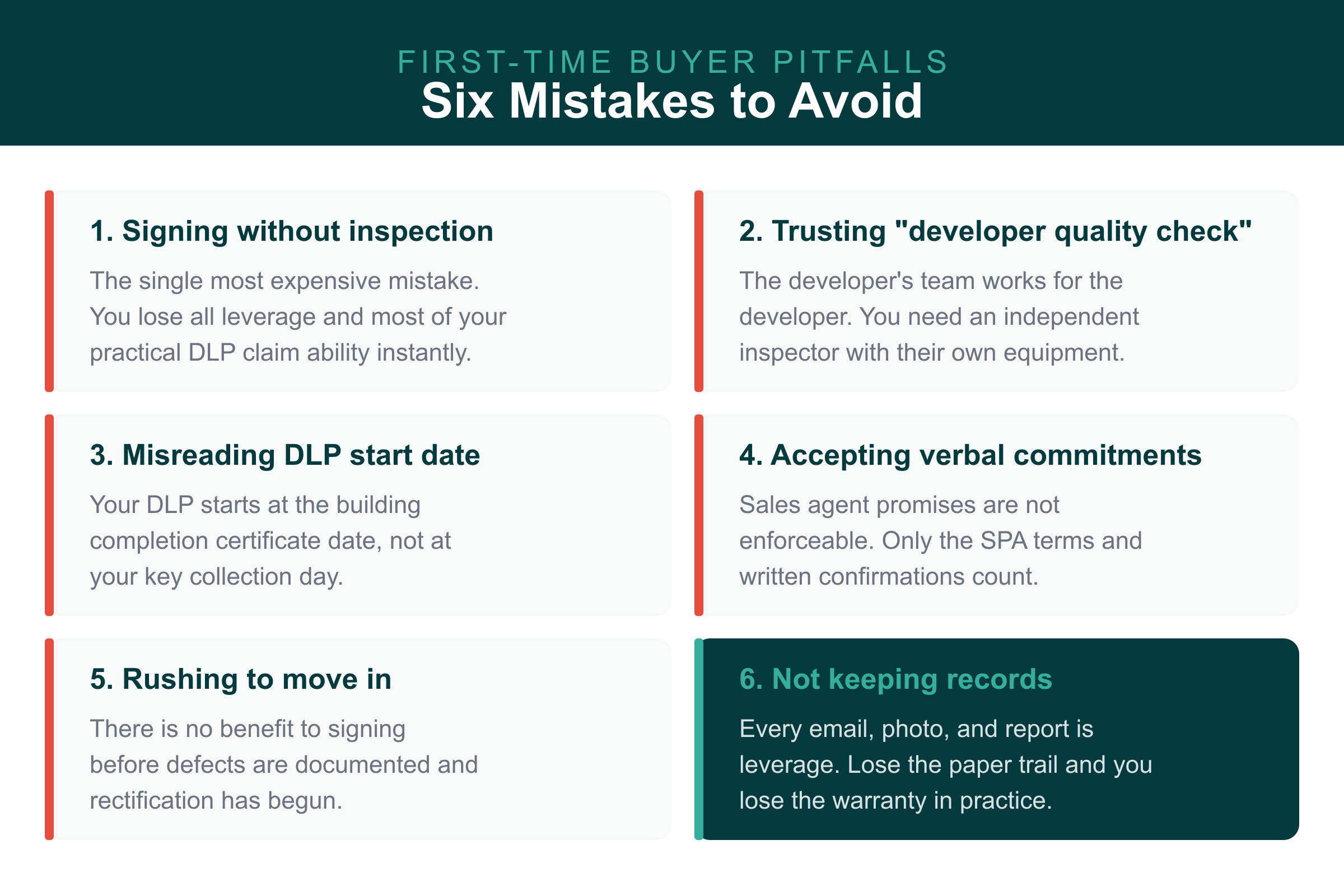
Signing the handover form during the walkthrough without inspection. The single most expensive mistake. Do not sign until you have a professional inspection report.
Relying on the developer’s own quality check. The developer’s team works for the developer. You need an independent inspector who works for you.
Not understanding when DLP starts. If you think it starts on your key collection day, you are likely wrong. Check the completion certificate date.
Accepting verbal commitments. If it is not in writing, it is not enforceable.
Rushing to move in. There is no practical benefit to signing the handover form before defects are documented and rectification begins. Take the time you need.
Not keeping records. Every email, photograph, and document matters. Keep everything in a dedicated folder for the entire DLP window.
Frequently Asked Questions
Can I refuse to accept the property if there are too many defects?
In most cases, you cannot outright refuse handover beyond the contractual terms of your SPA. However, you can refuse to sign the acceptance form until defects are rectified to your satisfaction. The contractual remedies for the off plan property handover UAE process depend on your specific SPA, so review it carefully before raising any formal dispute.
What if the developer delays handover significantly?
Delays in off-plan handovers are common across the UAE. Most SPAs include clauses about delay compensation or penalties. Review your contract to understand your rights if handover is significantly delayed. RERA and DMT also publish guidance on developer delay obligations that may apply to your situation.
Do I need a lawyer for handover?
For most standard off plan property handover UAE situations, a lawyer is not strictly required. However, if you are dealing with complex circumstances such as significant delays, dispute with developer, or a luxury high-value purchase, consulting a real estate lawyer is worthwhile and often pays for itself in negotiation outcomes.
Can someone else represent me at handover if I’m overseas?
Yes. Many overseas investors appoint a representative or use a service like our Investor Pack to manage the entire handover process remotely. This includes inspection coordination, developer communication, defect submission, and rectification management on the buyer’s behalf.
What if I find new defects after I have already signed the handover form?
You can still report defects during the 12-month DLP window. Document them with photographs and submit in writing referencing your original inspection report. However, your position is weaker than it would have been before signing the off plan property handover UAE acceptance form. This is why pre-handover inspection matters so much.
Your First Handover Doesn’t Have to Be Stressful
The off plan property handover UAE process has many steps, but none of them are complicated when you know what to expect. The key is preparation, documentation, and professional inspection. Book your pre-handover inspection before your developer walkthrough and set yourself up for a smooth handover.
Book your pre-handover inspection on WhatsApp or visit our pre-handover inspection service page for full details on protecting your investment at every stage of the off plan property handover UAE process.