DAMAC Properties Snagging: Common Defects and What to Check
DAMAC properties snagging is one of the most-searched developer-specific inspection topics in the UAE, because DAMAC is one of the largest developers with active projects across Dubai, Abu Dhabi, and international markets. Buyers taking handover of a DAMAC properties snagging inspection often ask the same question: what defects should I look out for, and how does DAMAC compare to other developers?
This guide is based on DAMAC properties snagging inspection data from DAMAC Hills, DAMAC Hills 2, DAMAC Lagoons, DAMAC Bay, and other communities. We outline the most common defect patterns, the inspection points that matter most, and how to use your inspection report effectively.
This is not an attack on DAMAC. Every major UAE developer delivers properties with defects. DAMAC’s scale means more handovers per year than almost any other developer, which gives us a clear view of what typically comes up during a DAMAC properties snagging inspection.
The DAMAC Handover Process
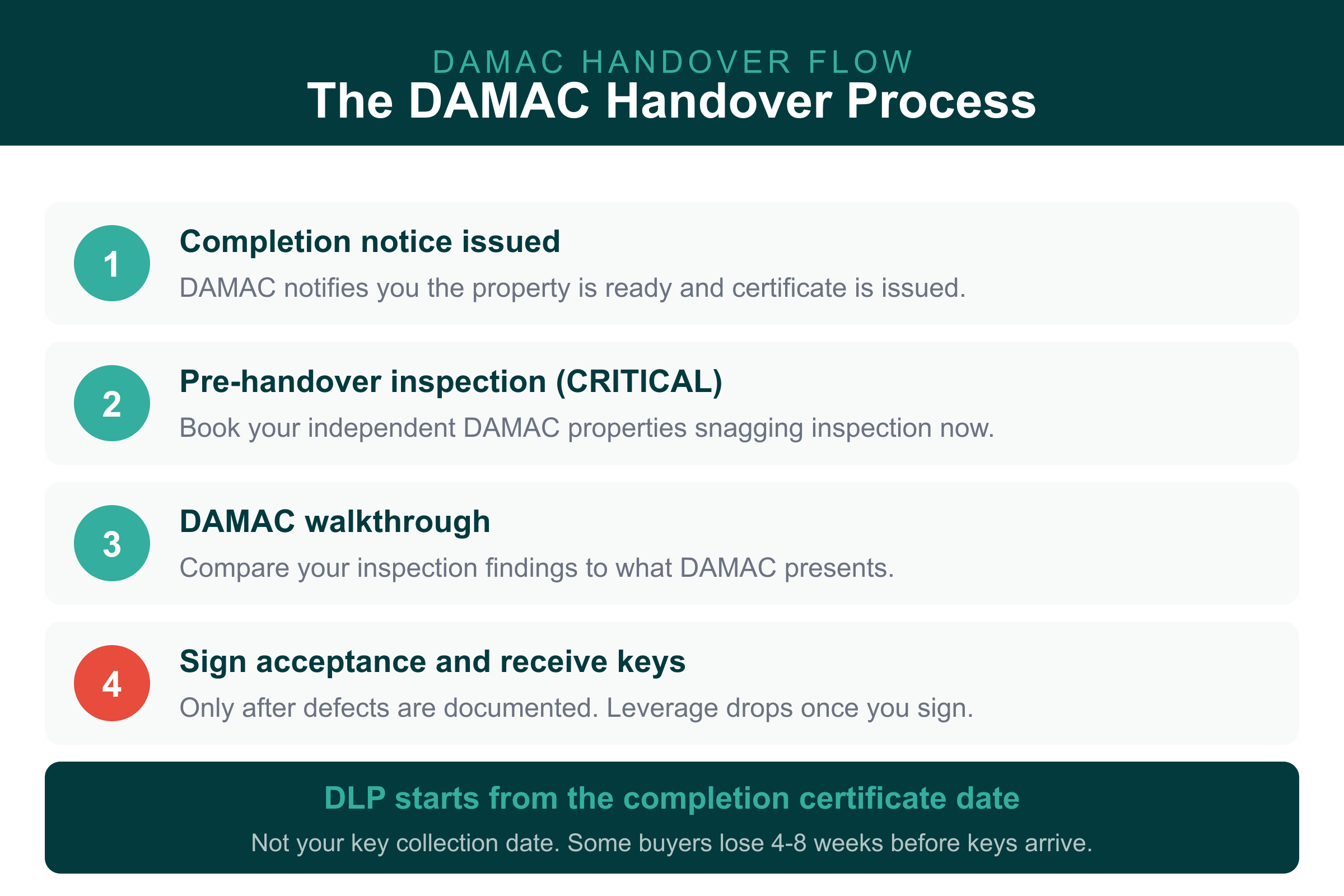
DAMAC’s handover process follows the standard UAE developer pattern. You receive a completion notice from DAMAC once the property is ready and the building completion certificate is issued. You then schedule a developer walkthrough with a DAMAC representative, sign the handover acceptance form, and receive your keys. Your Defect Liability Period in Dubai starts from the completion certificate date.
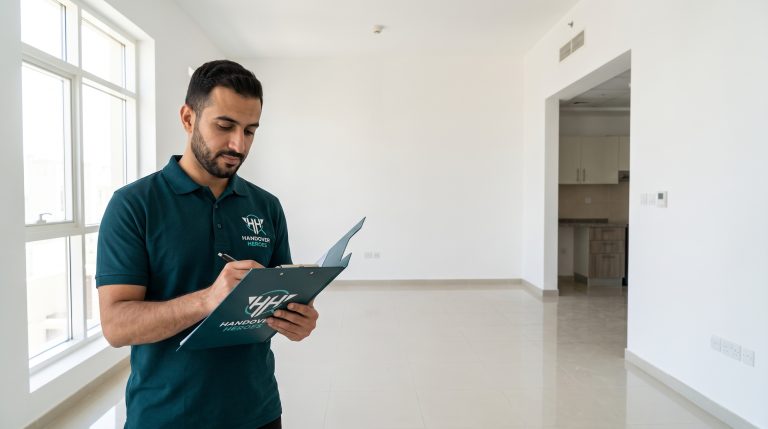
The critical window is between the completion notice and the moment you sign the acceptance form. This is when your DAMAC properties snagging inspection needs to happen. Once you sign, your leverage to compel rapid rectification drops significantly. For more on this timing, read our complete pre-handover inspection guide.
Common Defects We Find in DAMAC Properties
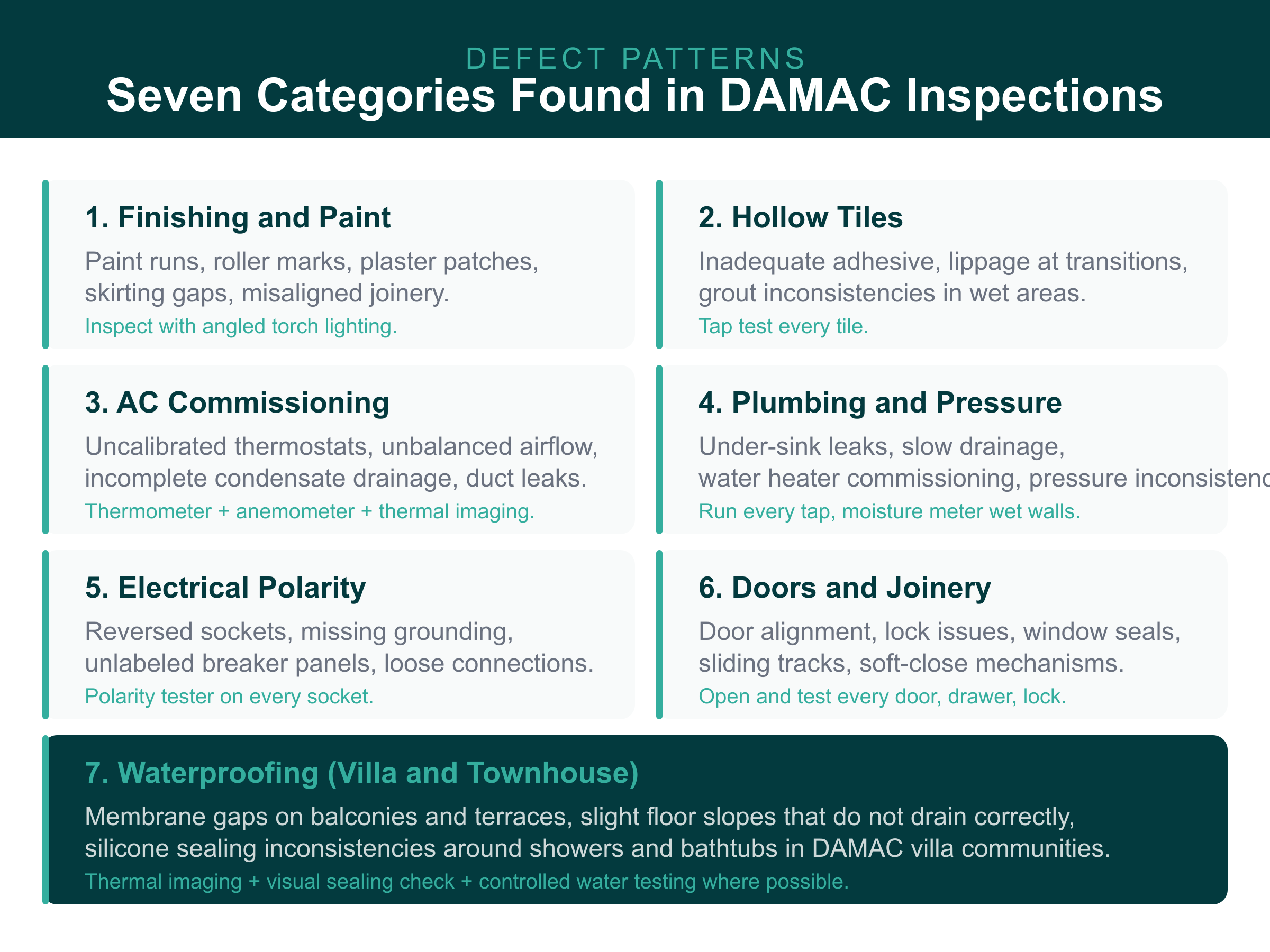
Across DAMAC apartments and villas, we consistently find defects in the following categories. These patterns reflect the pace and scale of DAMAC’s construction rather than any specific quality issue, and many are common across the broader UAE developer market.
1. Finishing and Paint Defects
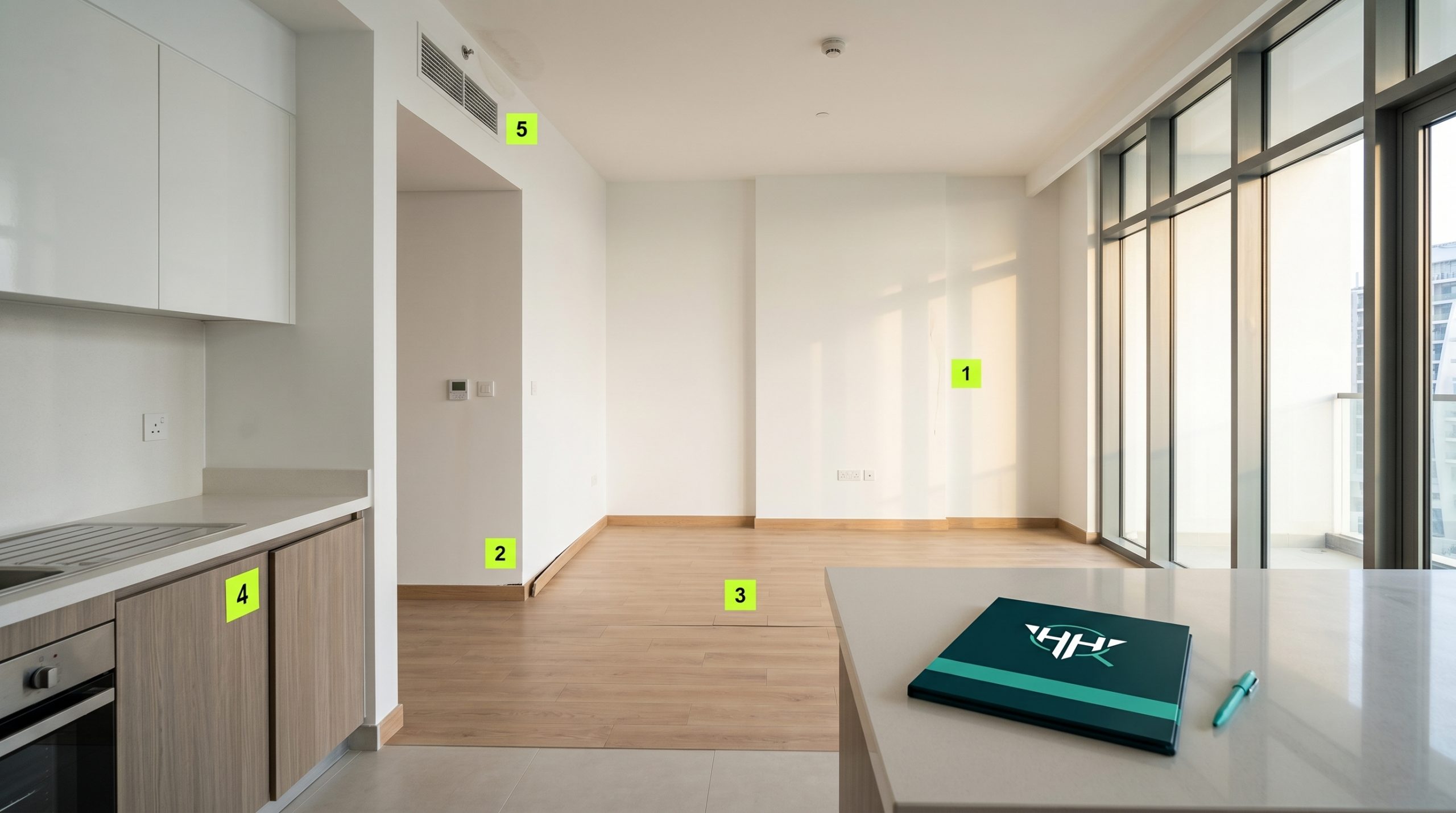
What we see: Paint runs, roller marks, uneven coverage on walls, rough plaster patches behind furniture lines, gaps between skirting and walls, misaligned joinery.
Why it happens: Finishing is the final phase of construction and is often completed under time pressure as handover approaches.
How to inspect: Use angled lighting (a bright torch held at a shallow angle against the wall surface) to reveal paint inconsistencies that are invisible under standard ceiling lighting. Check every skirting board for gaps.
2. Hollow Tiles
What we see: Hollow tiles in kitchens, bathrooms, and hallways. Lippage (uneven tile surfaces) at transitions. Grout inconsistencies.
Why it happens: Tiling at scale across large DAMAC projects sometimes results in inadequate adhesive coverage or rushed installation.
How to inspect: Every tiled surface should be tap tested with a specialised tapping tool. The sound difference between a solid tile and a hollow tile is unmistakable to a trained inspector.
3. AC Commissioning and HVAC Issues
What we see: AC systems installed but not properly commissioned. Thermostats uncalibrated. Airflow unbalanced between rooms. Condensate drains incomplete. Duct leaks.
Why it happens: AC commissioning is a technical process that requires specific testing and balancing. Under time pressure, this step is sometimes shortcut.
How to inspect: Measure temperature differential at each AC vent with a calibrated digital thermometer. Test airflow with an anemometer. Check condensate drain function by running each unit for a sustained period. Use thermal imaging to identify duct leaks and insulation gaps.
4. Plumbing and Water Pressure Issues
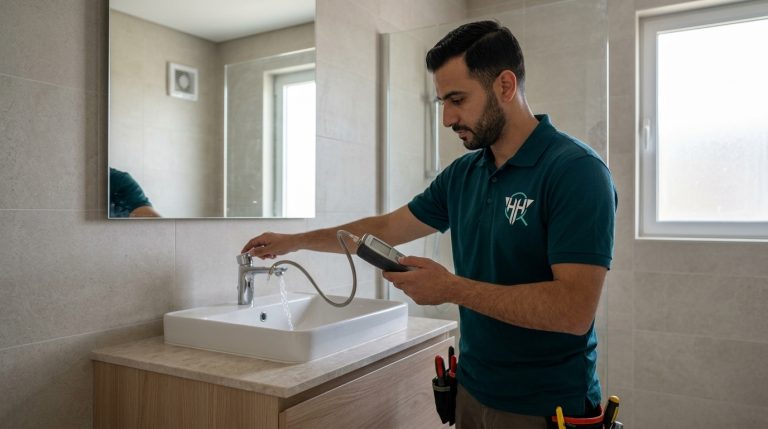
What we see: Under-sink leaks, slow drainage in bathrooms and kitchens, inconsistent water pressure, water heater commissioning issues.
Why it happens: Plumbing involves many joints and connections, and at scale, some are inevitably not sealed properly.
How to inspect: Run every tap for pressure and flow. Fill sinks and check drain times. Test hot water response time. Inspect under every sink with a torch for moisture. Use a moisture meter on any walls adjacent to wet areas.
5. Electrical Polarity and Grounding Issues
What we see: Reversed polarity sockets (live and neutral wires swapped), missing grounding on some circuits, inconsistent socket function, unlabeled breaker panels.
Why it happens: Electrical installation at scale involves thousands of individual connections, and errors are common even with good quality control.
How to inspect: Every socket must be tested with a polarity tester. This takes seconds per socket but cannot be skipped. Verify grounding continuity on at least a sample of sockets per room.
6. Doors, Windows, and Joinery
What we see: Doors not closing properly, locks not aligning, window seal gaps, sliding door tracks misaligned, soft-close mechanisms on cabinets not functioning.
Why it happens: These components require precise installation and adjustment. At scale, adjustments are sometimes not completed before handover.
How to inspect: Open and close every door and window. Test every lock. Check the seals on every external door and window. Open every cabinet and drawer. Test every soft-close mechanism.
7. Waterproofing Issues (Villa and Townhouse-Specific)
What we see: Waterproofing membrane gaps on balconies and terraces, slight floor slopes that do not drain correctly, silicone sealing inconsistencies around showers and bathtubs.
Why it happens: Waterproofing is a specialty trade and gaps can be difficult to identify without thermal imaging or water testing.
How to inspect: Thermal imaging of balcony and terrace surfaces. Visual inspection of silicone beads and sealing joints. Controlled water testing where possible.
DAMAC Properties Snagging by Community
DAMAC Hills
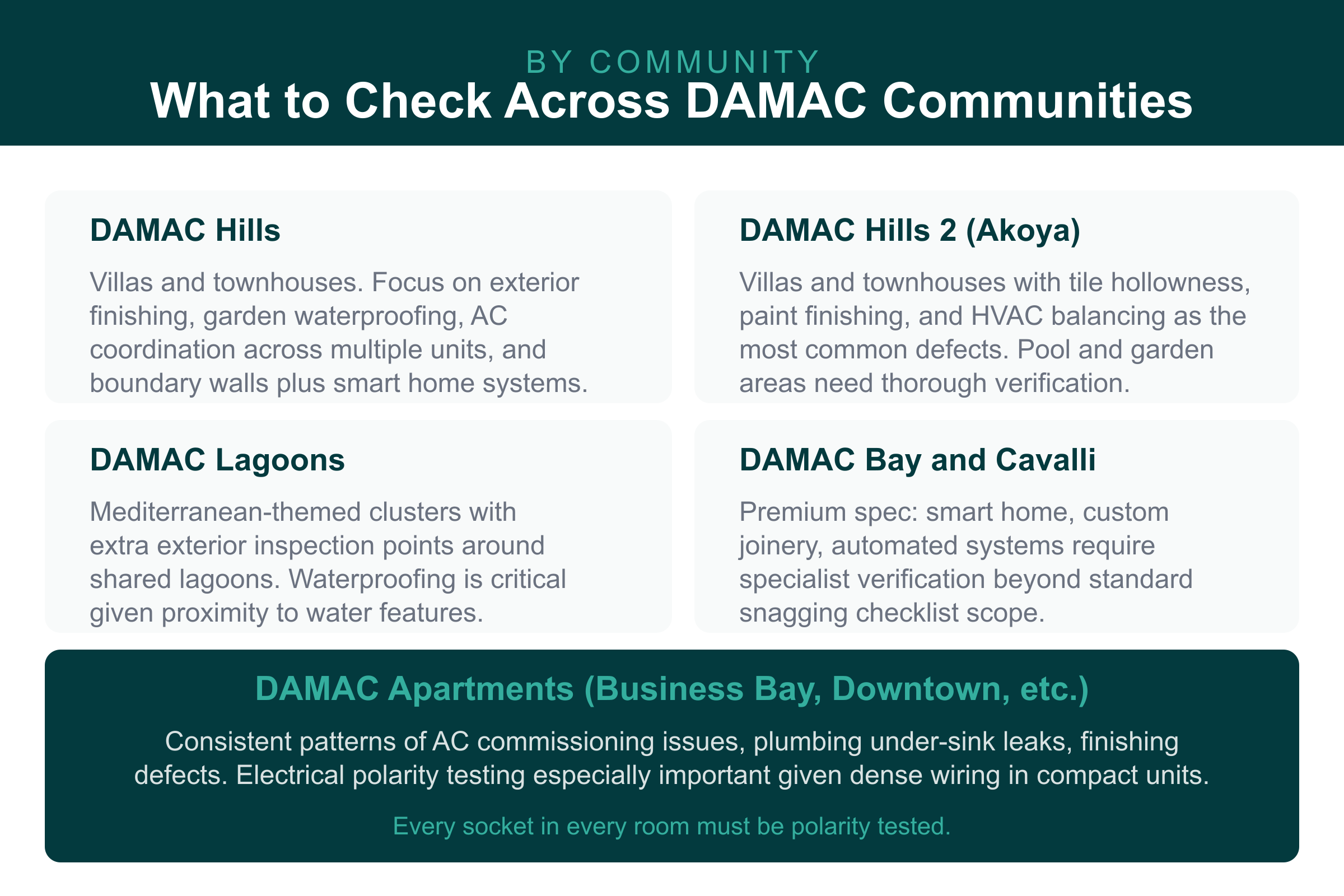
Villas and townhouses in DAMAC Hills typically show issues around exterior finishing, garden area waterproofing, and AC coordination across multiple units. Check boundary walls and any installed smart home systems carefully during your DAMAC properties snagging inspection.
DAMAC Hills 2
The newer DAMAC Hills 2 (formerly Akoya) has a mix of villas and townhouses. Common issues include tile hollowness, paint finishing, and HVAC balancing. Pool and garden areas also need thorough inspection.
DAMAC Lagoons
DAMAC Lagoons is a large-scale development with Mediterranean-themed communities. The distinctive designs mean additional inspection points around external features, shared lagoons, and unit-to-common-area interfaces. Waterproofing is particularly important given proximity to water features.
DAMAC Bay and Cavalli Properties
Premium DAMAC developments include higher-spec finishes and often smart home systems. These add complexity to inspection and require specialist verification of automated systems, high-end joinery, and custom fixtures.
DAMAC Apartments (Business Bay, Downtown)
Apartment-level DAMAC projects show consistent patterns of AC commissioning issues, plumbing under-sink leaks, and finishing defects. Electrical polarity testing is especially important given the density of wiring in compact apartments.
The Inspection Points That Matter Most for DAMAC Properties
If you could only inspect a subset of your DAMAC property, prioritise these.
Every tile. Hollow tiles are common in DAMAC properties snagging reports and expensive to fix later.
Every socket. Polarity issues are invisible and dangerous.
Every AC vent. Temperature differential and airflow reveal commissioning quality.
Every wet area. Under-sink, behind-toilet, and bathroom wall moisture is the most costly defect category.
Every door and window. Hardware and seal issues compound over time.
Thermal imaging of all walls. Hidden moisture and insulation gaps are invisible without it.
How to Use Your DAMAC Inspection Report
After your DAMAC properties snagging inspection, do not sign the DAMAC handover acceptance form until you have reviewed the report. Submit the developer-formatted defect report to DAMAC in writing via email. Request a specific timeline for rectification of each defect. Keep all correspondence, including email read receipts where possible.
Request a re-inspection before you finally accept the property. Follow up on any defects that are not rectified within the agreed timeline. Escalate to RERA via the Dubai REST app if DAMAC delays or refuses for Dubai properties, or to DMT for Abu Dhabi properties.
At Handover Heroes, we include complimentary de-snagging support with every pre-handover inspection, which means we chase the developer on your behalf until every defect is fixed. For DAMAC properties, this is especially useful given the scale of the developer’s operations.
Frequently Asked Questions
Does DAMAC fix defects found during snagging?
In our experience, yes. DAMAC typically responds to formal DAMAC properties snagging reports and rectifies documented defects during the DLP. The key is proper documentation. A casual complaint to a DAMAC sales agent does not have the same weight as a formal inspection report submitted in writing through the proper channels.
How long does DAMAC take to fix reported defects?
Timelines vary by defect type and project phase. Cosmetic defects are often addressed within a few weeks. MEP defects can take longer due to the need to coordinate specialised trades. Most rectifications are completed within 30 to 60 days of formal report submission, though this depends on the specific community and the volume of handovers DAMAC is processing.
Can I inspect my DAMAC property before the official handover date?
Generally, yes, once the property has received its completion certificate. Many buyers schedule their DAMAC properties snagging inspection on the same day as the DAMAC walkthrough or in the few days before, which gives them time to review findings and submit defects formally before signing the acceptance form.
What if DAMAC refuses to fix a defect?
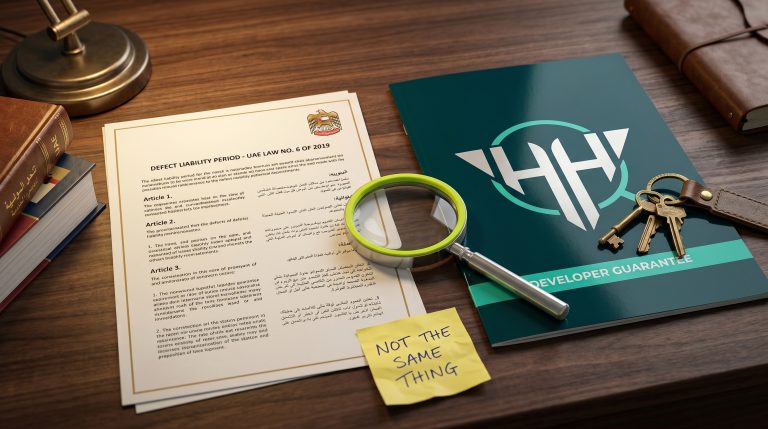
Under UAE Law No. 6 of 2019, developers are legally obligated to rectify construction defects reported during the DLP. If DAMAC refuses, escalate to RERA for Dubai properties or DMT for Abu Dhabi properties. Your formal inspection report is the foundation of any escalation, which is why thorough documentation matters.
Are newer DAMAC properties better quality than older ones?
DAMAC’s construction standards have evolved over the years. Newer projects often incorporate improved quality control processes, but defect patterns remain broadly consistent because the underlying challenges of UAE construction at scale are similar across projects. A DAMAC properties snagging inspection is still essential for any handover, regardless of vintage.
Book Your DAMAC Pre-Handover Inspection
Taking handover of a DAMAC property? Do not sign until you know exactly what you are accepting.
Book your DAMAC inspection on WhatsApp or visit our pre-handover inspection service page for full details on what your DAMAC properties snagging inspection covers.