
Defect Liability Period in Dubai: Everything You Need to Know (2026)
The Defect Liability Period is one of the most important protections available to property buyers in Dubai, and one of the least understood. In simple terms, it is a fixed window after handover during which the developer is legally required to fix construction defects in your property at zero cost to you.
Once that window closes, every repair comes out of your pocket.
This guide explains exactly what the Defect Liability Period in Dubai covers, how long it lasts, when it starts, what happens when it expires, and what you need to do right now to make sure you do not lose your right to free repairs.
What Is the Defect Liability Period in Dubai?
The Defect Liability Period (DLP) is a legally defined timeframe after the completion and handover of a new property during which the developer must rectify any construction defects at their own expense. It applies to all new-build properties in Dubai, whether apartments, townhouses, or villas.
The DLP exists to protect buyers from inheriting the cost of the developer’s construction mistakes. If your AC was installed incorrectly, if your bathroom has a waterproofing failure, or if tiles were laid over insufficient adhesive, the developer must fix it during the DLP. After the DLP expires, that same repair becomes your financial responsibility.
It is important to distinguish the DLP from manufacturer warranties. Appliances like ovens, dishwashers, and water heaters typically carry their own manufacturer warranty (usually 1 to 2 years), which is separate from the developer’s DLP. The DLP covers the building systems, structure, and finishing installed by the developer and their contractors.
How Long Does the Defect Liability Period Last?
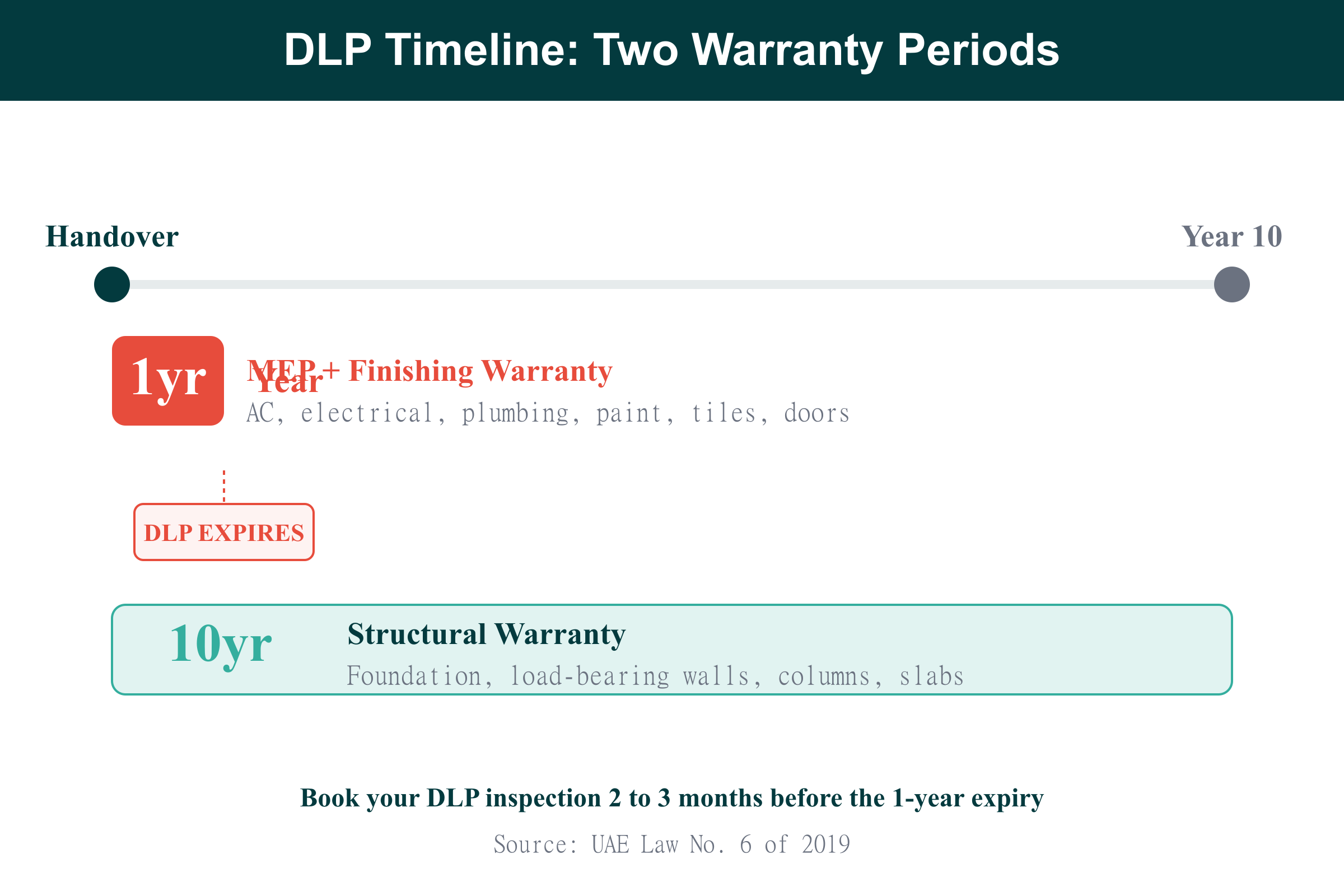
Under UAE Law No. 6 of 2019 Concerning Ownership of Jointly Owned Real Property in Dubai, developers are responsible for two distinct warranty periods:
10 years for structural defects. This covers the building’s foundation, load-bearing walls, columns, beams, slabs, and primary waterproofing. Structural defects that threaten the integrity or safety of the building fall under this extended coverage, calculated from the date the building completion certificate is issued.
1 year for MEP and finishing defects. This covers mechanical, electrical, and plumbing systems (AC, wiring, plumbing, fire safety) as well as finishing quality (paint, tiling, joinery, doors, windows, fixtures). This 1-year period is the one most relevant to the majority of defects identified during snagging inspections.
Some developers voluntarily offer extended DLP terms beyond the legal minimum. Check your Sales and Purchase Agreement (SPA) for the exact terms that apply to your property. The SPA is the binding contract, and its terms may differ from what a sales agent told you verbally.
What Does the Defect Liability Period Cover?
Structural Defects (10-Year Coverage)
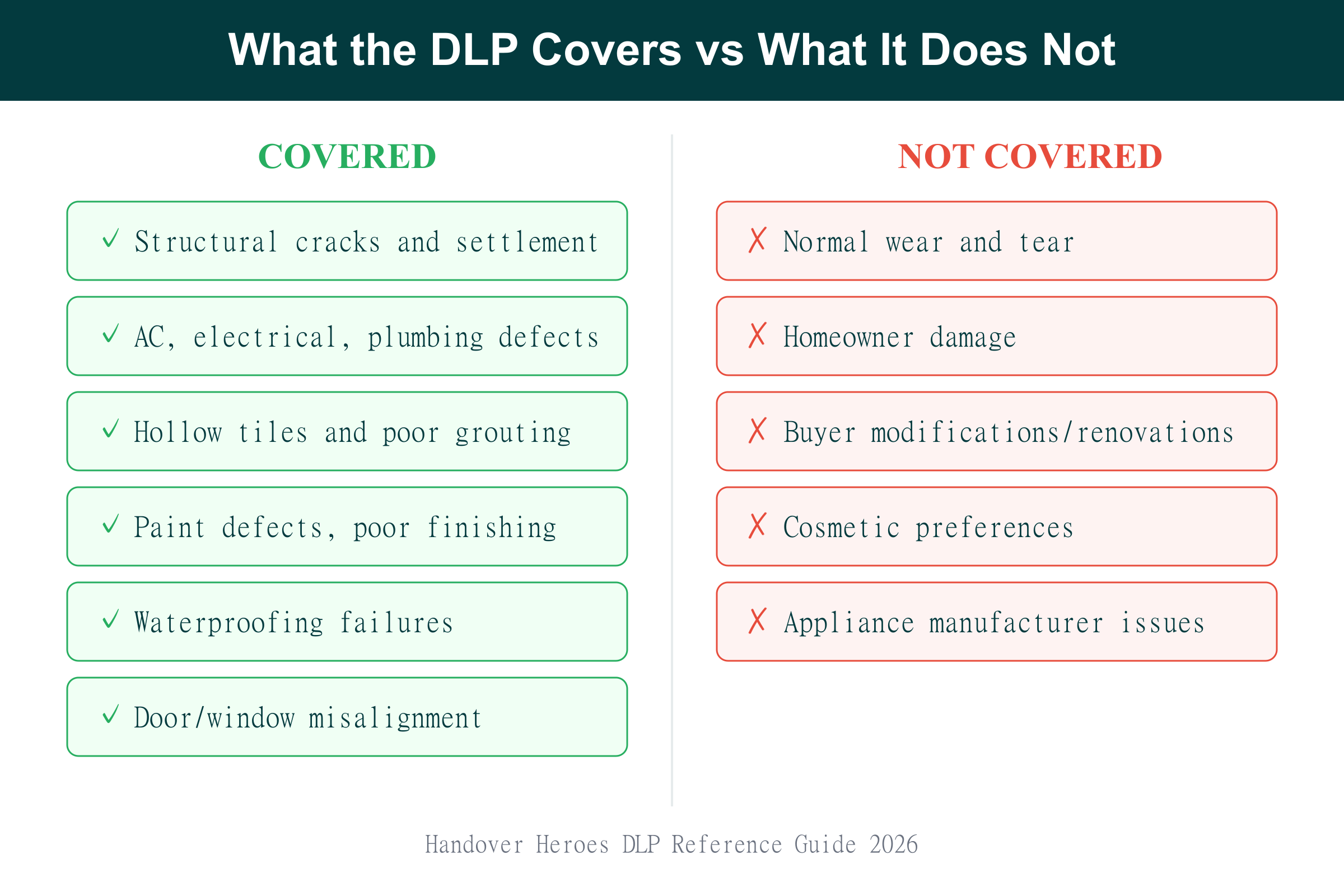
Structural defects affect the safety and integrity of the building. These include cracking in load-bearing walls, foundation settlement, slab deflection, waterproofing failures in the building envelope, and any defect that compromises the structural soundness of the property. These are rare but extremely expensive when they occur, which is why the law provides 10 years of coverage.
MEP Defects (1-Year Coverage)
MEP stands for mechanical, electrical, and plumbing. This covers your air conditioning and HVAC systems, all electrical wiring, sockets, switches, circuit breakers, and lighting, all plumbing including pipes, taps, drains, water heaters, and sanitary fixtures, and fire safety systems including smoke detectors and alarms. If any of these systems were installed incorrectly or fail due to construction quality, the developer must repair or replace them during the 1-year DLP.
Finishing Defects (1-Year Coverage)
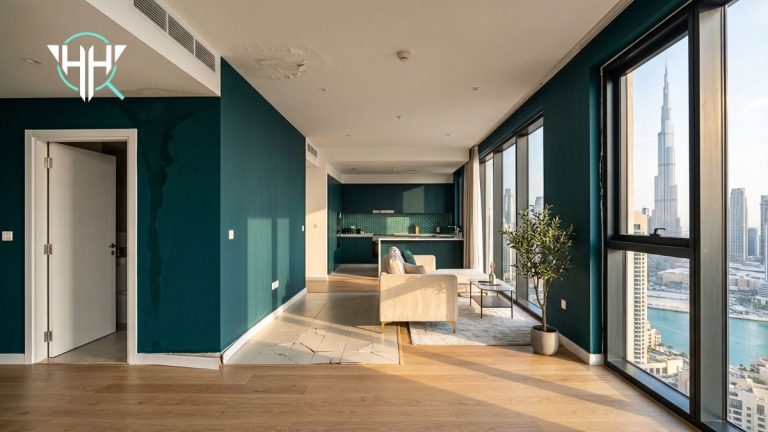
Finishing defects cover the visible and cosmetic quality of the property. This includes paint quality, tiling (including hollow tiles, lippage, and grout defects), door and window alignment and function, kitchen cabinetry and countertops, bathroom fixtures and fittings, skirting boards, and joinery. These are the most commonly found defects during snagging inspections and are fully covered during the 1-year DLP.
What the DLP Does NOT Cover
The Defect Liability Period does not cover everything. Developers are not required to fix issues caused by normal wear and tear from daily use, damage caused by the homeowner (accidental or intentional), modifications or renovations carried out by the buyer after handover, or cosmetic preferences such as colour choices, material styles, or design changes the buyer wishes were different. The DLP covers construction defects, not maintenance or personal taste.
When Does the Defect Liability Period Start?
This is where many Dubai homeowners get caught out. The common assumption is that the Defect Liability Period starts on the day you collect your keys. In many cases, that is not accurate.
The DLP start date is typically tied to the date the building completion certificate is issued by the relevant authority, not the date you personally received your keys. In large developments with multiple buildings, the completion certificate may be issued weeks or even months before individual unit handovers begin.
This means your 1-year DLP window may have already started shrinking before you even stepped inside your property for the first time.
To find your actual DLP start date, check your Sales and Purchase Agreement (SPA) for the specific DLP terms and reference dates. Review the official handover notice from the developer, which may reference the completion certificate date. If unclear, request the completion certificate date directly from the developer or the Dubai Land Department.
Knowing the real start date is critical because it determines exactly when your free repair window closes.
What Happens When Your DLP Expires?
The day after your Defect Liability Period expires, the developer’s obligation to fix defects ends. There are no extensions, no grace periods, and no exceptions for defects you “meant to report but forgot.”
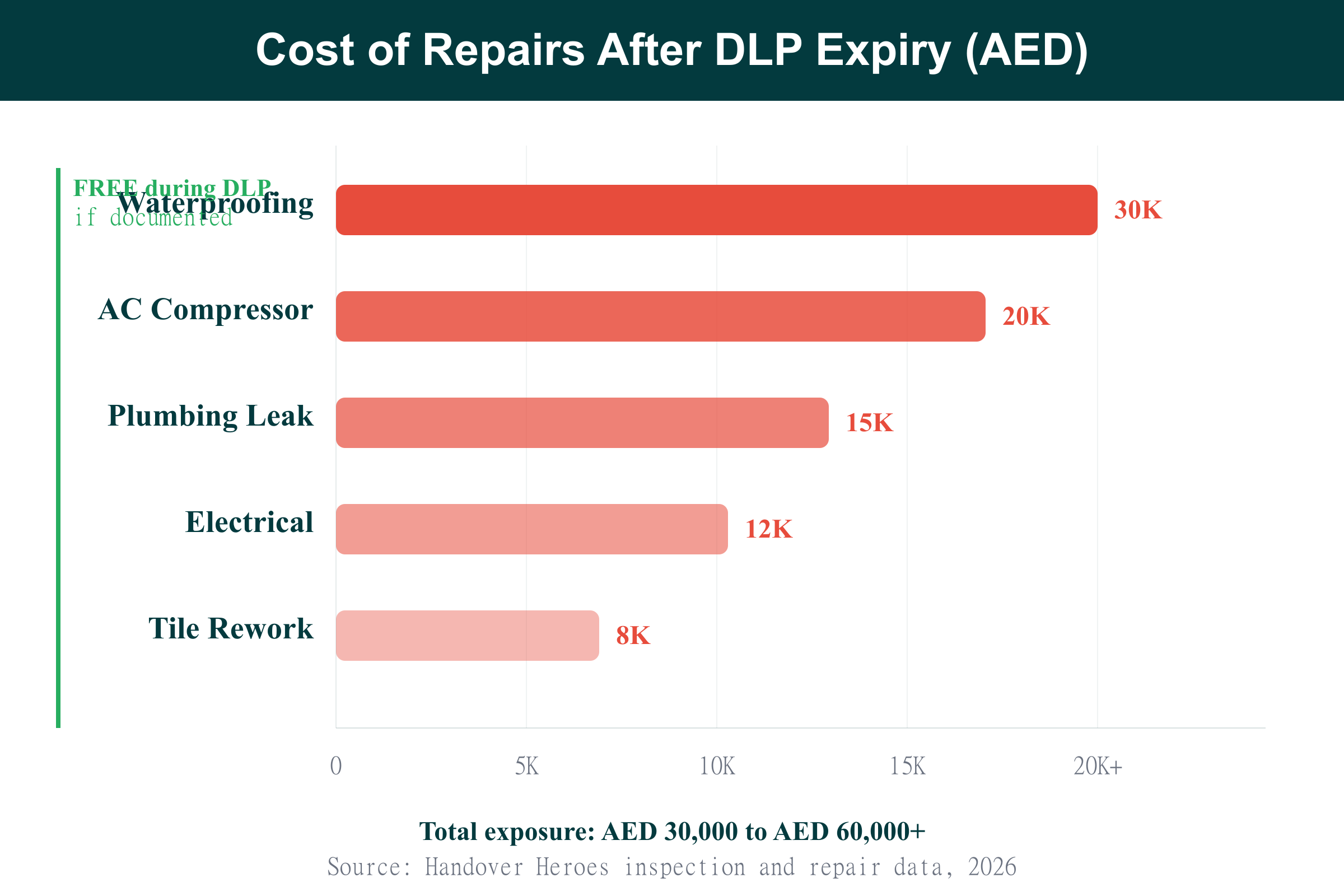
Every repair that was the developer’s responsibility yesterday becomes your financial responsibility today. Here is what that can look like in real costs:
- A hidden plumbing leak behind a bathroom wall: AED 8,000 to AED 15,000
- A full AC compressor replacement: AED 10,000 to AED 20,000
- A waterproofing failure on a balcony or terrace: AED 15,000 to AED 30,000
- Electrical rewiring for safety compliance: AED 5,000 to AED 12,000
- Replacing hollow tiles across a kitchen and two bathrooms: AED 3,000 to AED 8,000
Total potential exposure if you let your DLP expire without an inspection: AED 30,000 to AED 60,000 or more. All of which the developer would have fixed for free if the defects had been documented in time. For a full breakdown of inspection pricing, see our guide to property snagging cost in Dubai.
How to Protect Your Rights During the Defect Liability Period in Dubai
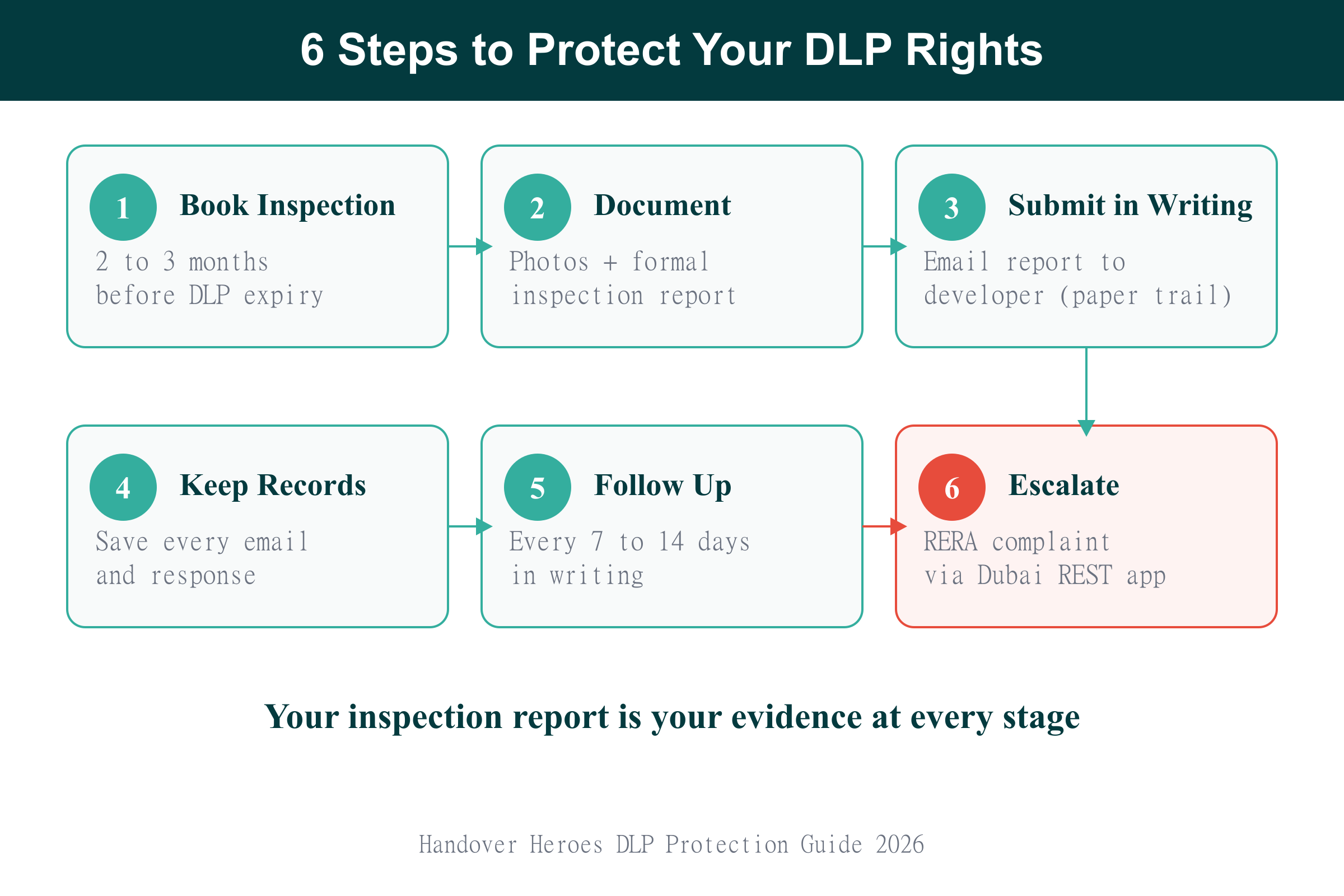
Protecting your rights during the Defect Liability Period in Dubai requires action, not assumptions. Here is exactly what to do:
Book a professional DLP inspection 2 to 3 months before your DLP expires. This gives enough time to identify defects, submit the report, and allow the developer time to schedule and complete repairs before the deadline.
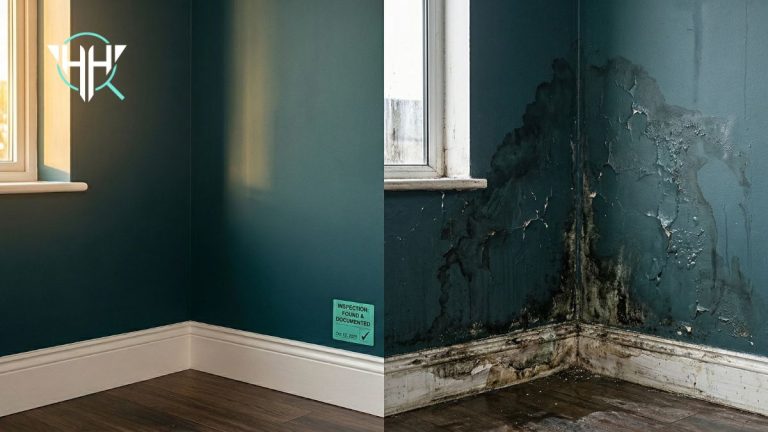
Document every defect with photographs and a formal inspection report. A professional report with annotated photographs is far more effective than a verbal complaint or an informal email listing issues. Developers take formal reports seriously because they know these documents can be used in RERA complaints and legal proceedings.
Submit the report to the developer in writing. Email is the best channel because it creates a timestamped record. Do not rely on verbal conversations, phone calls, or WhatsApp messages alone. A formal email with the inspection report attached creates a paper trail that proves you reported the defects within the DLP window.
Keep copies of all correspondence. Save every email, every response, and every acknowledgment. If a dispute arises, this documentation is your evidence.
Follow up in writing if repairs are not completed. If the developer does not respond or delays repairs, send follow-up emails on a regular schedule (every 7 to 14 days). Each follow-up strengthens your paper trail.
Escalate if necessary. If the developer refuses to act, you can file a complaint with RERA through the Dubai REST app, escalate to the Dubai Land Department (DLD), or pursue legal action through the Dubai courts. Your documented inspection report and correspondence history are essential at every escalation stage.
What Is a DLP Inspection and Why Do You Need One?
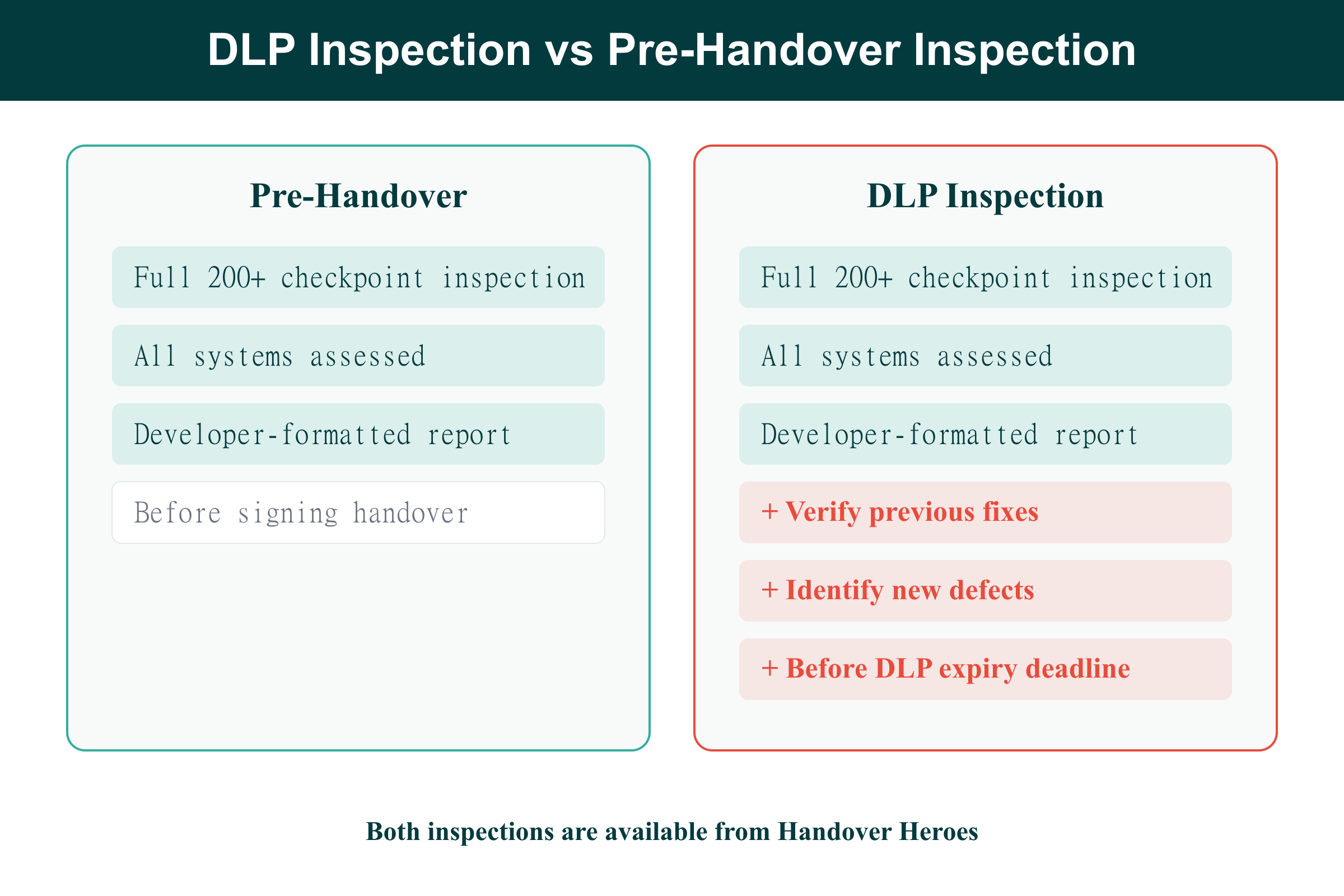
A DLP inspection is a comprehensive property assessment conducted specifically before your Defect Liability Period expires. It is different from a pre-handover inspection in one important way: it also checks whether defects you previously reported to the developer were actually fixed properly.
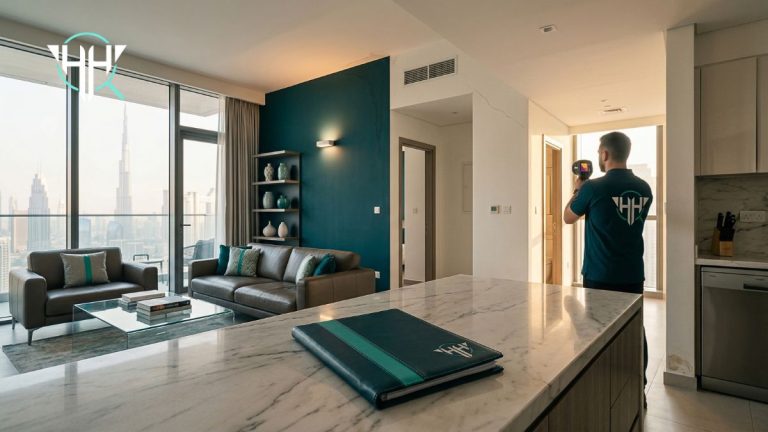
A DLP inspection covers a full re-inspection of all property systems (structural, electrical, plumbing, HVAC, finishing), identification of any new defects that have developed since handover, verification that previously reported defects were properly rectified (not just cosmetically patched), and documentation of everything in a developer-ready report format.
The purpose is simple: catch everything the developer owes you before the clock runs out.
Learn more about our DLP inspection service or book a free consultation on WhatsApp.
Can a Developer Refuse to Fix DLP Defects?
Under UAE law, developers are required to fix qualifying defects during the Defect Liability Period. However, there are situations where a refusal may be considered legitimate.
A developer can reasonably refuse to fix issues caused by homeowner damage (for example, a cracked tile caused by dropping a heavy object), normal wear and tear from daily use, or modifications the buyer made to the property after handover (for example, a plumbing issue caused by an unapproved bathroom renovation).
A developer cannot legitimately refuse to fix defects that result from poor construction quality, incorrect installation, substandard materials, or incomplete work. If your tiles are hollow because the contractor did not use enough adhesive, that is a construction defect. If your AC leaks because the condensate drain was installed incorrectly, that is a construction defect. The developer must fix these regardless of whether they consider them “minor.”
If a developer refuses to address legitimate defects, your escalation path is to file a formal complaint with RERA through the Dubai REST app, escalate to the Dubai Land Department dispute resolution centre, and if necessary, pursue the matter through the Dubai courts. Your inspection report is your primary evidence at every stage.
Frequently Asked Questions About the Defect Liability Period in Dubai
Does the DLP apply to secondary market properties?
No. The DLP is between the developer and the original buyer. If you purchase a resale property, any remaining DLP from the original handover does not automatically transfer to you unless explicitly stated in the sale agreement. This is one of the reasons a secondary market inspection is essential before buying resale.
Can I transfer my DLP to a new buyer if I sell?
This depends on the terms of your SPA and the developer’s policies. Some developers allow DLP transfer. Others do not. Check your SPA and confirm with the developer in writing before assuming the new buyer will receive DLP coverage.
What if I discover a defect after my DLP expires?
For MEP and finishing defects, you are generally out of luck. The developer is no longer obligated to fix them. However, if the defect is structural in nature (affecting the building’s integrity), you may still be covered under the 10-year structural warranty. Consult a legal professional if you believe you have a structural defect after the 1-year DLP has expired.
How do I find out when my DLP started?
Check your SPA, your official handover notice, and the building completion certificate. If you are unsure, contact the developer directly or check with the Dubai Land Department. Do not assume it started when you collected your keys.
Is the DLP the same as a home warranty?
Not exactly. A home warranty is a broader term that can include manufacturer warranties on appliances and fixtures. The DLP specifically refers to the developer’s legal obligation to fix construction and installation defects. They overlap in some areas but are not identical.
Do Not Let Your DLP Expire Without an Inspection
Your Defect Liability Period is a countdown. Every day that passes without a professional inspection is a day closer to paying for repairs the developer would have fixed for free.
If your DLP is expiring in the next 3 months, book a DLP inspection with Handover Heroes now. We identify every defect, document it in a developer-ready report, and support you through the entire rectification process.