
Property Inspection Before Buying a Resale Home in Dubai
Most buyers in Dubai associate property snagging with new-build handovers. They assume that if a property already has someone living in it, it must be fine. This is one of the most expensive assumptions a buyer can make.
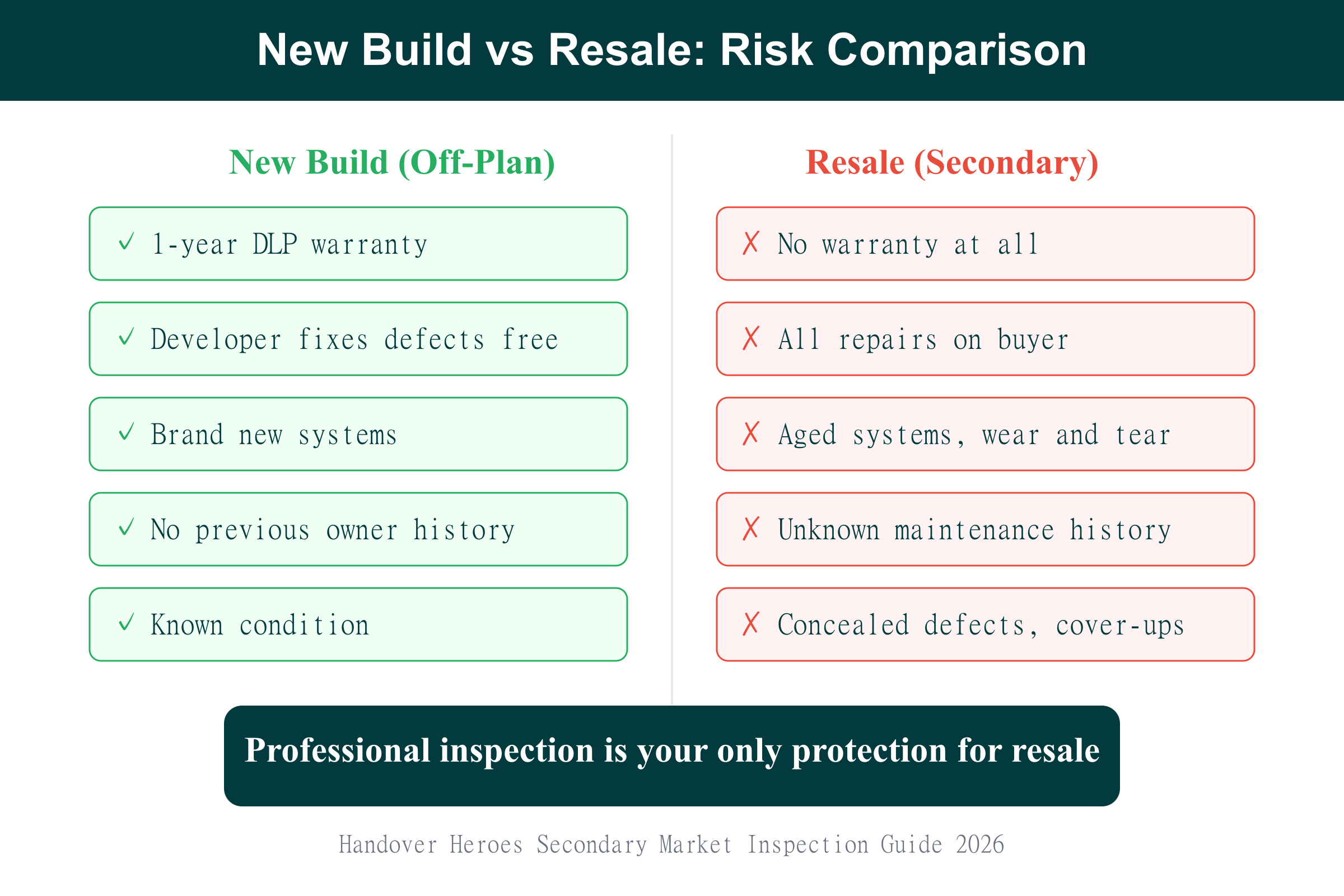
Resale properties carry higher risk than new builds because there is no developer warranty to fall back on. There is no Defect Liability Period. There is no developer obligation to fix anything after the sale completes. What you buy is what you get. A professional property inspection before buying a resale home in Dubai is the only way to know exactly what you are getting before you commit.
Why You Need a Property Inspection Before Buying Resale in Dubai
When you buy a resale property, you are inheriting the full history of that unit. Every decision the previous owner made, every repair they did or did not do, every tenant who lived there, and every defect they chose to ignore becomes your responsibility the moment the transfer is complete.
No Defect Liability Period. Unlike a new handover where the developer must fix defects for 12 months, a resale purchase comes with zero warranty. If you discover a plumbing leak three weeks after moving in, that repair is entirely on you.
Concealed defects. Previous owners may have hidden defects intentionally (a fresh coat of paint over cracked walls) or unintentionally (they simply never noticed the slow leak under the kitchen sink). Either way, you inherit the problem.
Renovations that mask deeper issues. A bathroom that was recently renovated may look beautiful on the surface. But if the renovation was done without proper waterproofing, the new tiles are sitting on top of a problem that will surface within months. Cosmetic upgrades can hide structural, plumbing, or electrical issues that are far more expensive to fix than the renovation cost.
Tenant-occupied properties. If the property has been rented, the tenant may not have reported maintenance issues to the landlord. AC systems may have been running at reduced efficiency for years. Minor leaks may have been ignored. Damage behind furniture or appliances may never have been seen.
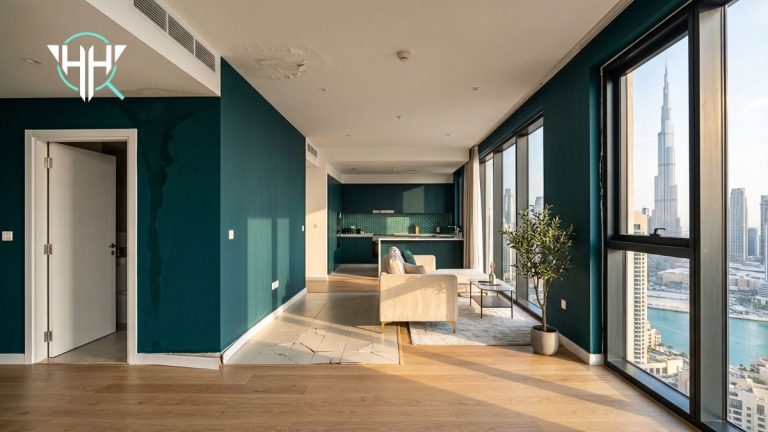
Furniture staging. When you view a property for sale, the furniture, rugs, and decor are arranged to show the space at its best. They also cover walls, floors, and corners where damage, damp, or defects may be hiding. A professional inspection assesses the property’s condition, not its staging.
What Does a Secondary Market Property Inspection Cover?
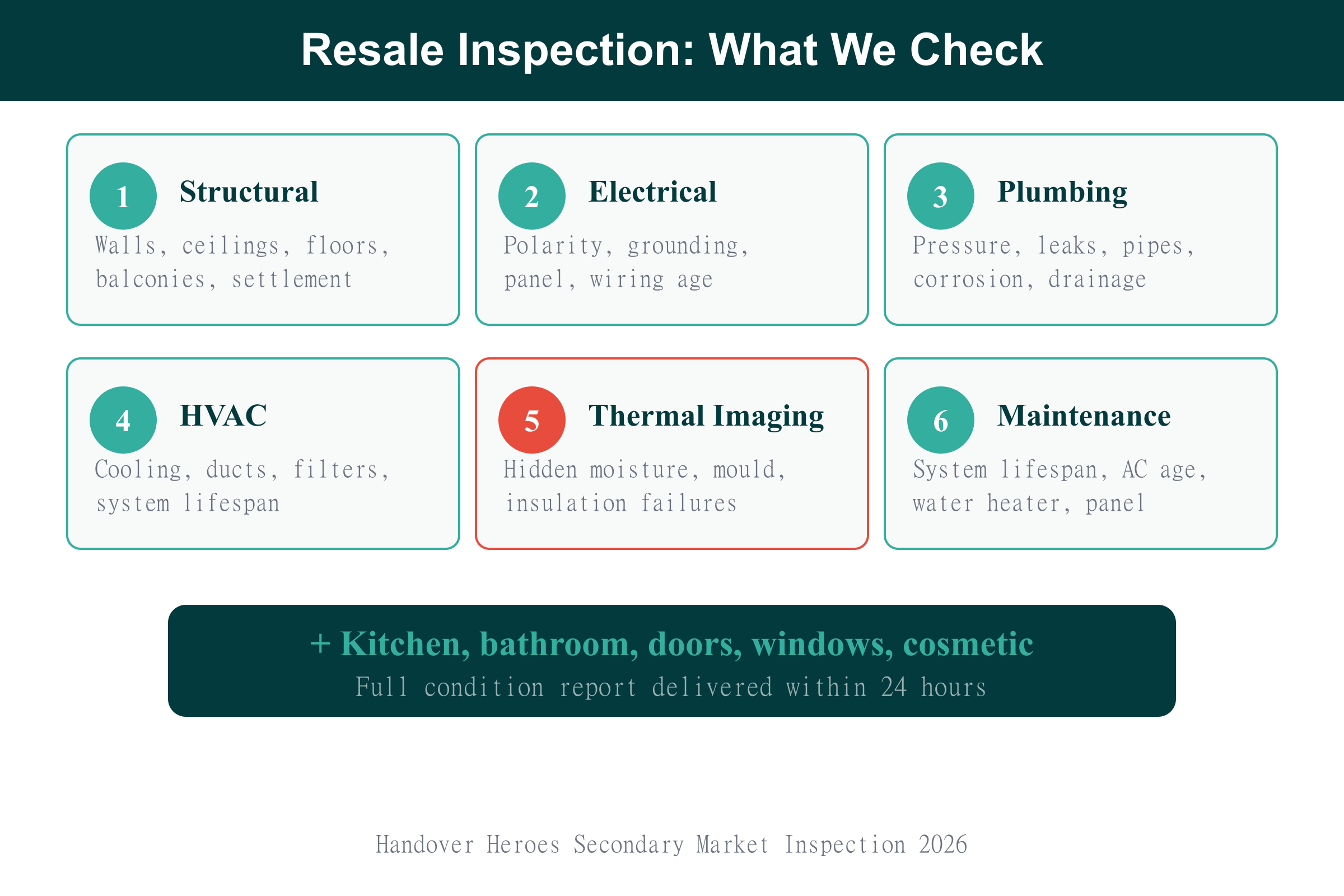
A secondary market property inspection is a comprehensive technical assessment of the property’s current condition. Unlike a new-build snagging inspection that focuses on construction defects, a resale inspection evaluates both construction quality and the effects of age, use, and maintenance over time.
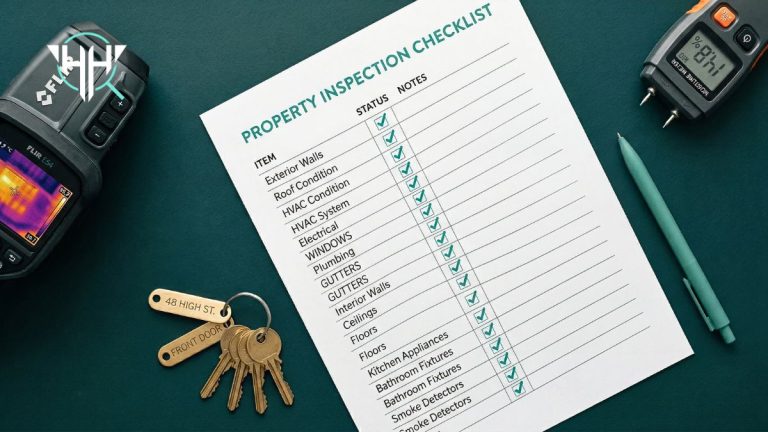
The inspection covers a full structural condition assessment including walls, ceilings, floors, and balconies. Electrical systems and wiring integrity are tested for safety, correct polarity, grounding, and capacity. Plumbing is assessed for water pressure, drainage function, leak detection, and pipe condition. AC and HVAC performance is measured for cooling efficiency, duct integrity, and system age. Thermal imaging is used to detect hidden moisture, damp, mould, and insulation failures that are invisible to the eye.
Kitchen and bathroom condition is assessed in detail because these are the highest-risk areas for water damage and the most expensive rooms to repair. Doors, windows, and security features are tested for function, alignment, and seal integrity. Balconies and external areas are checked for waterproofing, drainage, and structural condition. And an overall maintenance assessment provides an estimate of the remaining lifespan of key systems like the AC compressor, water heater, and electrical panel.
For a detailed breakdown of every inspection point, see our full snagging checklist.
Common Hidden Defects in Dubai Resale Properties
Hidden Water Damage and Mould
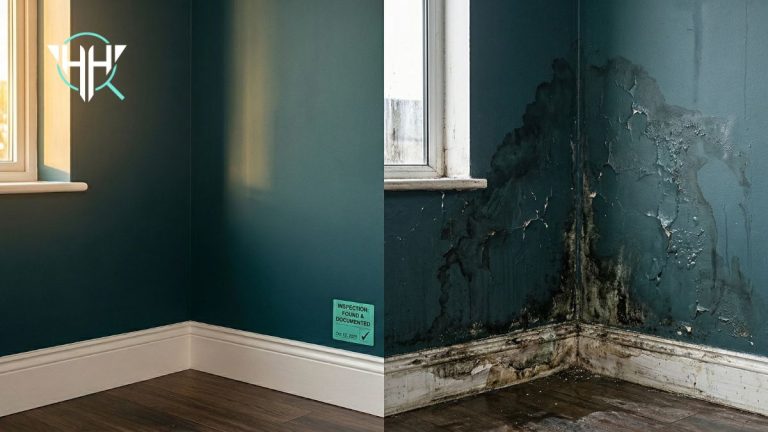
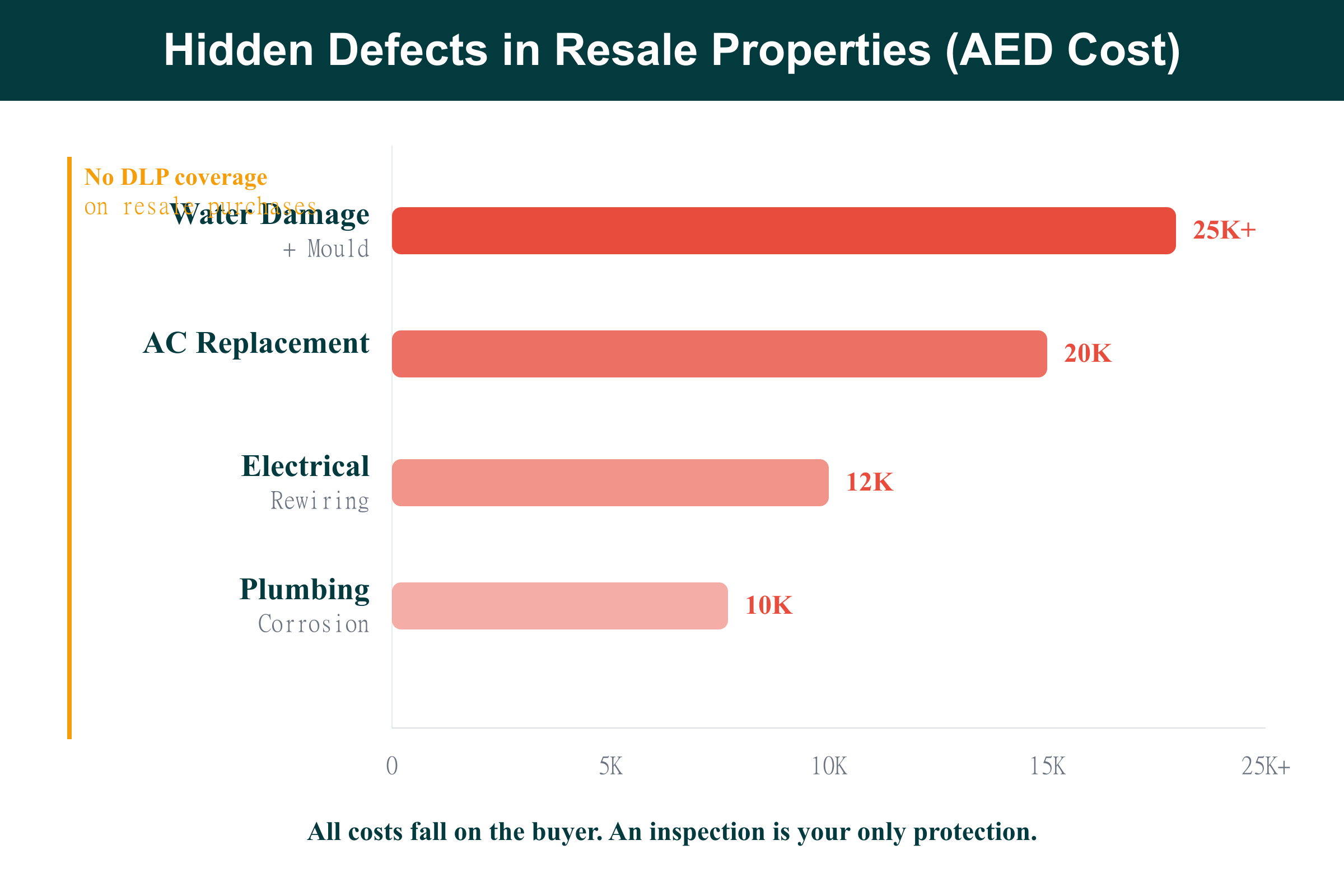
Water damage is the most serious hidden defect in Dubai resale properties. It is often behind walls, under flooring, or inside ceiling voids where it is completely invisible during a casual viewing. Older buildings and properties with poor bathroom waterproofing are especially vulnerable. A slow leak that has been dripping for months or years can cause structural damage to walls and slabs, mould growth behind surfaces, and deterioration of electrical systems in the affected area.
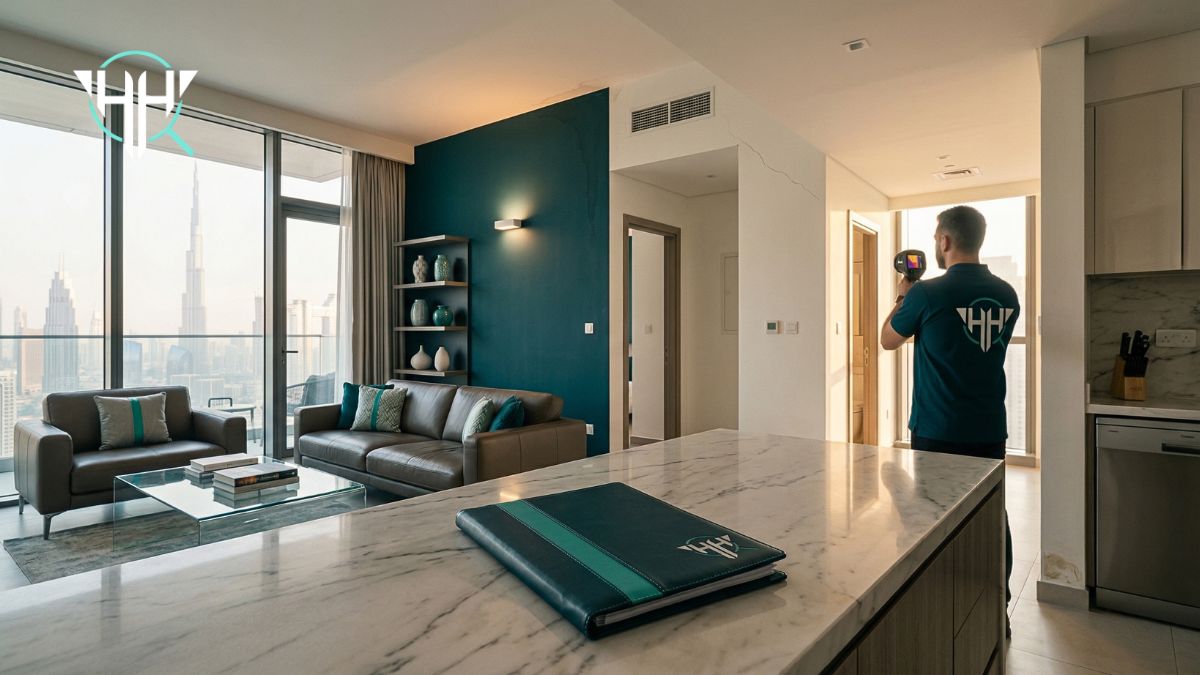
Thermal imaging is the only reliable way to detect hidden moisture without opening walls. A professional inspector can identify moisture patterns that indicate active leaks, historical water damage, or failed waterproofing in minutes.
Electrical Wear and Outdated Wiring
Properties that are 10 or more years old may have electrical systems that no longer meet current safety standards. Circuit breakers may be undersized for the load. Wiring insulation may have degraded. Sockets may have been added by tenants or previous owners without proper electrical certification. Overloaded circuits, missing earth connections, and deteriorated wiring all create fire and safety risks that are not visible without testing.
AC System Deterioration
Air conditioning systems in Dubai work harder than almost anywhere else in the world. Compressors, duct systems, and condensate drains all degrade over time. A 7 to 10 year old AC system may still function but at significantly reduced efficiency, costing hundreds of extra dirhams per month in electricity. A full system replacement can exceed AED 15,000 to AED 25,000 depending on the property size and unit type.
A property inspection tests AC performance under load and provides an honest assessment of remaining system life, giving you the information to budget for replacement or negotiate the cost with the seller.
Plumbing Corrosion and Slow Leaks
Older Dubai properties, particularly those built before 2010, may have galvanized steel pipes that corrode internally over time. The corrosion restricts water flow (causing low pressure), creates weak points where leaks develop, and can contaminate the water supply. Slow leaks under floors or behind walls cause gradual damage that compounds over months and years.
Cosmetic Cover-Ups
Fresh paint is the oldest trick in the resale market. A newly painted property looks clean and move-in ready. But fresh paint also covers wall cracks, damp stains, plaster damage, and previous mould remediation. New tiles may have been laid over an uneven or damaged substrate without proper preparation. Silicone patching around bathrooms may be covering failed waterproofing rather than fixing it. A professional inspector knows where to look and what questions the cosmetics are designed to prevent you from asking.
For more detail on the types of defects found during inspections, see our guide to common property defects in Dubai.
How to Use Your Inspection Report to Negotiate
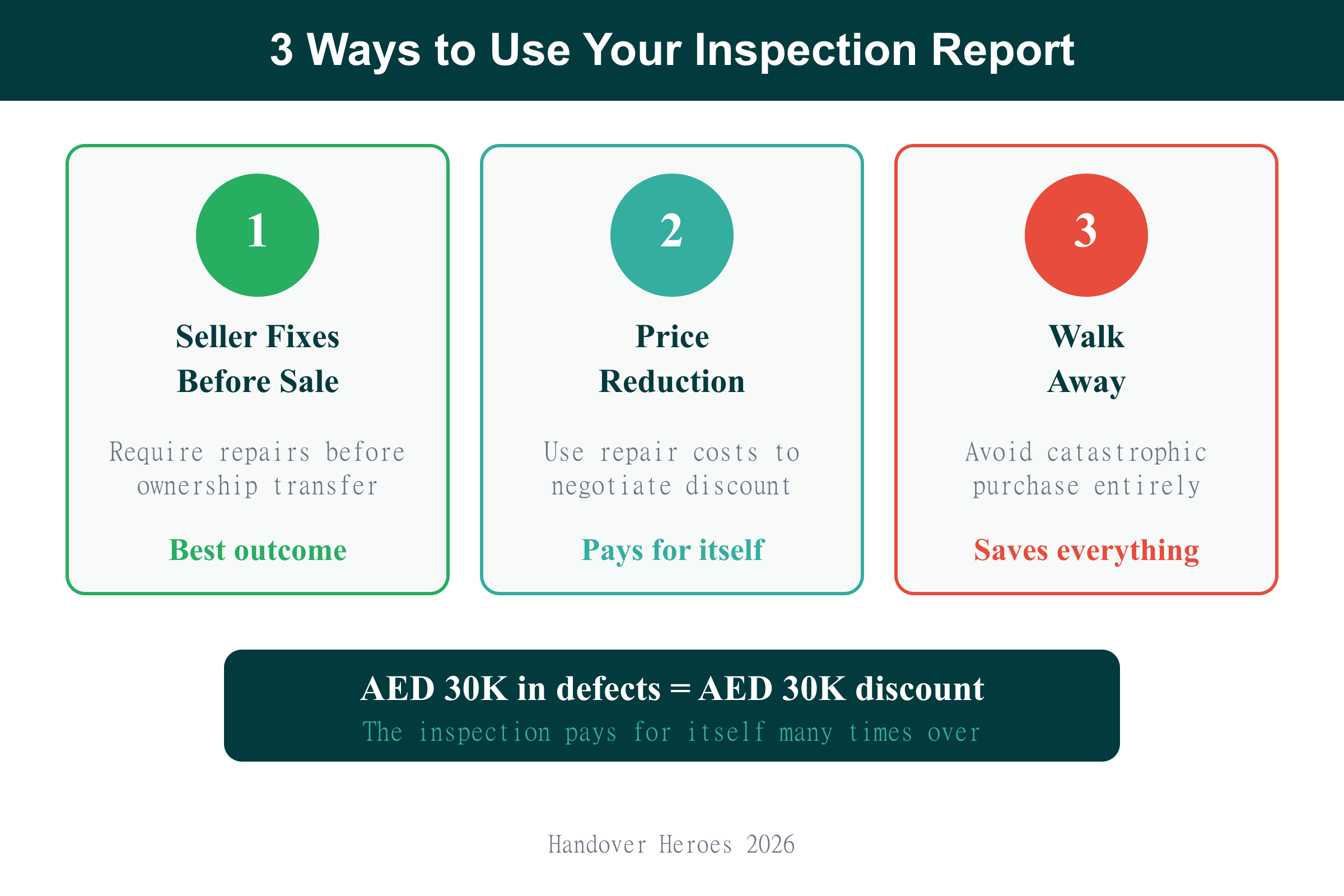
Your property inspection report is not just a list of problems. It is a negotiation tool. Every defect identified in the report has a repair cost, and that cost is leverage you can use in three ways.
Scenario 1: Request the seller to fix defects before completion. If the inspection reveals issues like a leaking shower, a faulty AC unit, or electrical safety concerns, you can require the seller to complete repairs before the ownership transfer goes through. This is the cleanest outcome because you receive the property in the condition you expected.
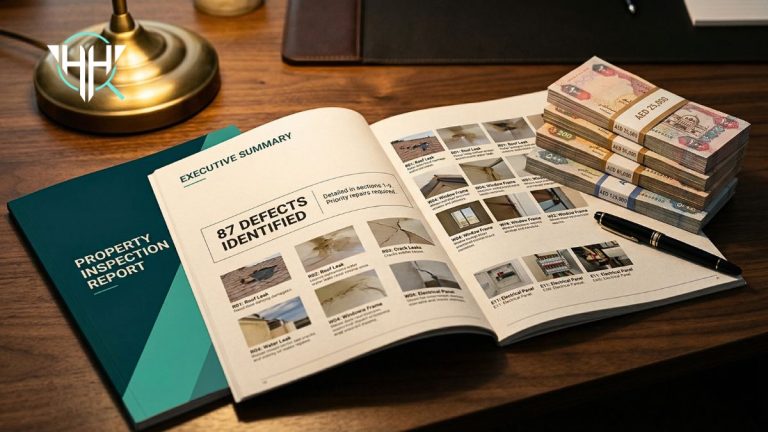
Scenario 2: Negotiate a price reduction. If the seller cannot or will not make repairs, you can use the total estimated repair cost to negotiate a lower purchase price. An inspection report showing AED 30,000 in required repairs gives you concrete evidence to justify a AED 30,000 discount. This is where the inspection pays for itself many times over. For context on inspection pricing, see our guide to property snagging cost in Dubai.
Scenario 3: Walk away. If the inspection reveals defects that are too significant, too expensive, or too risky (such as major structural issues or hidden mould infestation), you can withdraw from the purchase before committing any non-refundable funds. The inspection cost is a small price to pay for avoiding a catastrophic purchase.
When Should You Book a Resale Property Inspection?
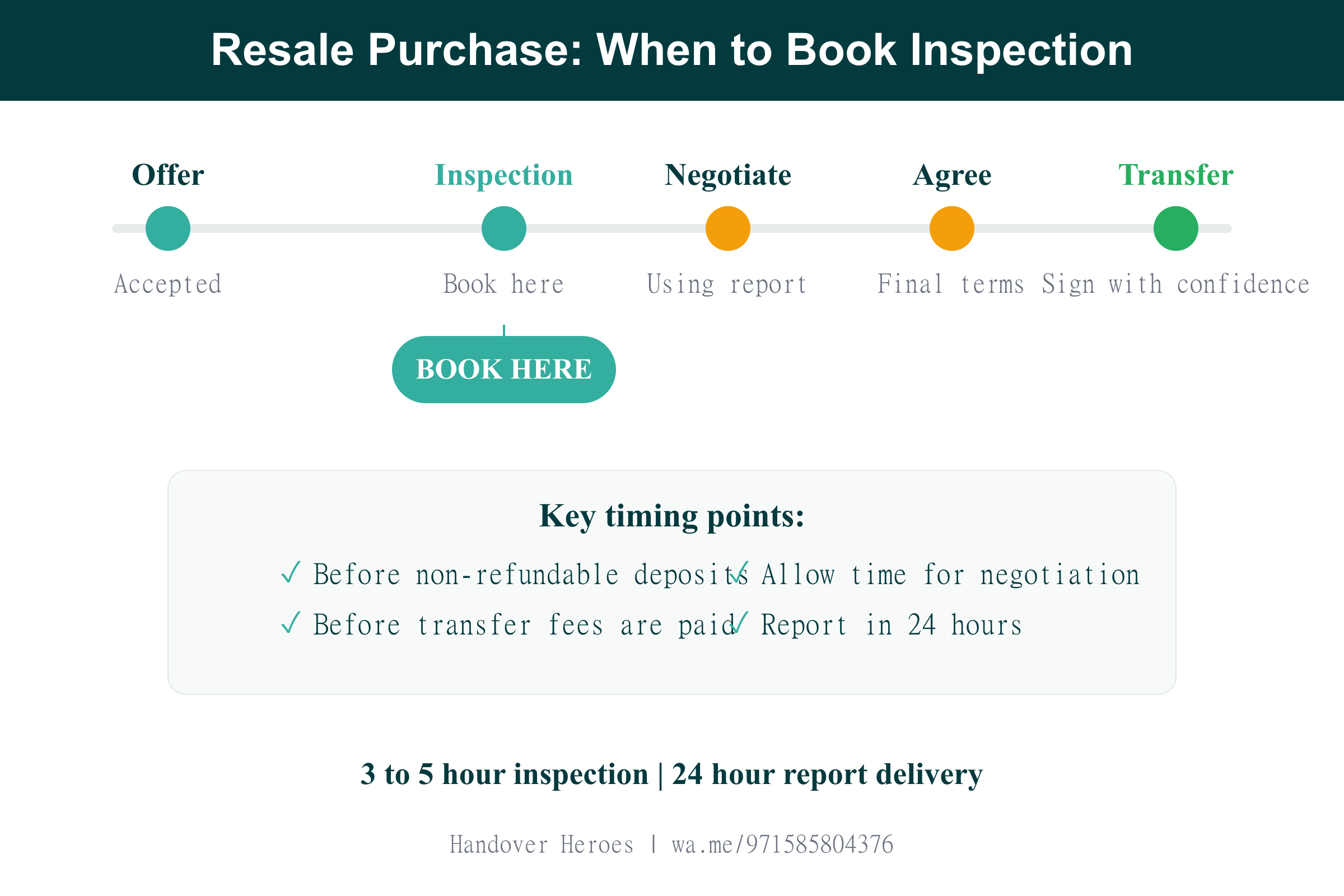
The ideal timing for a property inspection before buying a resale home in Dubai is after your offer has been accepted but before the ownership transfer is finalised. Specifically:
- Book the inspection during the due diligence period, before you pay any non-refundable deposits or transfer fees via Dubai REST
- Make sure there is enough time between the inspection and the transfer date to negotiate repairs or a price adjustment if needed
- If possible, arrange the inspection before the property is fully emptied of furniture so you can also see how the space looks unfurnished
Most secondary market inspections can be completed within 3 to 5 hours depending on property size, and the report is delivered within 24 hours. This means you can have a complete condition assessment in hand within a day or two of booking.
Frequently Asked Questions About Property Inspection for Resale in Dubai
Is a property inspection required by law for resale purchases in Dubai?
No. Property inspections for resale purchases are not legally required in Dubai. However, they are strongly recommended because the buyer assumes all responsibility for the property’s condition from the moment of transfer. Without an inspection, you are relying entirely on trust and your own observations during a brief viewing.
Can I inspect a property that still has tenants?
Yes, with the seller’s permission. The seller or their agent will need to coordinate access with the existing tenant. Inspecting a tenanted property is still valuable, though some areas may be partially obstructed by the tenant’s belongings.
How long does a resale property inspection take?
For apartments, typically 2 to 4 hours. For villas and larger properties, 4 to 6 hours. The report is delivered within 24 hours of the inspection.
What if the seller refuses to allow an inspection?
A seller who refuses to allow a professional inspection is a significant red flag. It suggests they are aware of issues they do not want documented. In this situation, you should seriously reconsider the purchase. If the seller is acting through a RERA-registered real estate agent, you can request that the agent facilitates the inspection as part of standard due diligence.
Know Exactly What You Are Buying
A resale property in Dubai is a significant investment. A property inspection before buying gives you the full picture: every defect, every risk, every repair cost, and every negotiation opportunity. It takes a few hours and costs a fraction of what a single undetected defect could cost you after the sale.
Book a secondary market inspection with Handover Heroes or learn more on our secondary market inspection page.