AC Airflow at Handover: Why a Working Unit Can Still Be a Defect
Air conditioning is the system owners are least equipped to judge and most dependent on. In the UAE it runs for the majority of the year, it is the largest single line on most electricity bills, and the difference between a system performing correctly and one performing at seventy percent is entirely invisible on handover day.
The unit switches on. Cool air comes out. Almost everyone stops there. Judging a new system by that single moment is the gap AC airflow snagging exists to close, and for the handover rights that sit behind it the UAE Government housing information portal is a useful reference.
The Problem With “It Works”
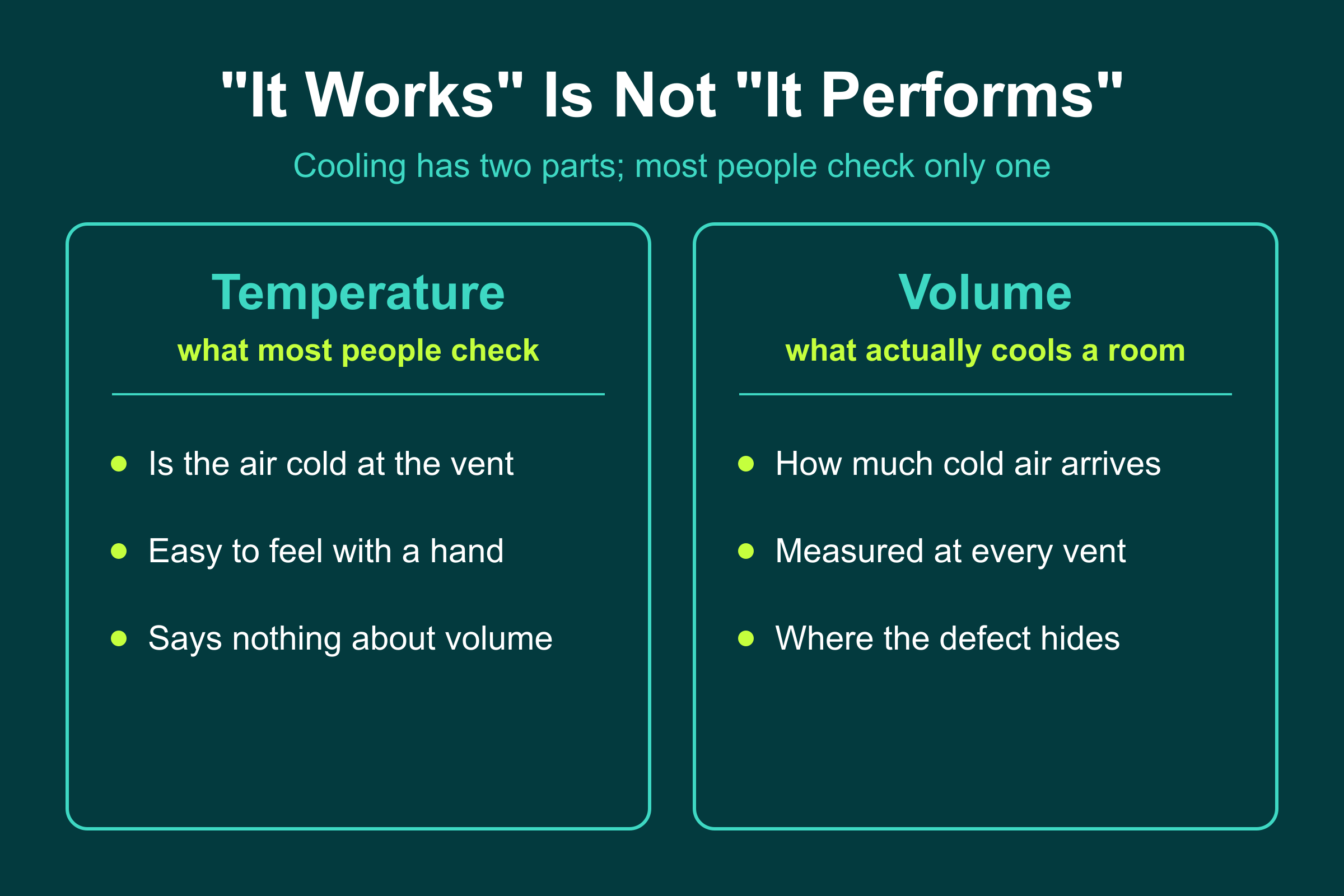
Cooling capacity is a function of two things: the temperature difference the unit achieves, and the volume of air it moves. Most people only ever assess the first, by holding a hand under a vent.
A system can produce properly cooled air and still deliver far less of it than designed. The room then takes longer to reach temperature, the unit runs longer to compensate, and the thermostat is satisfied late or not at all during peak months.
You will not notice this in a handover viewing conducted in a cool month with the property empty. You will notice it in July, in a furnished room, when one space never quite settles and the bill arrives.
What Reduces Airflow in a New Property
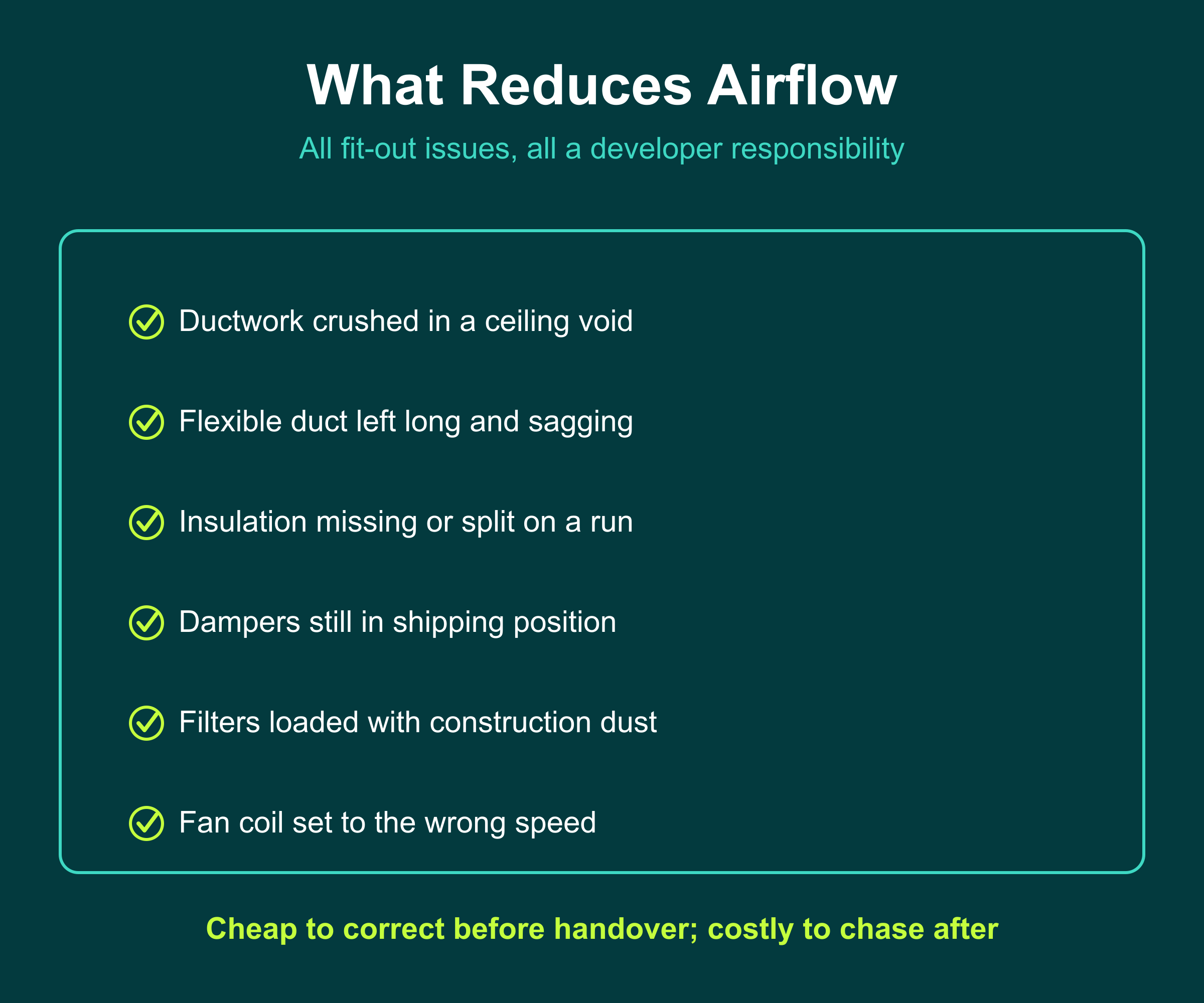
The causes we document most often are all fit-out issues rather than equipment failures.
Ductwork crushed or kinked where it passes through a ceiling void, usually where services compete for space.
Flexible duct runs left too long and sagging, which adds resistance the system was never designed to overcome.
Insulation missing or split on duct sections, which does not reduce airflow directly but loses cooling capacity before the air arrives.
Diffusers and grilles fitted with the dampers still in their shipping position, partially closed.
Filters left in place from construction, loaded with fit-out dust.
Fan coil units commissioned at the wrong speed setting for the zone they serve.
Every one of these is a developer responsibility, and every one is cheap to correct before handover.
How AC Airflow Snagging Measures Each Vent
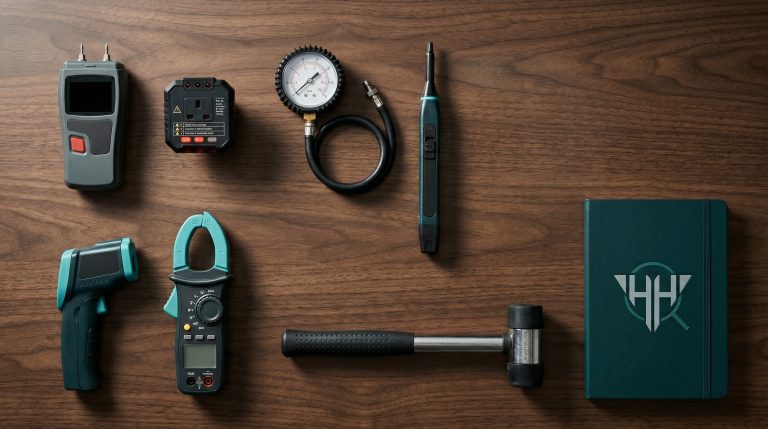
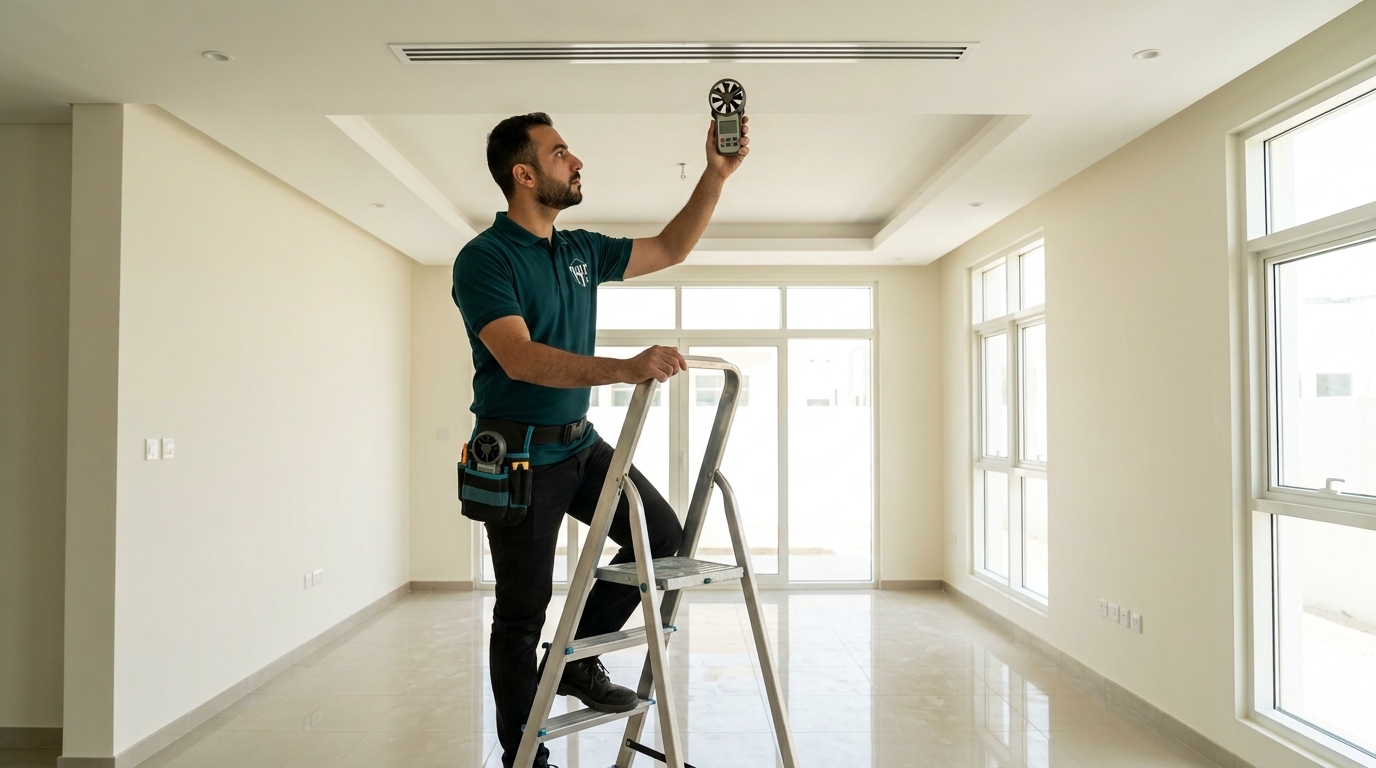
We measure at each diffuser with an anemometer, which reads air velocity at the outlet. Combined with the diffuser’s face area, that gives the volume of air being delivered at that point. That is the discipline behind AC airflow snagging: a recorded figure at each vent rather than an impression at one.
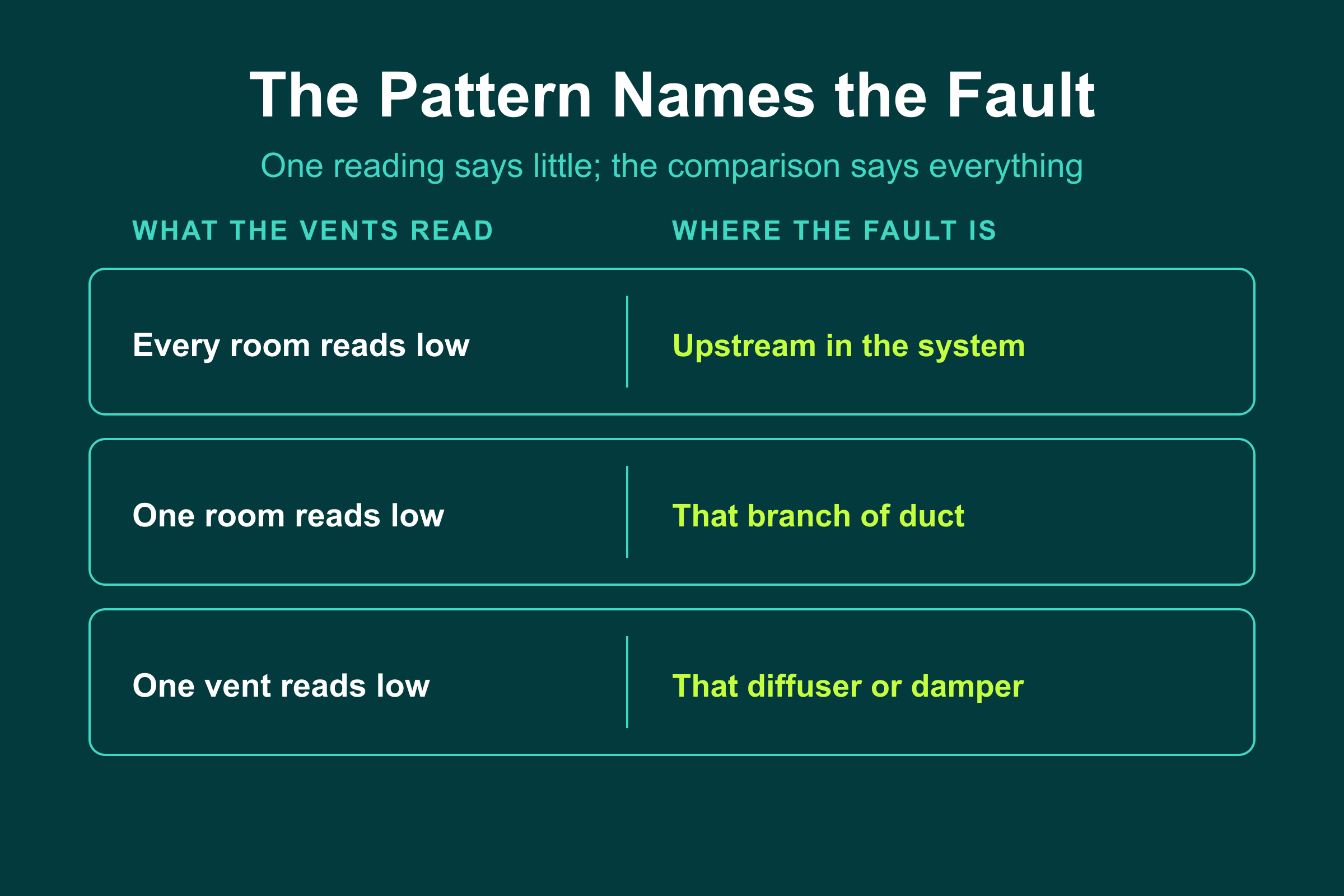
The useful output is not a single number but a comparison across the property. Two bedrooms of similar size served by the same system should read broadly similar. When one reads materially lower, there is a reason, and that reason is upstream in the ductwork.
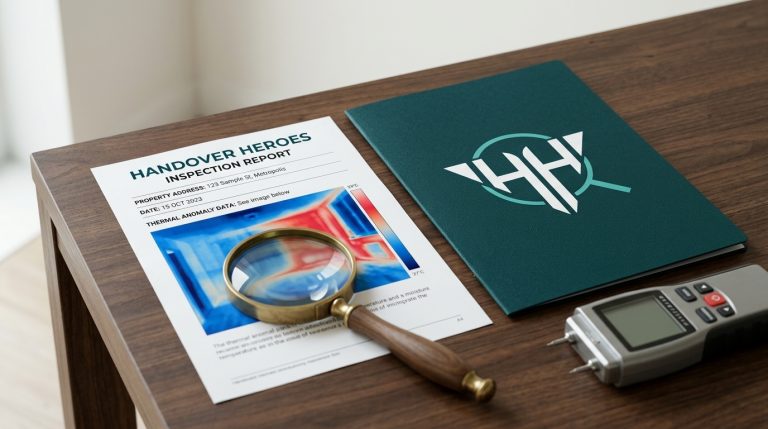
We also read delivered air temperature at the vent with an infrared thermometer, the same thermal imaging method we use to find hidden moisture, because airflow and temperature together tell you whether the system is performing or merely running.
The Cost of Getting This Wrong
An underperforming AC system does not fail. It just costs you continuously.
A system running longer to achieve the same result consumes more power every day you own the property, through every summer. Over the years that most owners hold a home, an airflow defect that would have cost the developer very little to correct at handover becomes one of the more expensive things you did not check.
There is also a comfort cost that owners underestimate. A bedroom that never quite cools at night is a problem you live with, and retrofitting duct corrections in an occupied and finished property is invasive work involving ceiling access.
What To Check Yourself
The rough version below is not AC airflow snagging, but it will tell you whether a room is worth measuring properly. At your handover viewing, switch every unit on and let them run while you inspect other things. Then come back and check each room.
Hold a hand under each diffuser and compare the strength of the airflow between rooms of similar size, not the temperature. You are looking for one room that is obviously weaker than its neighbours.
Look up at each diffuser and see whether the damper blades behind it are visibly closed or angled shut.
Listen for a unit that is noticeably louder than the others, which can indicate it is working against resistance.
Our Honest Advice
Judge the AC on volume, not on temperature. Cool air that arrives too slowly is a defect, and it is the single most expensive defect to live with in this climate because it charges you every month rather than once. Because that defect is a developer responsibility, documenting it before you sign keeps it their obligation to fix within the defect liability period, under the Real Estate Regulatory Agency (RERA) framework.
If you do only one measured test at handover, make it this one.
Handover Heroes carries out AC airflow snagging at every vent as part of a full property snagging, alongside all 13 systems and 500+ checkpoints, with a documented report and video proof within 24 hours. You can estimate the scope and cost with our snagging cost calculator.
WhatsApp +971 58 580 4376 or visit handoverheroes.ae.