Hollow Tiles in UAE Properties: Why They Matter and How We Find Them
A floor can look perfect and still hide hollow tiles, one of the most common and costly defects in a UAE handover. These are tiles that have not bonded properly to the surface beneath them, and they are invisible from above. They look identical to a perfectly laid tile. The difference only shows when they crack, and by then the damage is done.
This guide explains what hollow tiles are, why they are so common in the UAE, what they cost to fix, and how a professional snagging detects every one of them before you take handover. For broader buyer guidance, the UAE Government housing information portal is a useful reference.
What Are Hollow Tiles?
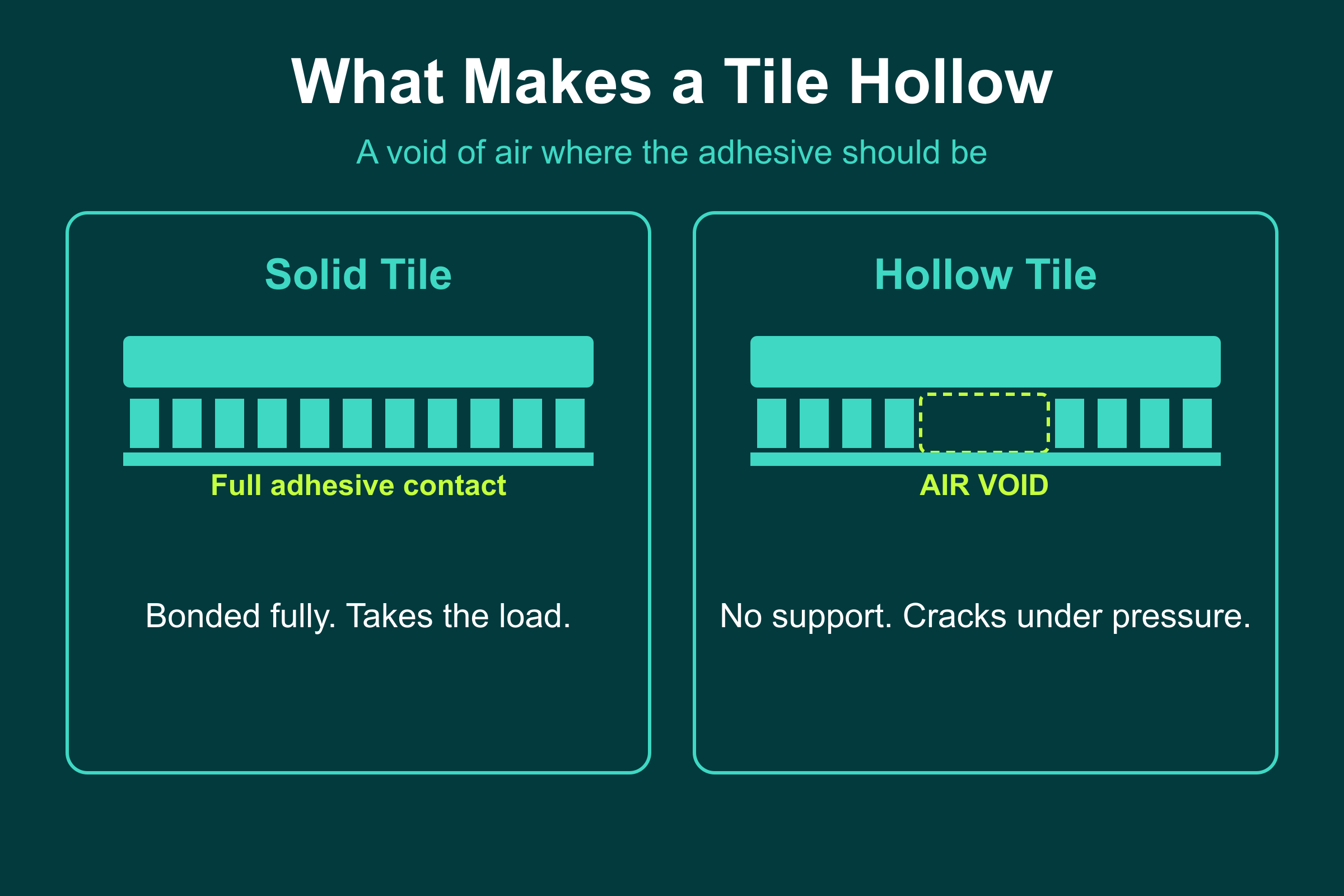
When a tile is laid correctly, the adhesive bonds it fully to the surface beneath, leaving no air gaps. A hollow tile is one where the adhesive did not bond properly, leaving a void of air between the tile and the floor or wall.
That void is the problem. A tile with full adhesive support can take the weight of furniture, foot traffic, and daily use. A hollow tile has nothing supporting it from below in the void area. Apply enough pressure, the weight of a sofa leg, a dropped object, or simply repeated foot traffic, and it cracks.
Why Hollow Tiles Are So Common in the UAE
Hollow tiles are one of the most frequently found defects in UAE handovers, for a few reasons. The pace of construction is fast, and tiling is often done at speed. Large format tiles, popular in modern UAE properties, are more prone to incomplete adhesive coverage because of their size. And the issue is genuinely invisible at handover, so without testing, it passes unnoticed until the buyer has moved in and the warranty may have lapsed.
This is exactly the kind of defect that separates a professional snagging from a visual walkthrough. You cannot see a hollow tile. You have to test for it.
How Professional Snagging Detects Hollow Tiles
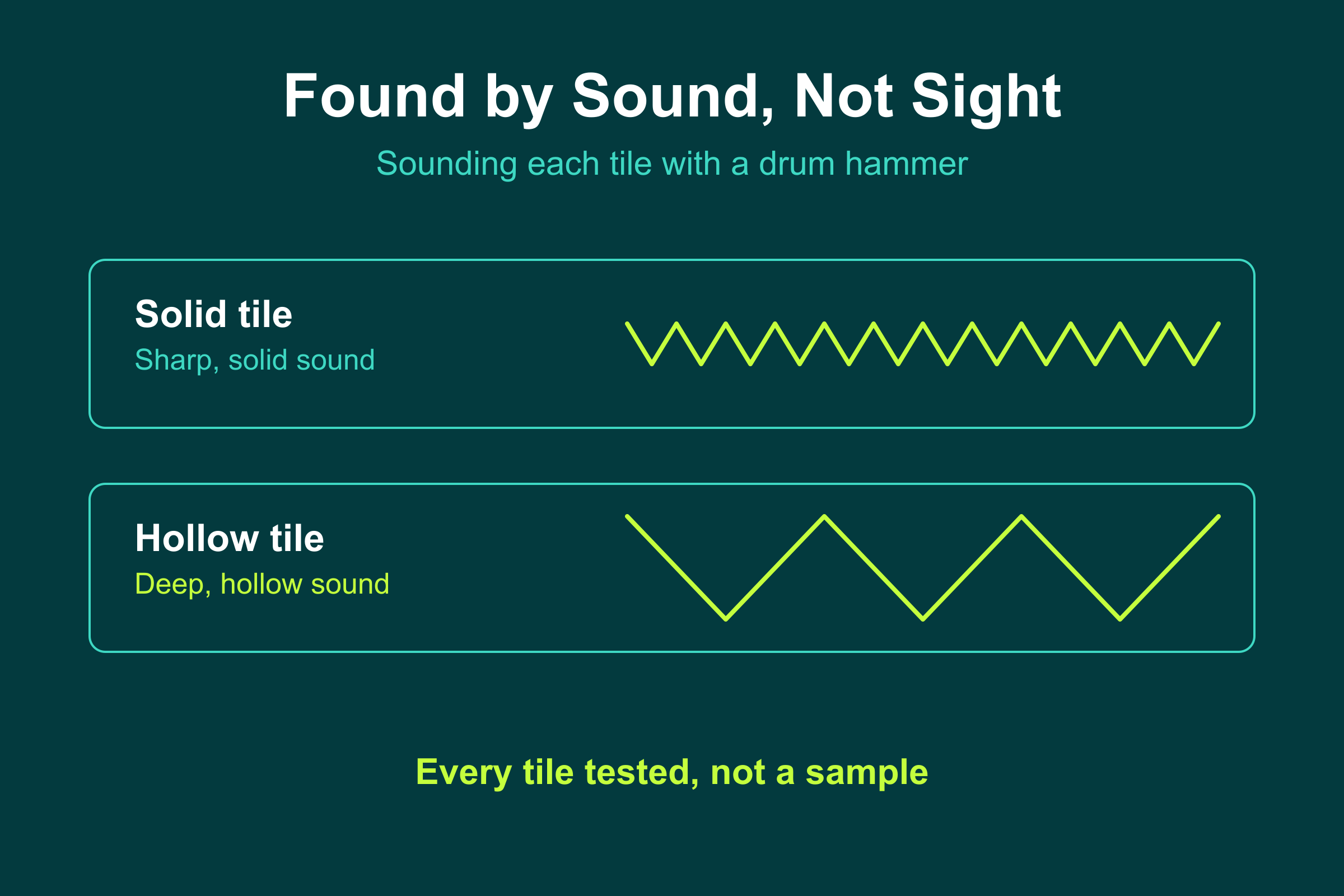
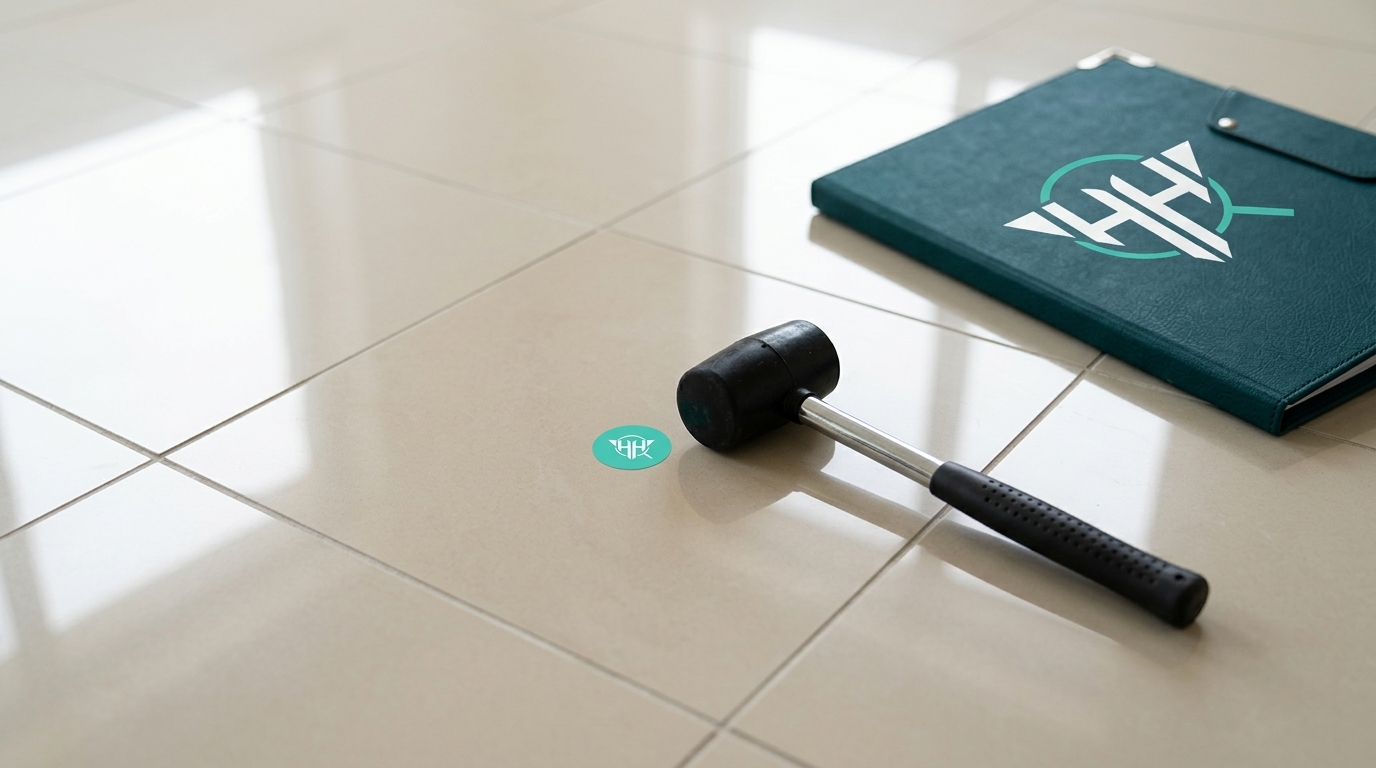
The detection method is precise and systematic. A professional snagging involves sounding, or tapping, every floor and wall tile in the property using a drum hammer, a specialist tool designed for exactly this purpose. You can see it in our guide to snagging tools and equipment.
A solid, well-bonded tile produces a sharp, solid sound when tapped. A hollow tile produces a distinctly different, deeper, hollow sound, because of the air void beneath it. A trained inspector can hear the difference immediately.
Every tile is tested, not a sample. In a villa, that can mean hundreds of tiles across multiple floors and wet areas. Each hollow tile found is marked and documented in the report with its location, so the developer or contractor knows exactly which tiles need attention.
Beyond hollow detection, the tiling inspection also covers cracks, chips, and surface damage, grouting consistency and completeness, floor level and lippage between adjacent tiles, correct slope in wet areas, skirting tile alignment, and silicone expansion joints.
What Hollow Tiles Cost to Fix
The cost of fixing them depends on how many there are and where. The real expense is not just the tile itself, it is the labour to remove the cracked tile, prepare the surface, source a matching replacement, and re-lay it, often with the risk of damaging adjacent tiles in the process.
For new builds, the critical point is timing. If they are documented during a pre-handover snagging, the developer is responsible for fixing them at their cost, an obligation backed by the Real Estate Regulatory Agency (RERA). If they are discovered after you have signed and moved in, and especially after the warranty period has closed, the cost falls entirely on you. A handful of cracked tiles replaced after move-in can cost far more than the entire snagging. It is one of the most common handover defects we document.
Why Timing Matters
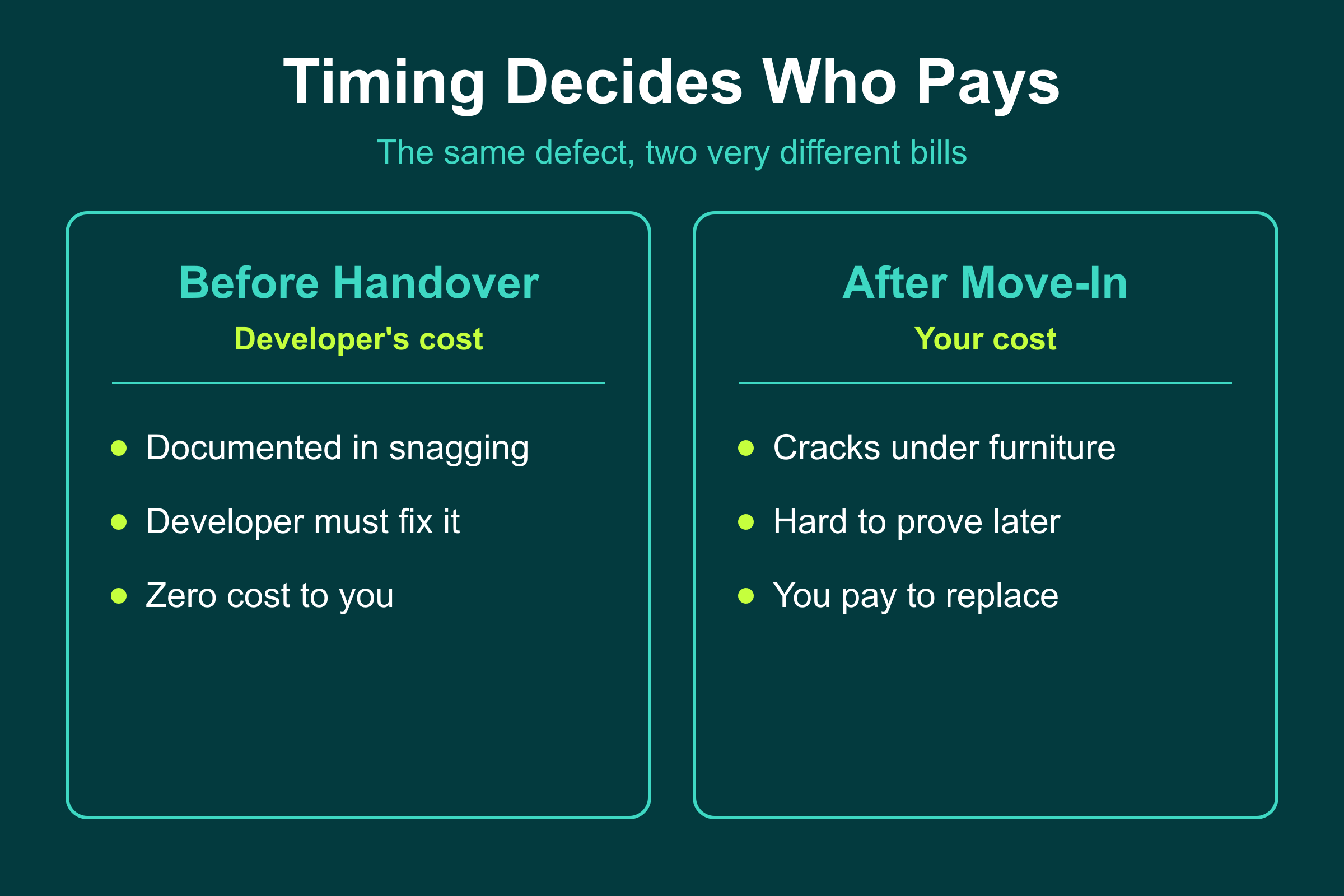
A hollow tile rarely cracks on day one. It cracks weeks or months later, under the furniture you have placed on it, after you have moved in and settled. By then, proving it was a construction defect rather than accidental damage is difficult, and the developer is unlikely to accept responsibility.
This is why they must be caught before handover, before the property transfers to your name through the Dubai Land Department. A documented hollow tile is the developer’s responsibility. An undocumented one that cracks later is your problem.
Frequently Asked Questions
How can I tell if a tile is hollow myself?
You can tap a tile and listen for a hollow sound, but doing this systematically across hundreds of tiles, and reliably distinguishing the sounds, takes a drum hammer and a trained ear. Most buyers find that a professional snagging detects far more hollow tiles than a casual self-check, and provides documented evidence the developer must act on.
Will a hollow tile definitely crack?
Not always immediately, but a hollow tile is at significantly higher risk of cracking because it lacks support beneath it. Tiles under furniture or in high-traffic areas are most likely to fail. The safe approach is to have them fixed before you take handover, while it is still the developer’s cost.
Are hollow tiles a developer defect?
Yes, hollow tiles result from improper installation, which is a construction defect. For new builds within the warranty period, the developer is responsible for fixing documented hollow tiles. This is why pre-handover snagging matters: it documents the defect while accountability still sits with the developer.
How many hollow tiles are normal in a UAE handover?
It varies widely, but it is common to find anywhere from a few to several dozen hollow tiles in a handover property, particularly with large format tiles. The only way to know how many your property has is to have every tile tested.
Book Your Snagging
Have every tile in your property tested for hollow tiles and other defects, alongside 500+ checkpoints across all 13 systems. Apartments from AED 500. Villas and townhouses from AED 1,400. Report within 24 hours.
Book your snagging on WhatsApp, estimate the price with our snagging cost calculator, or visit our pre-handover snagging service for details.
Handover Heroes is the UAE’s trusted property inspection service. We inspect every inch, every tile included, so you do not sign for hidden surprises.