What Snagging Tools Does a Professional Inspection Company Use in the UAE?
The difference between a walkthrough and a professional snagging is the snagging tools. Anyone can spot a scratched wall or a chipped tile with their eyes. Finding hidden moisture behind a wall, reverse polarity in a socket, or weak water pressure inside a pipe takes calibrated instruments and the training to use them.
When you book a professional snagging in the UAE, you are not paying for someone to walk around with a clipboard. You are paying for an engineering-led inspection backed by industrial grade, calibrated snagging tools. This guide explains exactly what those tools are and what each one finds. For broader buyer guidance, the UAE Government housing information portal is a useful reference.
Why Snagging Tools Matter More Than Eyes
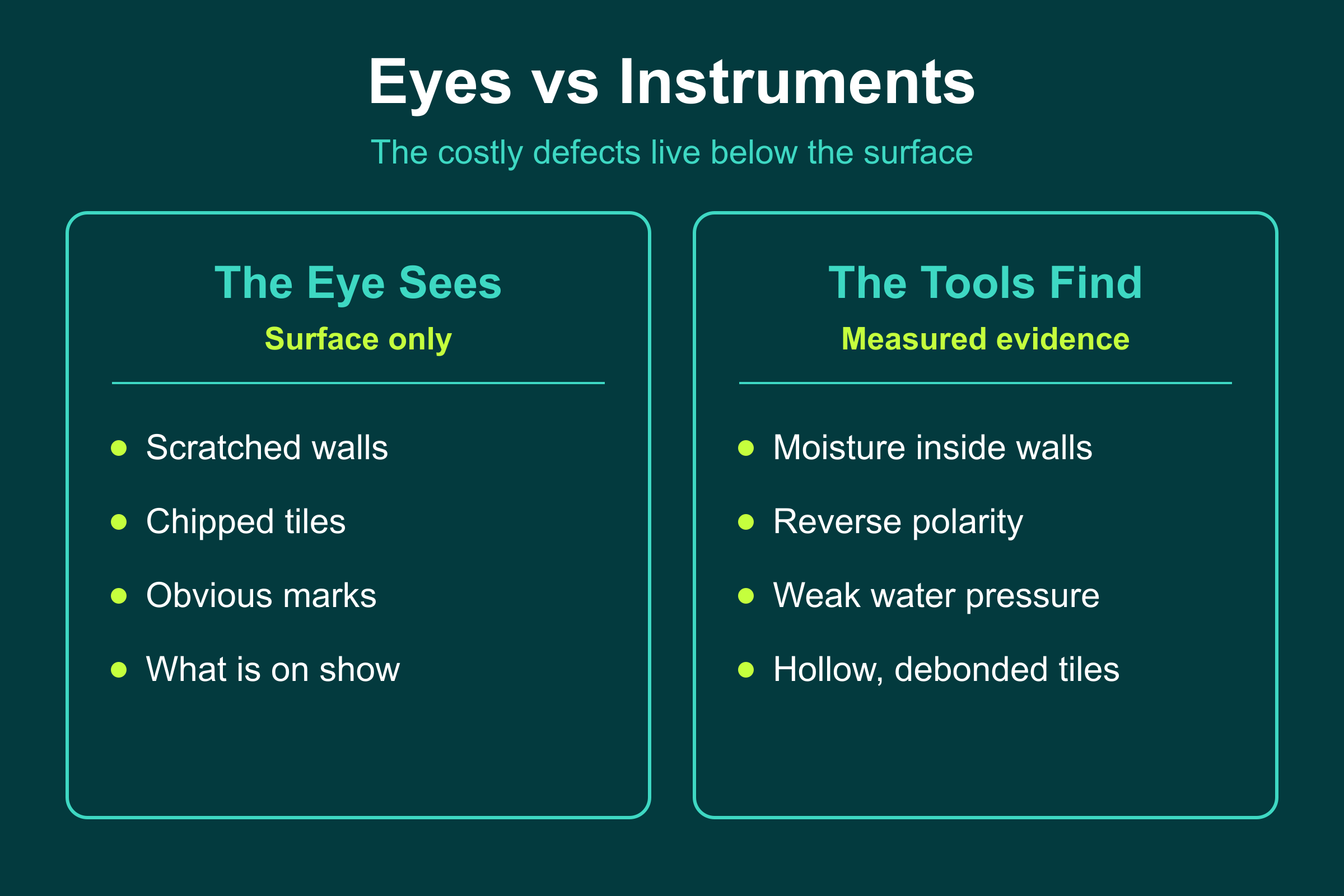
A handover property can look flawless and still hide thousands of dirhams in defects. The faults that cost the most are almost always the ones you cannot see: moisture building behind a wall, a grounding fault in the electrical system, a hollow tile waiting to crack, or an AC unit moving far less air than it should.
These defects do not show up in a viewing. They show up in readings. That is why a credible snagging company arrives with a full kit of calibrated instruments rather than a checklist alone. You can estimate the price of that inspection in seconds with our snagging cost calculator.
The Calibrated Snagging Tools Behind a Professional Inspection
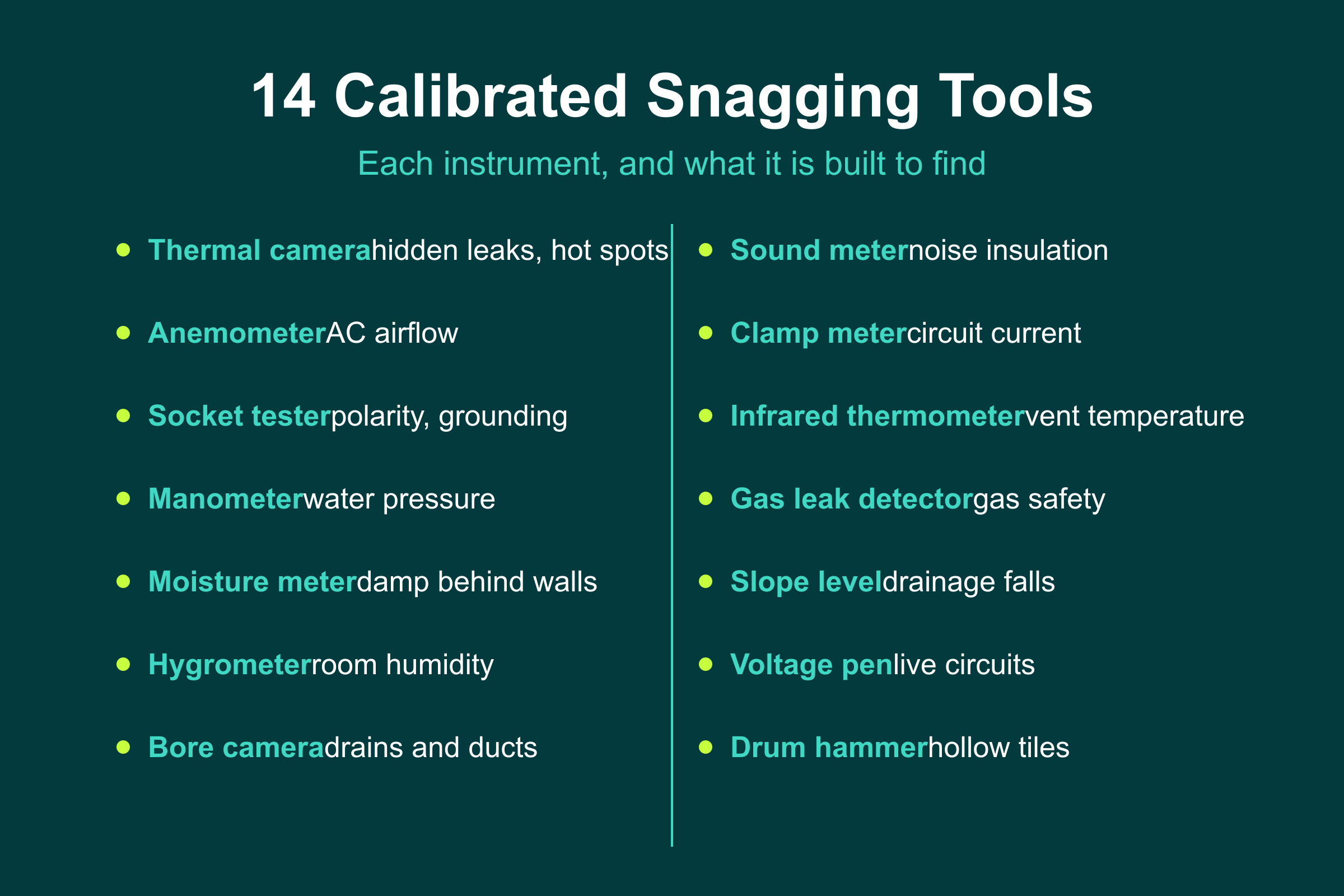
Here is the equipment a professional UAE snagging team brings to every inspection, and what each of these snagging tools is built to find.
Thermal Imaging Camera
A thermal camera detects hidden leaks behind walls, overheating inside the electrical board, and insulation gaps around doors and windows. It reads surface temperature differences that are invisible to the eye, revealing problems that would otherwise stay hidden until they caused visible damage.
Anemometer
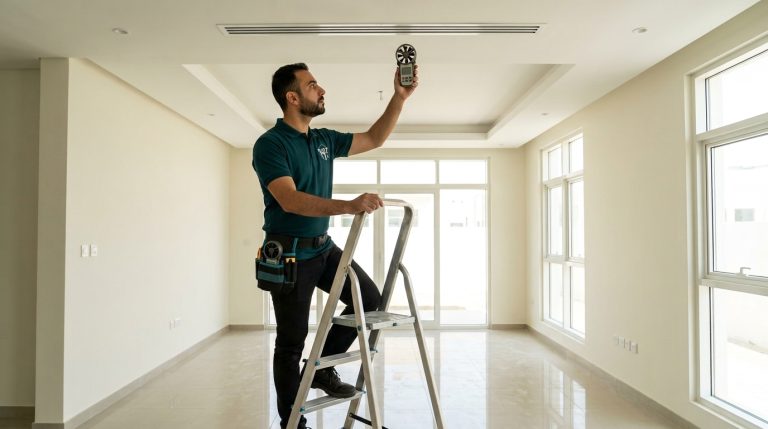
An anemometer measures the actual airflow coming from every AC vent. An air conditioner can run and still underperform. If the airflow falls below specification, the cooling will be weak, the bills will be higher, and the system will work harder than it should. The anemometer turns a vague complaint into a measured fact.
Socket Tester
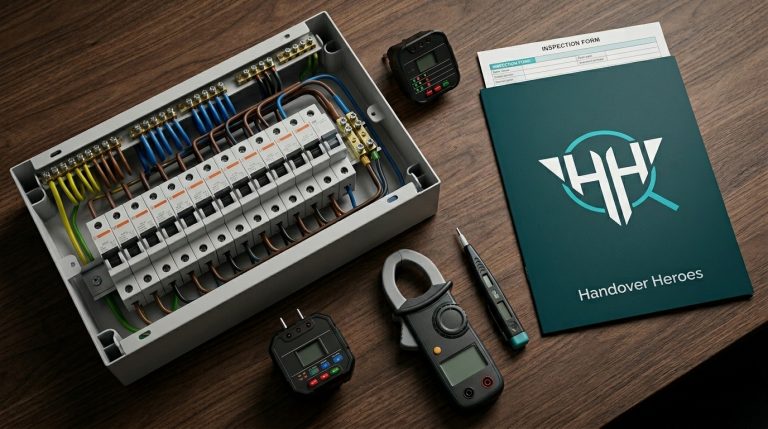
A socket tester checks every power socket for reverse polarity and grounding issues. These faults are completely invisible and can damage appliances or create a safety hazard. Testing each socket takes seconds. Skipping it can cost an entire appliance.
Manometer
A manometer checks water pressure at every outlet in the property. Low pressure can point to plumbing blockages, supply restrictions, or installation problems hidden inside the walls. The manometer measures it precisely at each tap, shower, and outlet.
Moisture Meter
A moisture meter checks for hidden moisture behind walls and ceilings, and classifies what it finds as an active or passive issue. Active moisture means something is leaking right now. Passive moisture means it leaked before and the damage is already present. That distinction changes how the problem is handled.
Hygrometer
A hygrometer measures the humidity in each room and compares it against acceptable standards. High humidity can indicate ventilation problems or moisture issues that have not yet become visible damage.
Bore Camera
A bore camera goes into inaccessible areas to find hidden drain blockages and check AC duct condition. It reaches places no one can see during a viewing, inside pipes, drains, and ducts, and shows exactly what is building up in there.
Sound Meter
A sound meter measures sound pressure levels in decibels. This matters for assessing noise insulation between rooms and from outside, which affects everyday comfort in the property.
Clamp Meter
A clamp meter measures current in the live wires and detects any circuit break that could cause a major hazard later. It reads the electrical system without cutting into anything, catching overloaded or faulty circuits before they fail.
Infrared Thermometer
An infrared thermometer measures temperature at AC vents and the water heater outlet. It confirms that cooling and heating systems are actually delivering the temperatures they should.
Specialist Instruments
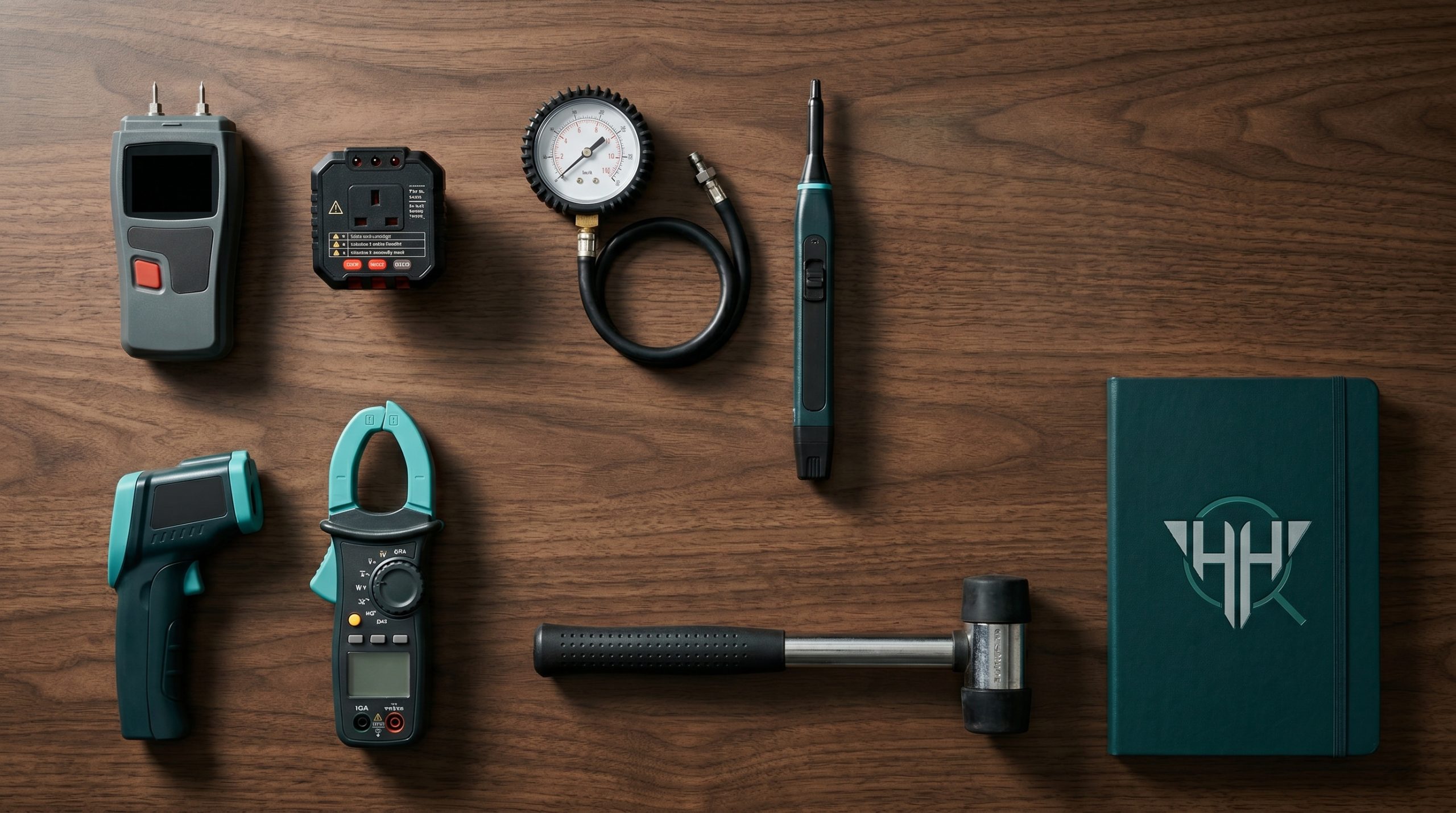
A complete snagging kit also includes a gas leak detector for safety around gas connections, a slope level detector for checking surfaces and drainage falls are correct, a voltage tester pen for quick live-circuit checks, and a drum hammer for sounding tiles to find hollow or debonded areas.
How the Snagging Tools Work Together
No single tool tells the whole story. A professional snagging uses these snagging tools in combination across 500+ checkpoints. The moisture meter flags dampness, the thermal camera locates its source, and the hygrometer confirms whether the room conditions are contributing. The anemometer measures airflow while the infrared thermometer confirms the temperature, together telling you whether the AC is genuinely performing.
This is what engineering-led snagging means: measured evidence, not opinion. Every reading is documented in your report with photographic and video proof. It is the same rigour we bring to a full snagging checklist and to every pre-handover snagging we carry out.
What This Means for You
When you compare snagging companies in the UAE, ask what snagging tools they use. A company that arrives with calibrated instruments and can explain what each one finds is offering a genuine technical inspection. Developer obligations are set by the Real Estate Regulatory Agency (RERA), and a documented report is how you hold them to it. A company that arrives with only a checklist is offering a walkthrough you could do yourself.
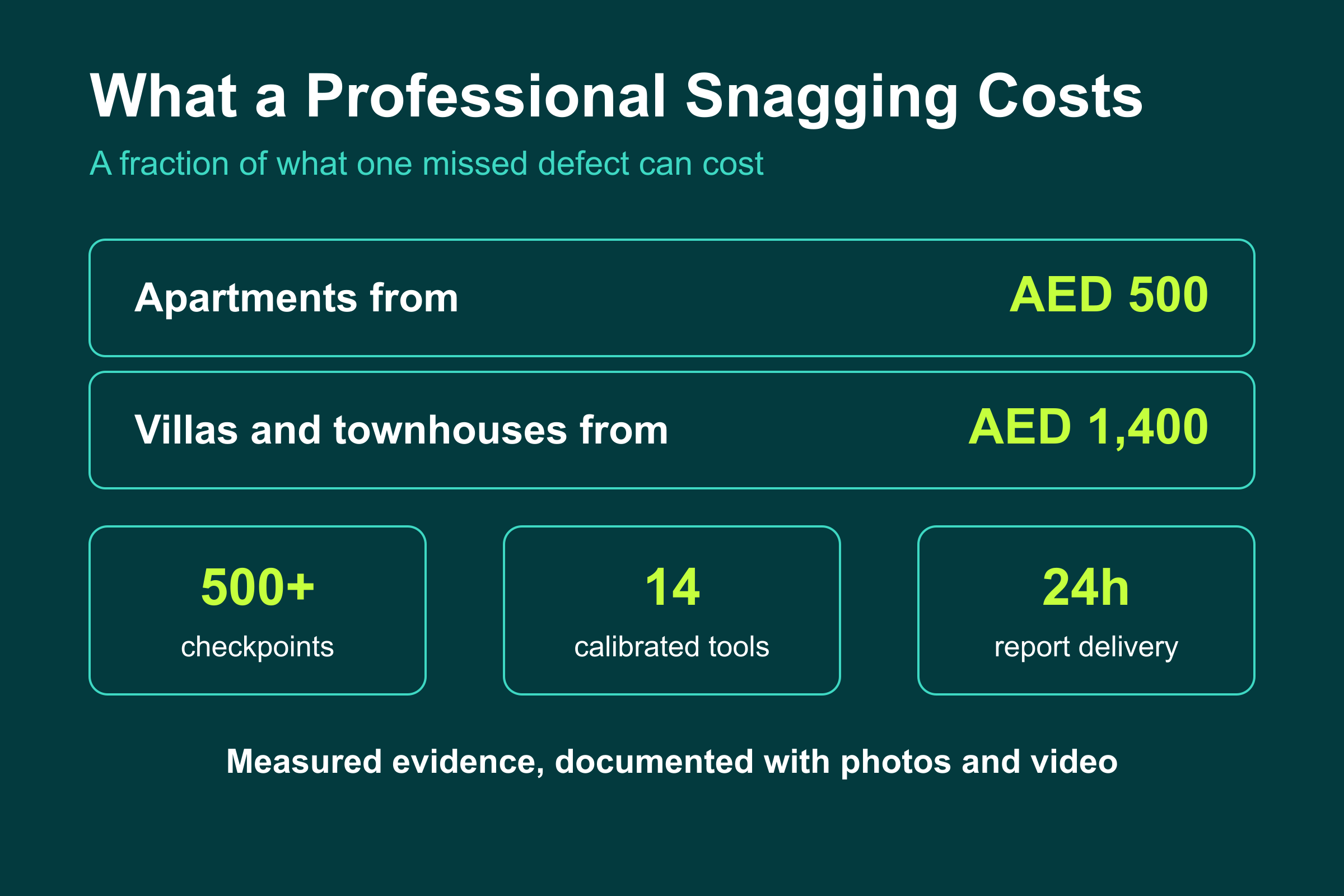
The cost of a professional snagging, from AED 500 for apartments and AED 1,400 for villas and townhouses, is a fraction of what a single missed defect can cost after you have signed and the property is registered with the Dubai Land Department. To see how those defects add up, read our guide to the cost of property snagging in Dubai. The snagging tools are the reason it pays for itself.
Frequently Asked Questions
What is the most important tool in a snagging inspection?
There is no single most important tool, because different defects require different instruments. The moisture meter and thermal camera catch hidden water damage, the socket tester and clamp meter catch electrical faults, and the manometer catches plumbing issues. A professional snagging uses all of them together across the property.
Can I do a snagging myself with my own tools?
You can check obvious cosmetic issues yourself, but professional tools like calibrated moisture meters, anemometers, and clamp meters require both the equipment and the training to interpret the readings correctly. Most buyers find that a professional snagging uncovers far more than a self-inspection, and the report carries weight with developers.
Why does tool calibration matter?
Calibration ensures the instrument gives an accurate reading. An uncalibrated moisture meter or manometer can show misleading numbers, which defeats the purpose of measuring at all. Professional snagging companies use calibrated, industrial grade instruments so the findings can be trusted and acted upon.
How long does a snagging with all these tools take?
A villa snagging takes 3 to 5 hours depending on the size of the property, covering 500+ checkpoints with the full tool kit. Apartments take less time. The detailed report, with photographic and video evidence, is delivered within 24 hours.
Book Your Snagging
Find out what a fully equipped, engineering-led snagging finds in your property. Apartments from AED 500. Villas and townhouses from AED 1,400. Every snagging covers 500+ checkpoints with 14 calibrated snagging tools and a detailed report within 24 hours.
Book your snagging on WhatsApp, get an instant estimate with our snagging cost calculator, or visit our pre-handover snagging service for details.
Handover Heroes is the UAE’s trusted property inspection service. We inspect every inch with calibrated tools so you do not sign for hidden surprises.