Move-In Inspection for UAE Tenants: How to Protect Your Security Deposit
A move-in inspection in the UAE protects the security deposit that every tenant pays. In Dubai, that deposit is typically 5% of the annual rent for unfurnished properties and 10% for furnished, which is AED 5,000 to AED 15,000 or more that you expect to get back when you leave.
The problem is that without a documented record of the property’s condition at move-in, you have no proof of what was already damaged, worn, or broken before you arrived. When you hand the keys back, the landlord or property management company inspects the property and deducts for anything they consider damage. Without a baseline, every scratch, stain, and worn fixture becomes your financial responsibility.
A move-in inspection creates that baseline. It is the single most effective way to protect your security deposit. For broader tenant guidance, the UAE Government renting guidance portal is a useful reference.
What Is a Move-In Inspection?
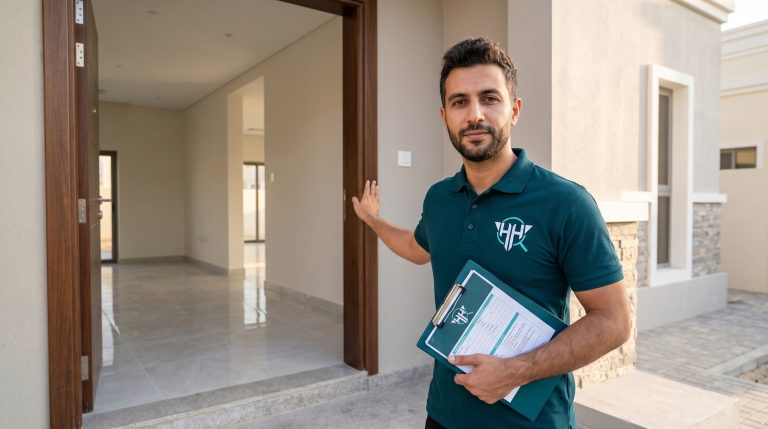
A move-in inspection is a professional assessment of a rental property’s condition at the start of a tenancy. It documents every defect, every area of wear, and every pre-existing issue with annotated photographs and a detailed written report. Your tenancy is registered with the Dubai Land Department through Ejari, and your inspection report sits alongside it as your private record.
The report serves as your evidence. When you move out and the landlord claims you damaged the bathroom tiles or stained the kitchen counter, you have a professional document showing that the damage existed before you moved in.
Why Landlords Do Not Provide Adequate Documentation
Some landlords or property management companies provide their own check-in report. These are often:
- Superficial. A quick walkthrough with a checklist that says “good condition” for every room without detail.
- Incomplete. They miss pre-existing issues that are not immediately obvious, like a slowly dripping tap, a loose tile in the corner, or moisture behind the bathroom wall.
- Biased. The landlord has a financial interest in the security deposit. Their documentation tends to describe the property favourably at check-in to maximise deductions at check-out.
An independent snagging report provides a level of detail and objectivity that a landlord’s check-in form cannot match. Professional photographs, moisture readings, and systematic documentation create evidence that holds up in any dispute.
What a Move-In Inspection in the UAE Covers
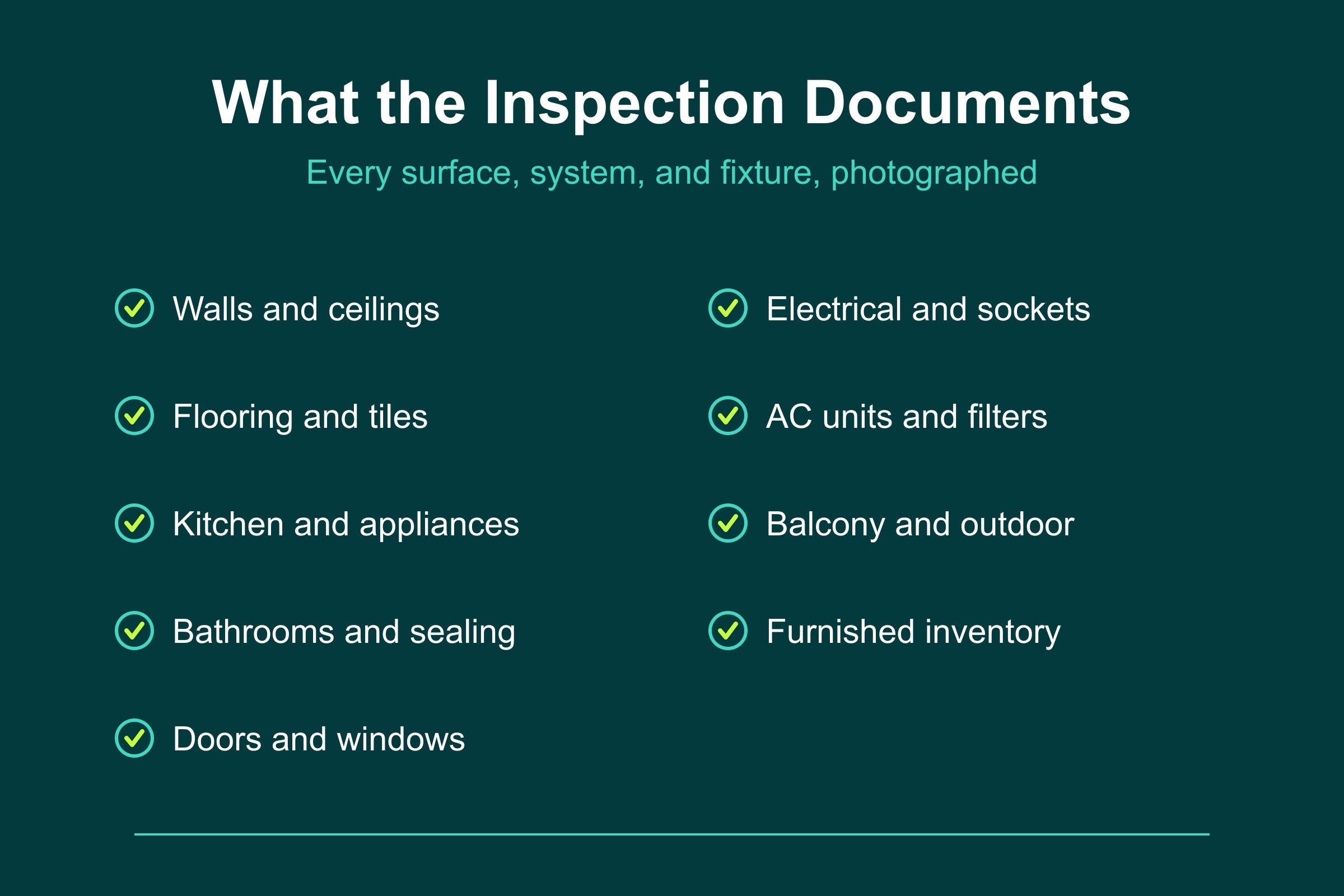
For tenants, our property inspection service uses the same 500+ checkpoints applied to property purchase snagging, the same methodology as a secondary market inspection, adapted for the tenancy context. The discipline is identical whether you are renting or buying a resale apartment in Dubai:
- Walls and ceilings. Every wall photographed for paint condition, cracks, stains, marks, and holes. Every ceiling documented for stains, peeling, or damage.
- Flooring. Every floor surface documented for scratches, stains, chips, and wear. Tiles checked for cracks and looseness. Carpet condition recorded.
- Kitchen. Countertops, cabinets, appliances, sinks, taps, and hardware all documented. Every drawer and door tested. Oven, hob, extractor, and dishwasher photographed and tested.
- Bathrooms. Shower, bath, toilet, sink, taps, cabinets, mirrors, silicone sealing, grout, and ventilation all documented.
- Doors and windows. Every door and window tested for function, locks, handles, and seals, with condition photographed.
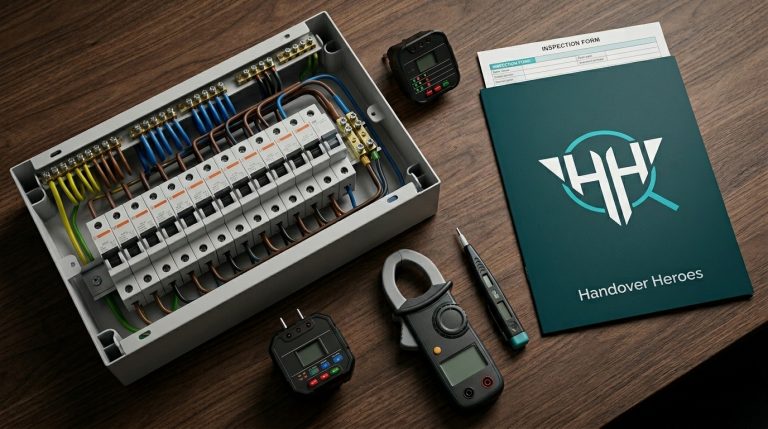
- Electrical. Sockets tested for function. Light switches and fittings checked. Circuit breaker panel photographed.
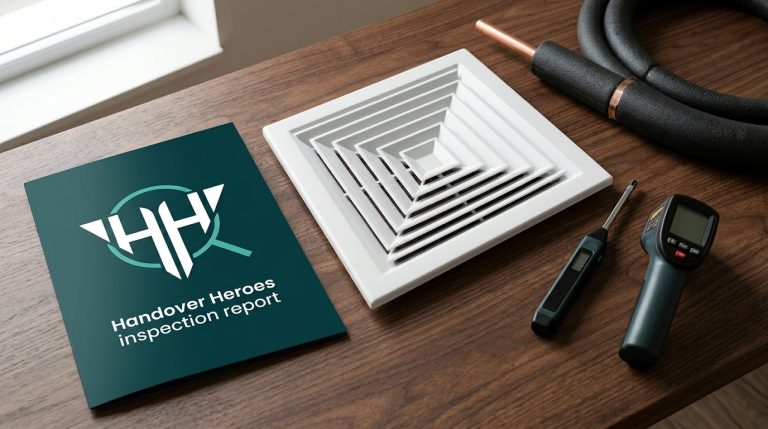
- AC. Units tested for cooling function and noise. Filter condition documented.
- Balcony and outdoor areas. Floor condition, railings, drainage, and any fixtures documented.
- Furnished items. Every piece of furniture, appliance, and fixture photographed and condition noted, then cross-referenced with the tenancy agreement’s inventory list.
How to Use the Report During Your Tenancy
- Keep the report safe. Store it digitally and have a backup. You will need it when you move out.
- Report new issues immediately. If something breaks or deteriorates during your tenancy due to normal wear, report it to the landlord in writing. This establishes that you are a responsible tenant.
- Do not make modifications without written permission. Any changes you make to the property, however well-intentioned, can result in security deposit deductions. Get written approval for anything beyond hanging a picture frame.
- Document anything you fix. If you fix a minor issue at your own expense, photograph the before and after. This prevents the landlord from claiming it as damage at check-out.
How to Use the Report at Move-Out
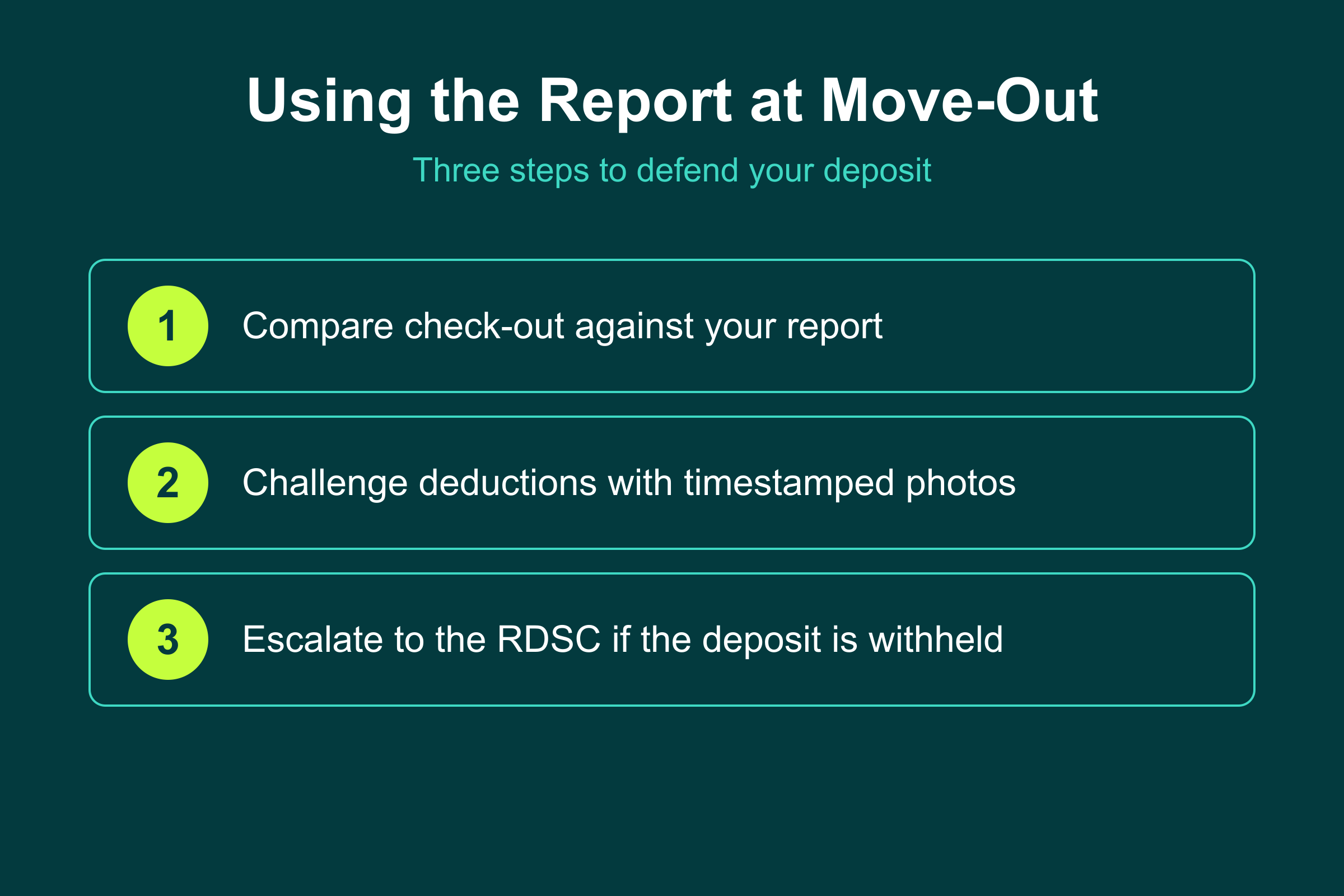
When your tenancy ends, the landlord or property management company will conduct a check-out inspection. This is where your move-in snagging report becomes invaluable:
Compare the check-out findings against your move-in report. Any issue documented in the move-in report cannot be charged to you.
Challenge unfair deductions. If the landlord tries to deduct for pre-existing damage, present the corresponding photograph from your move-in report. Professional documentation with timestamps is difficult to dispute.
Escalate if needed. If the landlord refuses to return your deposit despite evidence, you can escalate to the Rental Dispute Settlement Centre (RDSC) in Dubai or the equivalent authority in your emirate. Your move-in snagging report is your primary evidence.
What Tenants Typically Lose Without a Move-In Inspection
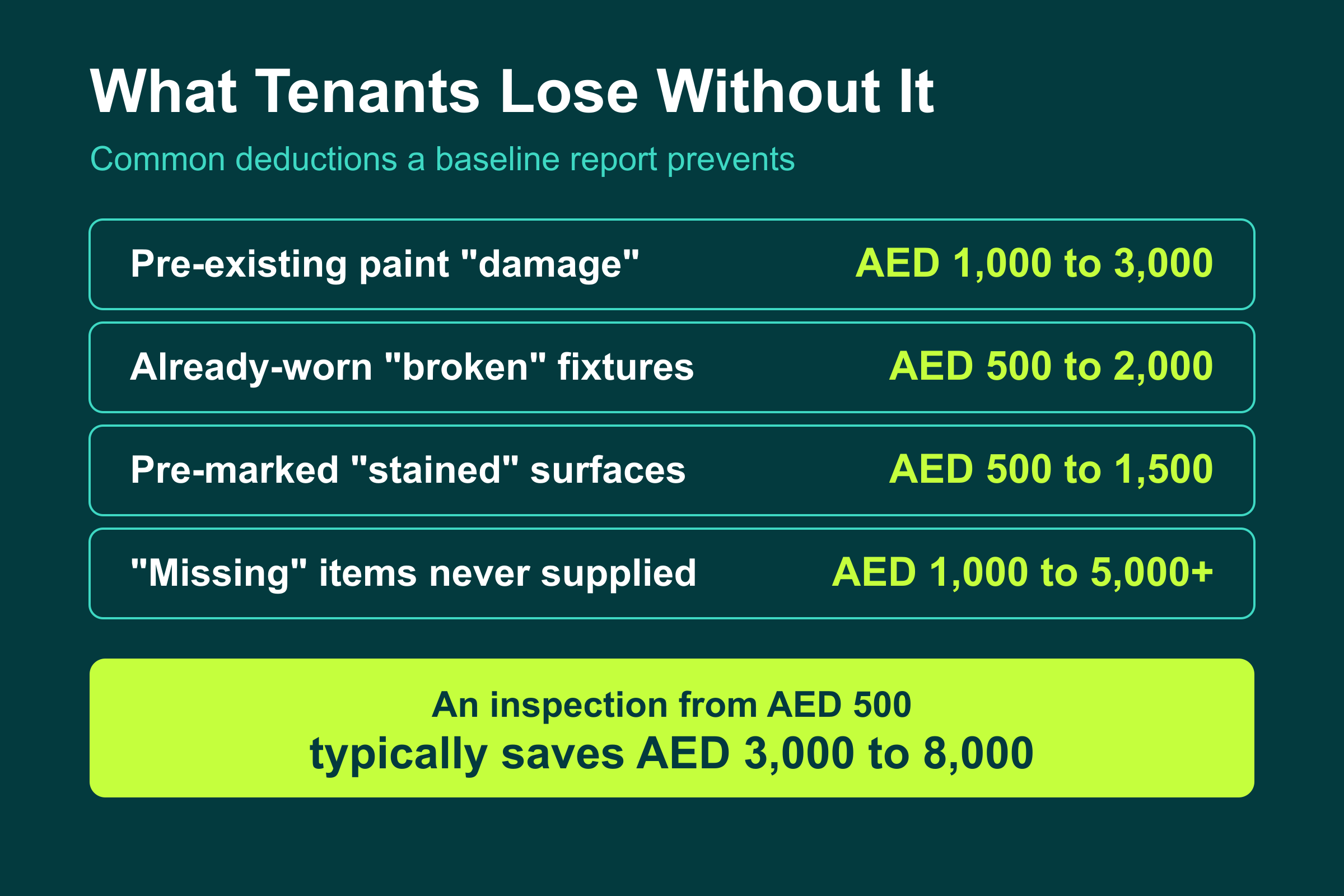
Based on our experience, tenants without move-in documentation typically lose AED 2,000 to AED 8,000 from their security deposit. The most common deductions that could have been challenged with proper documentation:
- Paint “damage” that was actually pre-existing wear. AED 1,000 to AED 3,000 deduction for repainting.
- “Broken” fixtures that were already worn or damaged. AED 500 to AED 2,000 for replacements.
- “Stained” surfaces that were already marked. AED 500 to AED 1,500 for cleaning or refinishing.
- “Missing” items from furnished properties that were never there. AED 1,000 to AED 5,000 or more for furniture or equipment.
A move-in inspection that starts from AED 500 typically saves AED 3,000 to AED 8,000 in deposit deductions.
Who Should Get a Move-In Inspection?
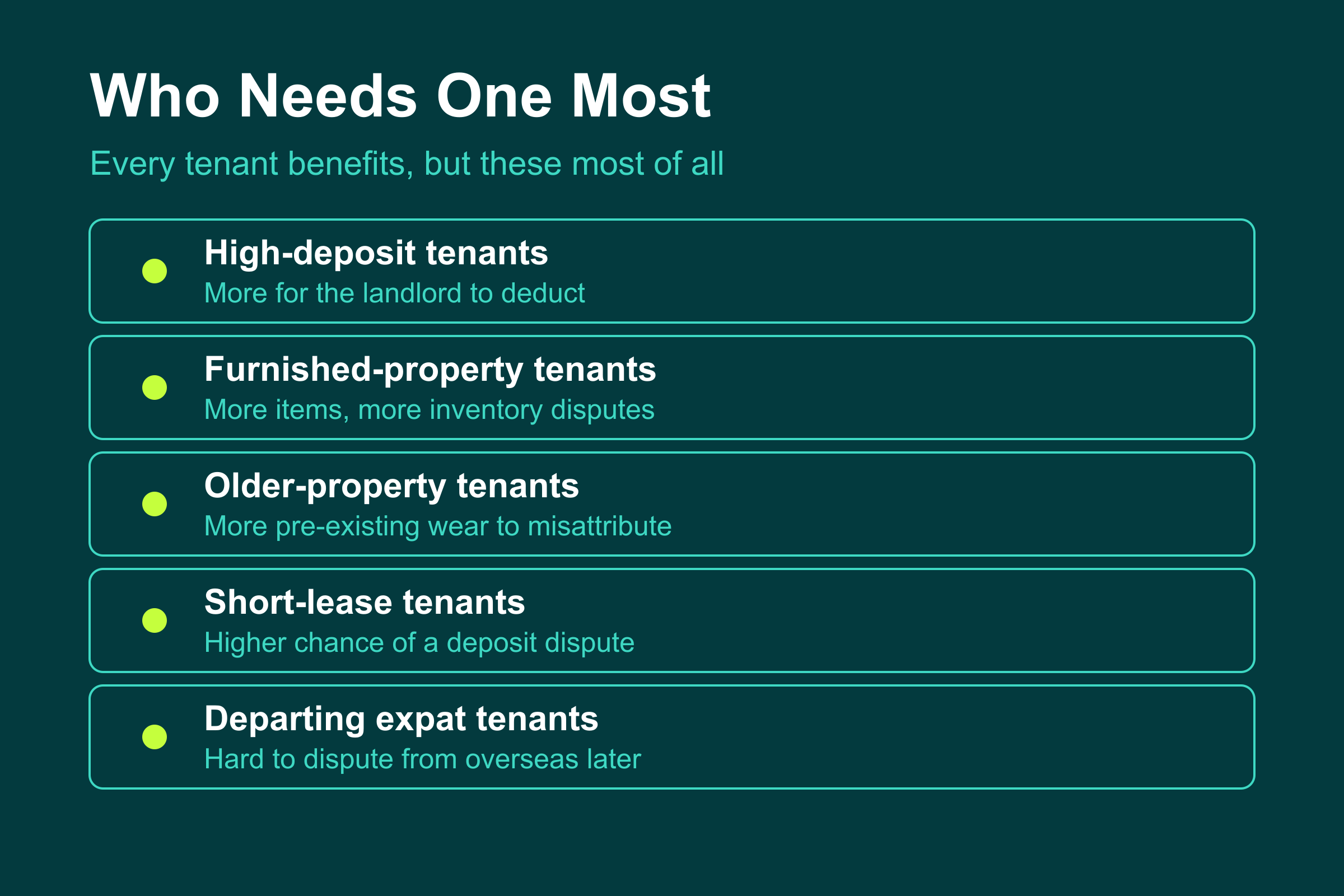
Every tenant benefits from a move-in inspection, but it is especially valuable for:
- Tenants paying high security deposits. The higher the deposit, the more the landlord can potentially deduct.
- Tenants in furnished properties. Furnished properties have more items to document and more potential for inventory disputes.
- Tenants in older properties. Older properties have more pre-existing wear that could be attributed to the tenant without proper documentation.
- Tenants with short leases. Short-term tenants are more likely to face deposit disputes because the landlord has a shorter window to recover maintenance costs.
- Expat tenants leaving the UAE. If you are leaving the country at the end of your tenancy, pursuing a deposit dispute from overseas is significantly more difficult. Documentation upfront is your best protection.
Frequently Asked Questions
When should I book the move-in inspection?
Book your move-in inspection for the day you receive the keys, or within the first 48 hours at the latest. The sooner the snagging happens, the stronger your documentation, because there is no question that any defect recorded was already there before you started living in the property.
Can I do the snagging myself with my phone?
You can photograph the property yourself, and any documentation is better than none. However, professional snagging provides systematic room-by-room coverage, specialist equipment for hidden issues like moisture behind walls, and a formatted, timestamped report that carries far more weight than phone photos in any deposit dispute.
Will the landlord be upset if I get independent snagging?
Most landlords respect tenants who take a professional approach. A move-in inspection protects both parties by establishing clear baseline documentation, which reduces disputes at check-out. A landlord who objects to honest, independent documentation may be planning to rely on the absence of it, which should raise concern.
What if I have already moved in without an inspection?
Get one as soon as possible. The sooner you document the property’s condition, the stronger your position, even if some time has passed since you moved in. A late inspection still records the current state of the property and is far better than having no documentation at all when you leave.
Does the snagging cover building common areas?
No. The snagging covers your individual rental unit only, including its walls, floors, fixtures, systems, and any furnished inventory. Common areas such as the lobby, lifts, corridors, and shared facilities are maintained by the building management company and fall outside the scope of a tenant move-in inspection.
Protect Your Security Deposit from Day One
A move-in inspection in the UAE takes a few hours and costs a fraction of your security deposit. The documentation it provides can save you thousands of dirhams when you move out, turning a stressful check-out into a simple comparison against the record.
Book your move-in inspection via WhatsApp, or contact our team for details.
Handover Heroes is the UAE’s trusted property inspection service. We inspect every inch so you move in with full documentation and move out with your full deposit.