Buying a Resale Property? Why You Need a Secondary Market Inspection in the UAE
If you are buying a resale property, a secondary market inspection in the UAE is the one step you should never skip, because the original developer warranty has almost certainly expired. That means every defect in the property, whether from the original construction or from years of wear, becomes your financial responsibility the moment you complete the purchase.
A secondary market snagging is the only way to know what you are actually buying. Not what the seller tells you. Not what the listing photos show. What the property’s walls, pipes, wiring, tiles, and systems actually look like under professional scrutiny.
This guide covers everything UAE resale buyers need to know about a secondary market inspection in 2026. What inspectors check, what they typically find, how to use the findings to negotiate, and why skipping this step is one of the most expensive shortcuts a buyer can take.
What Is a Secondary Market Inspection?
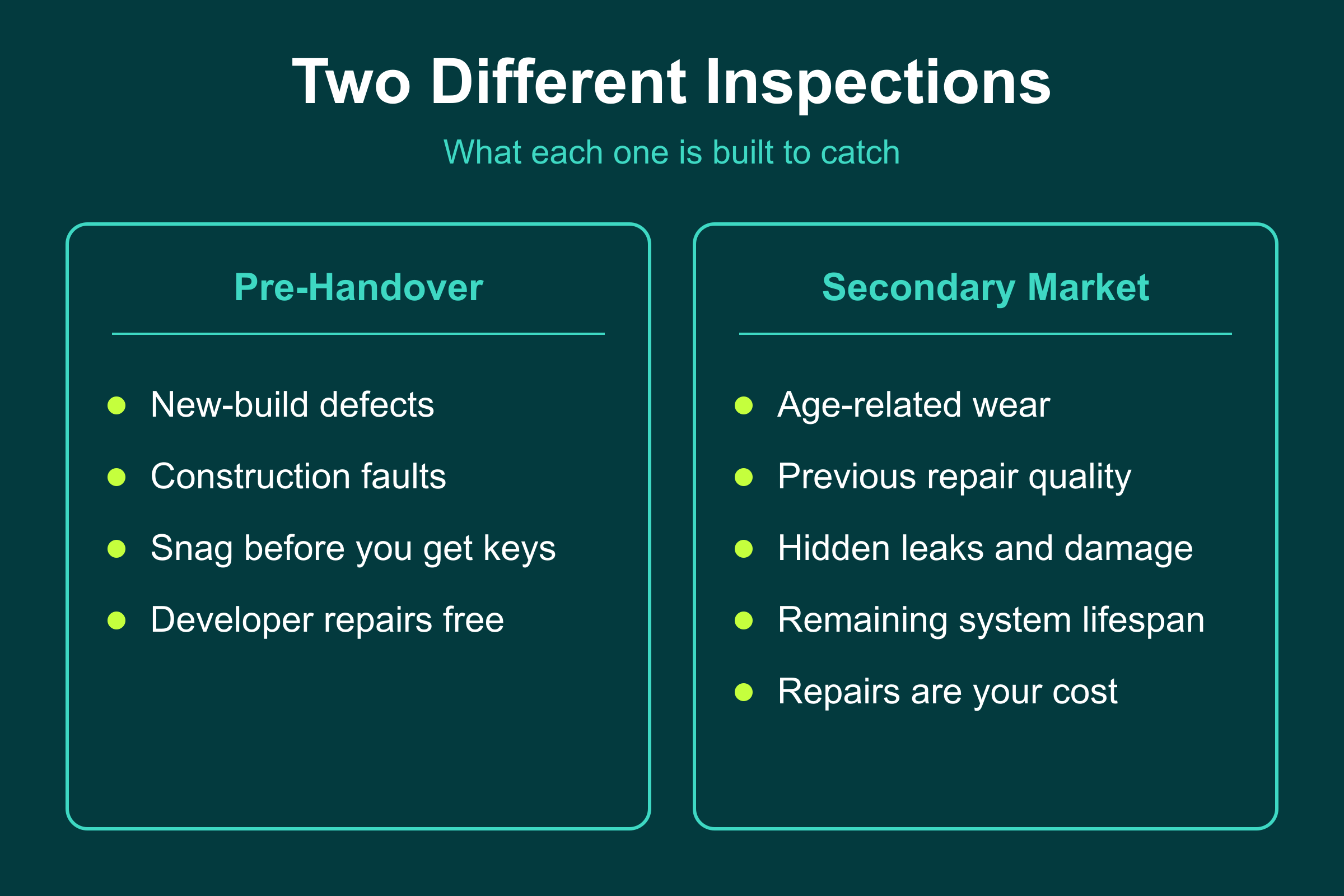
A secondary market snagging is a professional property assessment carried out before you complete a resale purchase. Unlike a pre-handover inspection on a new build, a secondary market inspection focuses on age-related wear, previous repair quality, hidden damage, and remaining system lifespan alongside standard construction defect checks.
The inspection covers 500+ checkpoints across structural integrity, electrical systems, plumbing, AC and ventilation, tiling, paint and finishing, doors, windows, kitchens, bathrooms, and external areas. For villas, the scope extends to boundary walls, landscaping, pools, garages, and driveways.
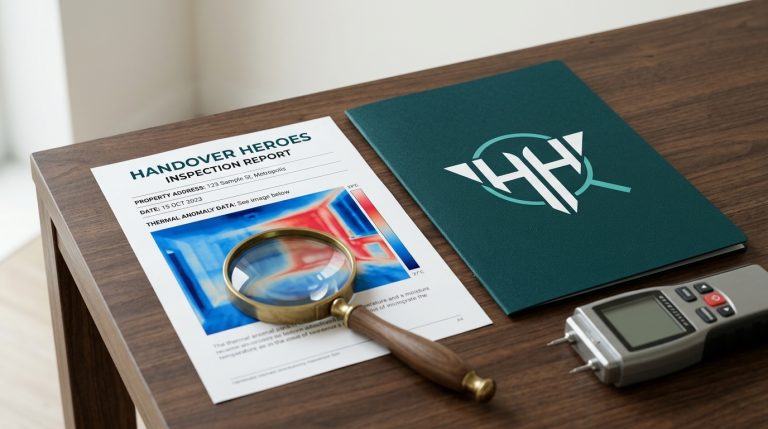
The result is a detailed report with annotated photographs that tells you exactly what condition the property is in. You use this report to make an informed purchase decision, negotiate the price, or request the seller to fix issues before completion.
Why the Original Warranty Does Not Protect You
When a property is sold on the secondary market, the original developer warranties have typically expired. The 12-month MEP and finishing warranty ends after year one. The 10-year structural warranty may still have coverage if the property is under 10 years old, but even then, enforcing structural claims against a developer for a property you did not originally buy from them is complex. The Real Estate Regulatory Agency (RERA) sets the rules, yet the practical burden still falls on you.
The practical reality is that whatever you find after you buy a resale property is yours to deal with. There is no developer to call. There is no free repair window. Every issue is a bill with your name on it. For an overview of buyer protections, the UAE Government housing information portal is a useful starting point.
This is why a secondary market inspection before you complete the purchase is not optional. It is the only leverage you have.
Secondary Market Inspection UAE: What We Typically Find
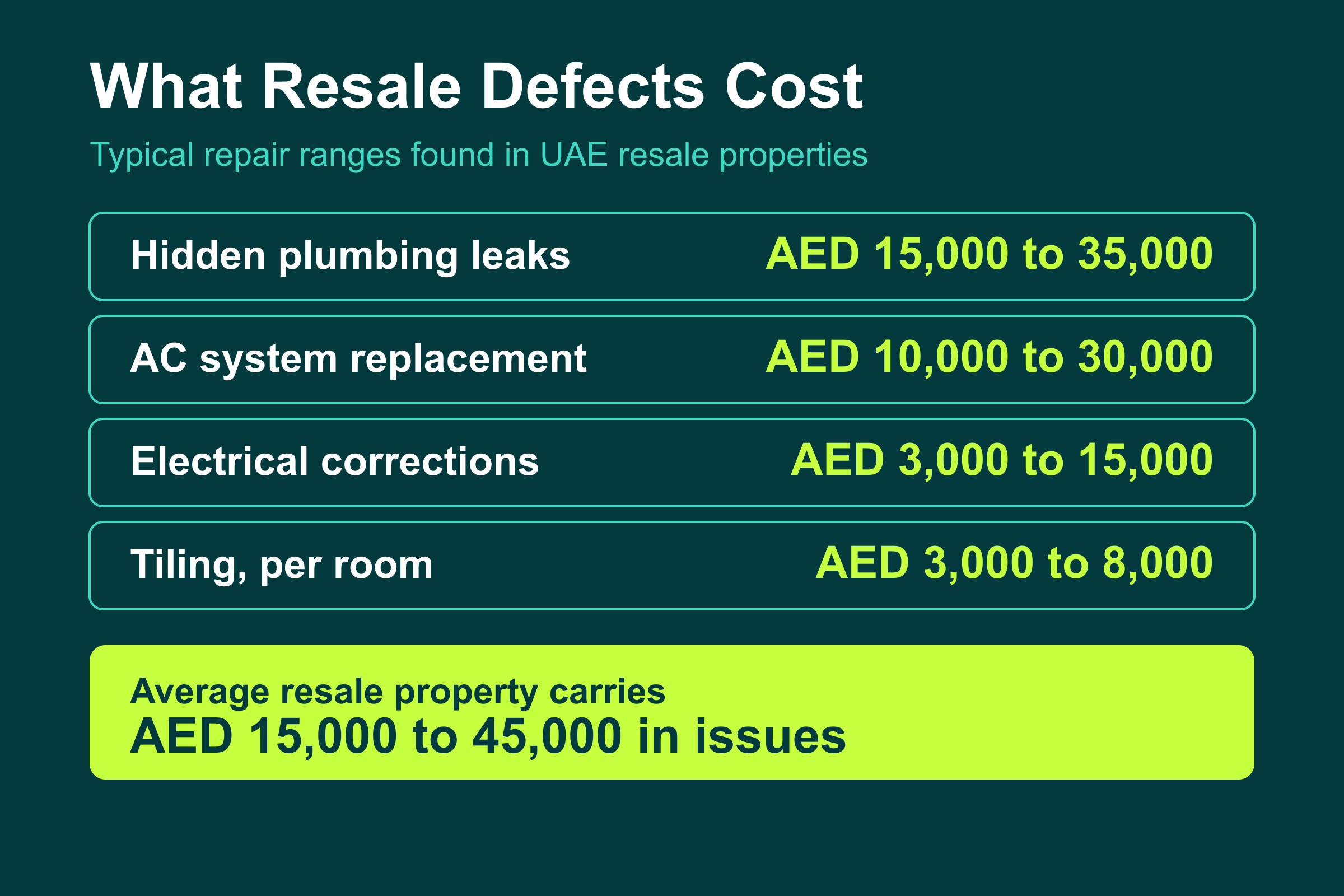
Resale properties have a different defect profile compared to new builds. Here is what we commonly find across UAE resale properties:
Plumbing Wear and Hidden Leaks
Older properties frequently have plumbing issues that are invisible during a viewing. Pipe joints degrade over time. Water heaters lose efficiency. Under-sink connections loosen. Slow leaks behind walls cause moisture accumulation that leads to mould and structural damage.
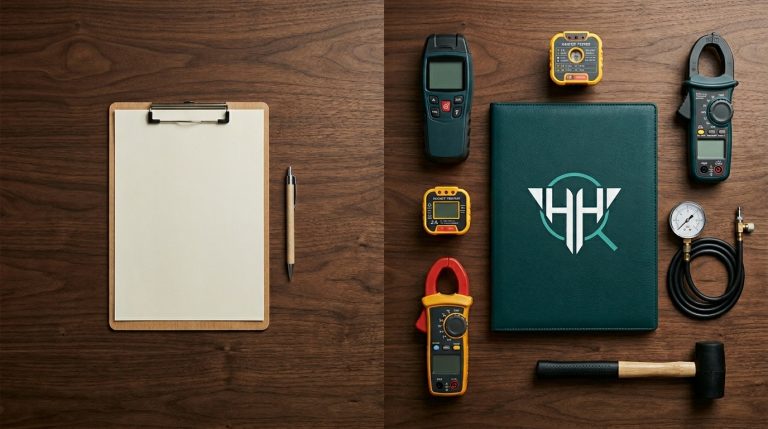
A moisture meter identifies elevated readings in walls, ceilings, and floors that indicate hidden water problems. This is the single most valuable check in a resale inspection because plumbing repairs are the most expensive defect category, often running AED 15,000 to AED 35,000 for a significant hidden leak.
AC System Age and Efficiency
AC systems in the UAE work harder than almost anywhere else in the world. After 8 to 12 years of continuous use, compressors, condensers, and duct systems are approaching end of life. Common findings include reduced cooling efficiency, unusual noise, condensate drainage problems, and duct deterioration.
Replacing a major AC system costs AED 10,000 to AED 30,000. Knowing the condition of the AC before you buy lets you factor replacement costs into your offer price.
Electrical System Condition
Older properties may have electrical systems that do not meet current safety standards. Common findings include outdated circuit breaker panels, overloaded circuits, deteriorated wiring insulation, and sockets that have lost grounding integrity over time.
Electrical corrections and upgrades cost AED 3,000 to AED 15,000 depending on scope. A socket tester identifies basic faults in seconds, and a full electrical assessment reveals systemic issues.
Tile and Flooring Condition
Tiles in high-traffic areas crack, chip, and loosen over time. Grout discolours and deteriorates. Marble and natural stone lose their polish. Bathroom and kitchen tiles may have compromised waterproofing underneath.
Replacing tiles in a single room costs AED 3,000 to AED 8,000 including labour and materials. A tap test identifies loose tiles, and visual inspection under angled light reveals cracks and wear patterns.
Paint, Walls, and Structural Condition
Paint fading, wall cracks, ceiling stains, and plaster deterioration are common in resale properties. Most are cosmetic and relatively inexpensive to fix. The critical question is whether any cracks indicate structural movement rather than surface wear.
Hairline cracks in plaster are normal settlement. Cracks wider than 2mm that grow over time, cracks around door and window frames, and cracks that follow a diagonal pattern may indicate structural issues that need professional assessment.
Previous Renovation Quality
Many resale properties have been renovated by previous owners. The quality of renovation work varies enormously. Common issues include amateur plumbing and electrical work, poor waterproofing in renovated bathrooms, incorrect materials used for UAE climate conditions, and finishes that look good but are not properly installed.
A professional inspection identifies where renovation work has been done well and where it has introduced new problems.
How to Use Your Inspection Report
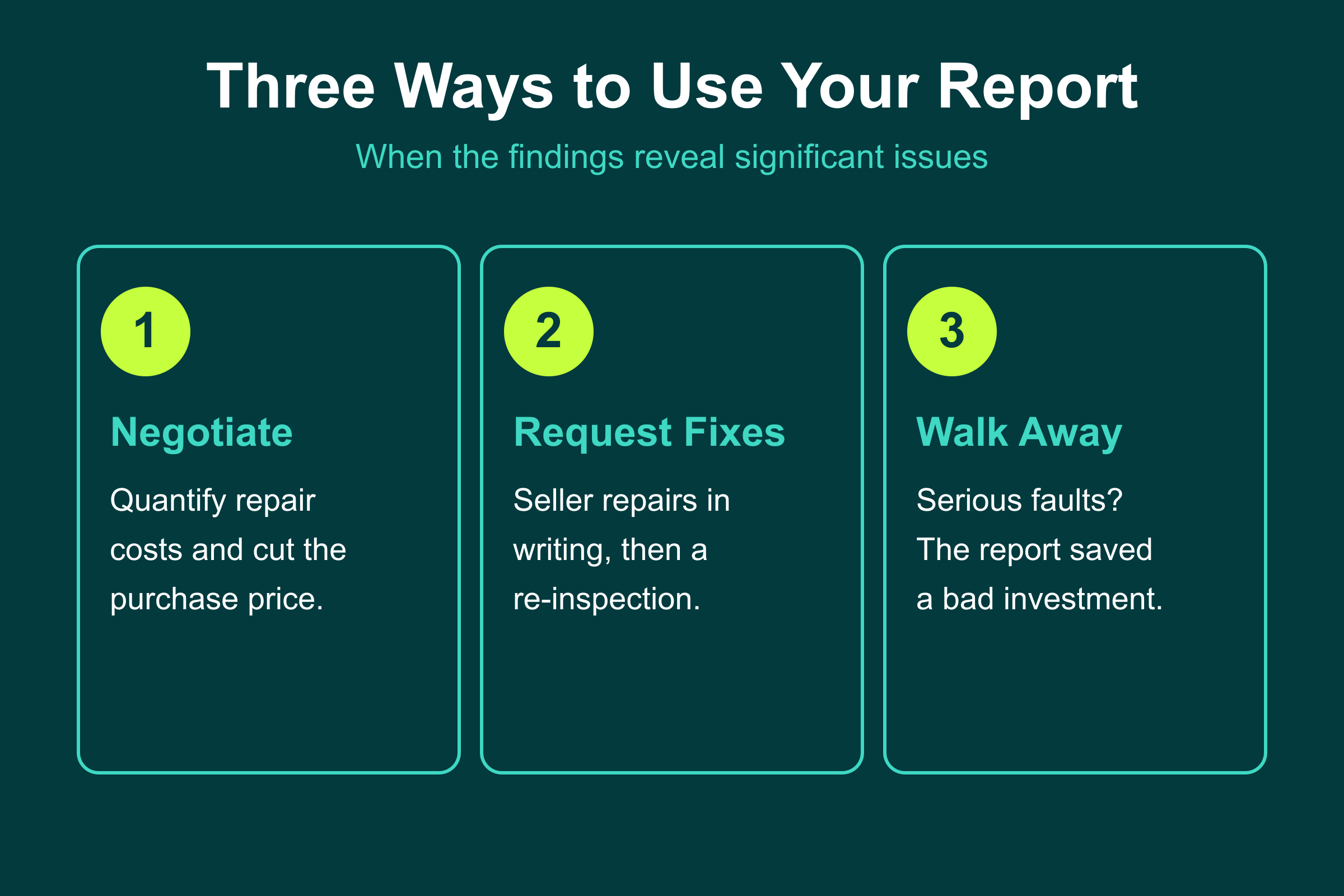
Your secondary market inspection report is a negotiation tool. Here is how to use it effectively:
Review the report before making your final purchase decision. If the findings are within your budget and expectations, proceed. If they reveal significant issues, you have three options.
Negotiate the price down. Use the report to negotiate the resale property price by quantifying the cost of required repairs and requesting a corresponding reduction in the purchase price. This is the most common approach.
Request the seller to fix issues before completion. Some sellers prefer to handle repairs rather than reduce the price. Get any repair commitments in writing and request a re-inspection to verify the work.
Walk away. If the property has serious structural issues, major system failures, or hidden problems that make the purchase uneconomical, the inspection report has saved you from a bad investment. The cost of the inspection is a fraction of what you would have lost.
What About Villa Communities?
Apartment buyers have a simpler scope, and if you are buying a resale apartment in Dubai, the unit-level checks above cover most of what matters. Villas in established UAE communities like Arabian Ranches, Springs, Meadows, and Jumeirah Park have additional inspection requirements beyond apartments. The extended scope includes:
- Boundary walls and fencing condition.
- External paint and render integrity.
- Driveway and parking area condition.
- Garden irrigation systems.
- Pool equipment, filtration, and waterproofing, if applicable.
- Garage door mechanisms and drainage.
- Roof waterproofing and gutter systems.
- Landscaping drainage and grading.
Villa inspection takes longer, typically 3 to 5 hours compared to 2 to 4 hours for apartments, and requires additional equipment for exterior assessment. The investment is proportional to the property value and the broader scope of potential issues.
When to Book Your Secondary Market Inspection
The ideal time is after you have agreed on the purchase price in principle but before you sign the final sale agreement or transfer ownership through the Dubai Land Department. This gives you maximum leverage to negotiate based on findings.
If you are buying through a real estate agent, inform them that you will be conducting an independent inspection before completion. Most agents welcome this because it reduces the risk of disputes after the sale.
Do not wait until after you have signed. At that point, you own whatever the property contains, defects and all.
The Cost of Skipping a Secondary Market Inspection
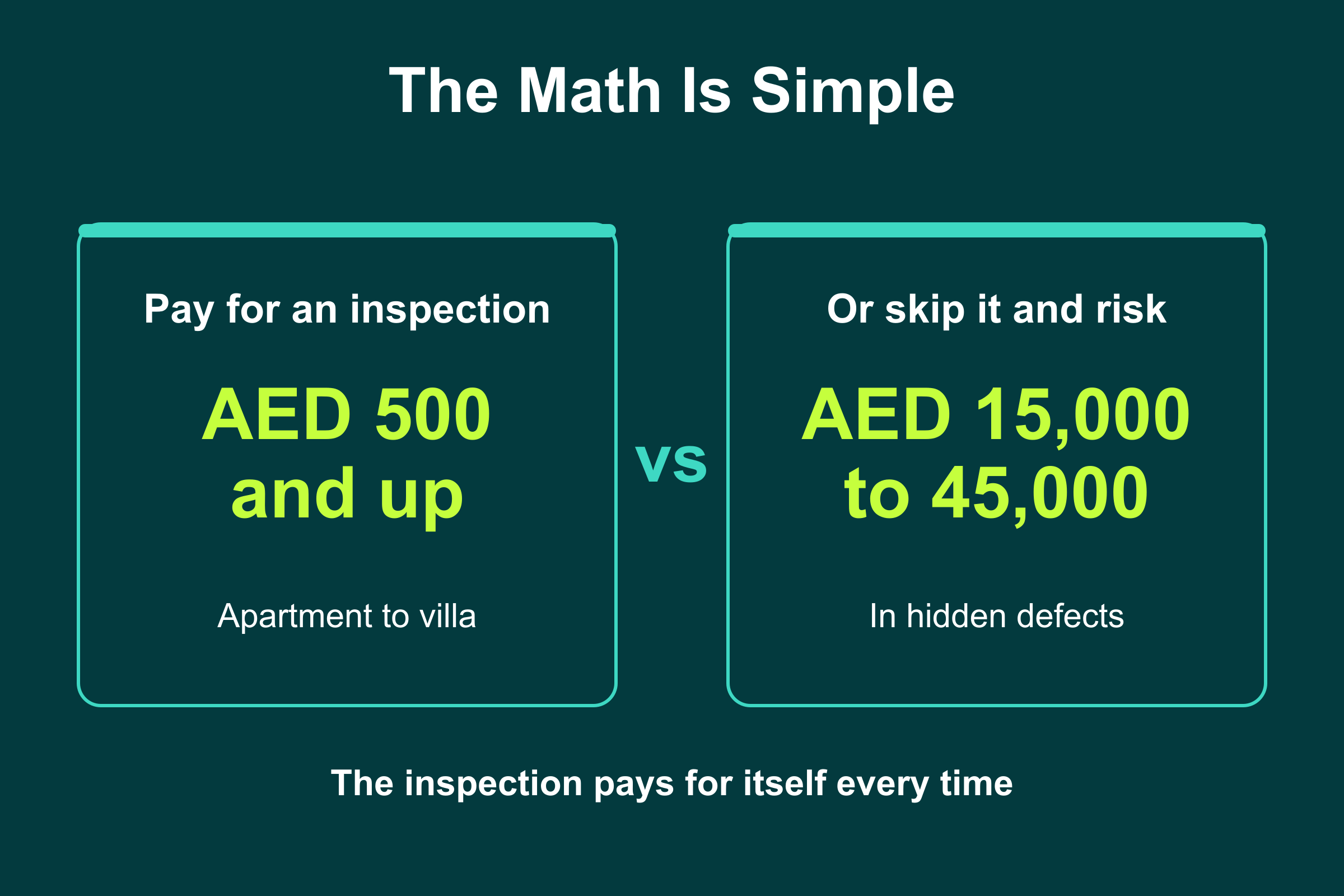
A secondary market inspection starts from AED 500 for a UAE apartment. For villas and townhouses, it starts from AED 1,400, depending on size and complexity.
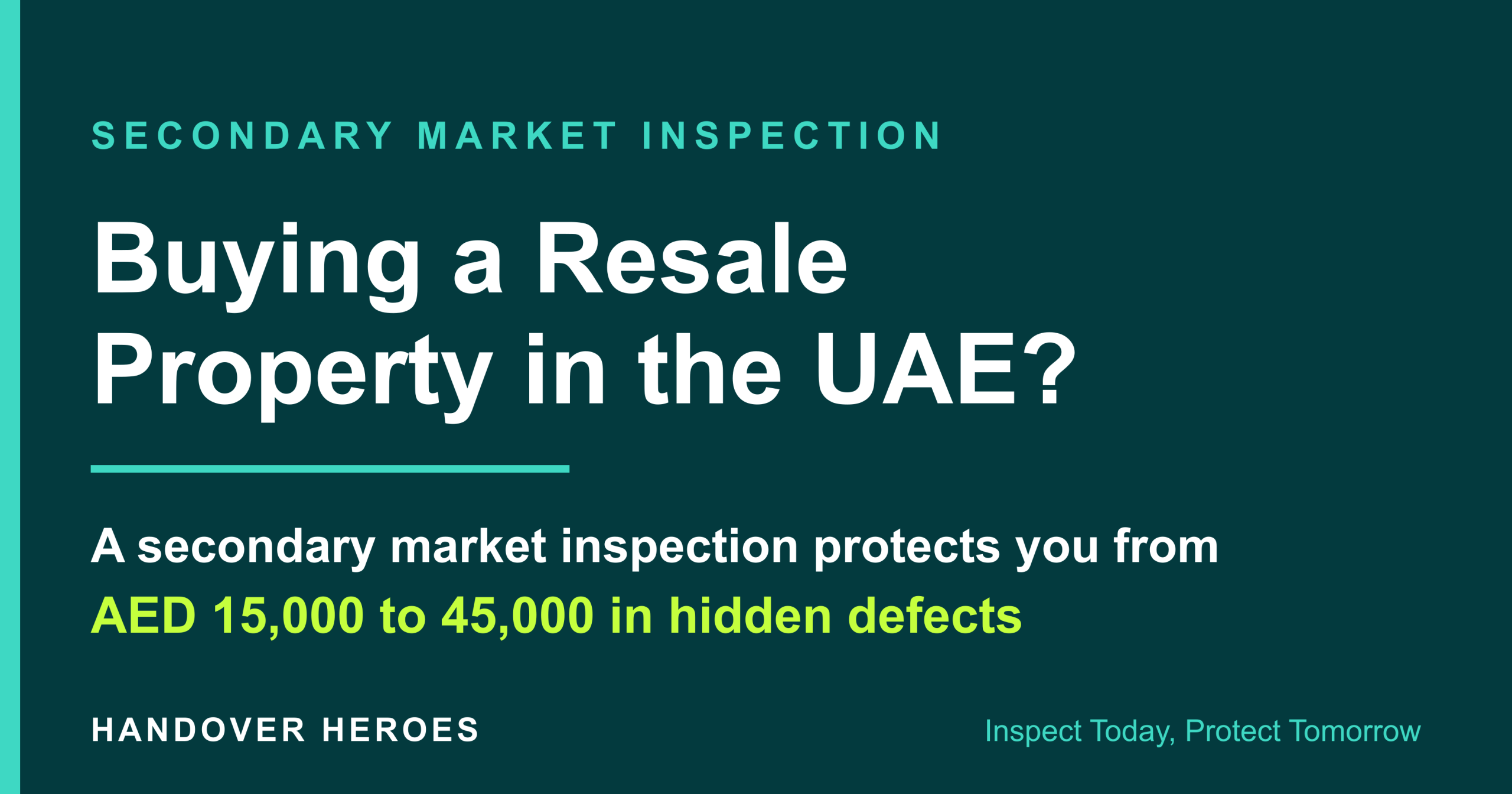
The cost of not inspecting is the full repair bill for every hidden issue you discover after purchase. Based on our inspection data, the average resale property in the UAE has AED 15,000 to AED 45,000 in issues that a professional inspection would have identified before completion.
The inspection pays for itself every time.
Frequently Asked Questions
Is a secondary market inspection the same as a pre-handover inspection?
No. A pre-handover inspection focuses on construction defects in a brand new property. A secondary market inspection covers age-related wear, previous repair quality, system lifespan, and hidden damage alongside standard defect checks. The scope is broader because a resale property has years of history behind it.
Can I use the inspection report to back out of a purchase?
That depends on the terms of your sale agreement. In most cases, if the inspection reveals significant undisclosed issues, you have grounds to renegotiate or withdraw from the deal. Review your purchase terms with your agent or lawyer before you sign anything binding.
How long does a secondary market inspection take?
Apartments typically take two to four hours to inspect thoroughly. Villas and townhouses take three to five hours because the scope is larger and includes boundary walls, gardens, pools, garages, and roof systems. The exact time depends on the size and complexity of the property.
What if the seller refuses to allow an inspection?
A seller who refuses an independent inspection is a red flag worth taking seriously. Most sellers cooperate because it builds buyer confidence and speeds up the sale. If a seller refuses, ask yourself whether the property is worth buying without full knowledge of its true condition.
Does the inspection cover common areas in apartment buildings?
The inspection covers your individual unit in full detail. Common areas such as the lobby, parking, elevators, and shared building systems are managed by the building’s owners association and fall outside the scope of a unit-level inspection. Your report focuses on the home you are buying.
Protect Yourself Before You Buy
A resale property is only a good investment if you know what you are buying. A professional secondary market inspection gives you the full picture before you commit, so you complete the purchase with confidence instead of hidden surprises.
Book your secondary market inspection via WhatsApp, or visit our secondary market inspection service page for full details.
Handover Heroes is the UAE’s trusted property inspection service. We inspect every inch so you do not complete a resale purchase with hidden surprises.