Water Pressure at Handover: What the Reading Actually Tells You
Weak water pressure is the defect owners most often dismiss. A shower that underwhelms feels like a preference problem rather than a fault, and most people assume it is simply how the building is.
Sometimes that is true. Often it is not, and the difference matters because one of those is your problem forever and the other is the developer’s to fix before you sign. Closing that gap is exactly what water pressure snagging is for. For context on handover rights, the UAE Government housing information portal is a useful reference.
What Pressure and Flow Actually Mean
Two different things get called pressure, and separating them is the whole diagnosis.
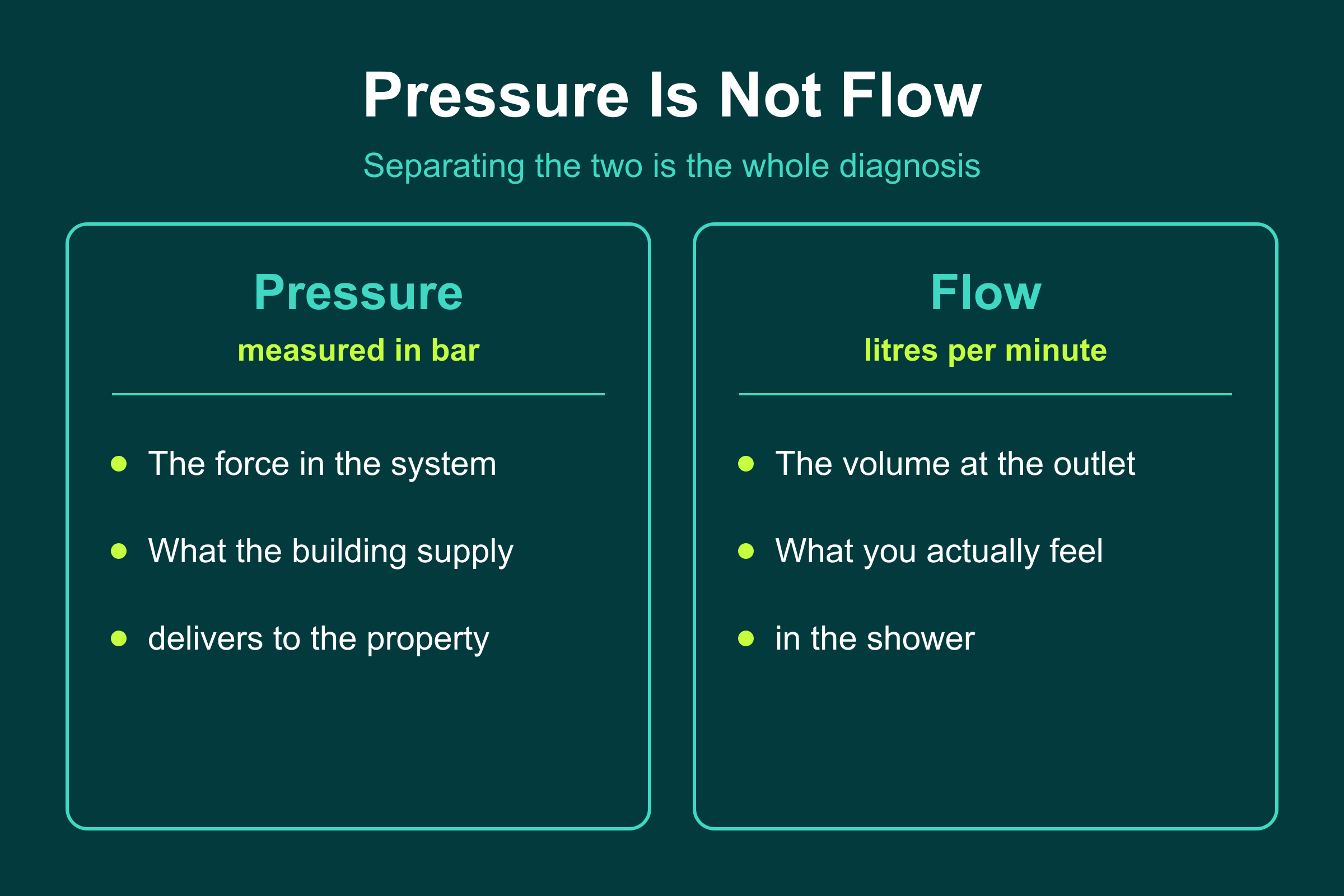
Pressure is the force in the system, measured in bar. It is what the building supply delivers to your property.
Flow is the volume actually arriving at an outlet, measured in litres per minute. It is what you experience in the shower.
You can have adequate pressure and poor flow. That combination is the interesting one, because it tells you the supply is fine and something between the riser and the outlet is restricting it. That something is almost always a defect, and almost always inside a wall, which is where concealed problems tend to live.
Why Water Pressure Snagging Measures Every Outlet
A single reading at one tap tells you very little. The value is in the comparison.
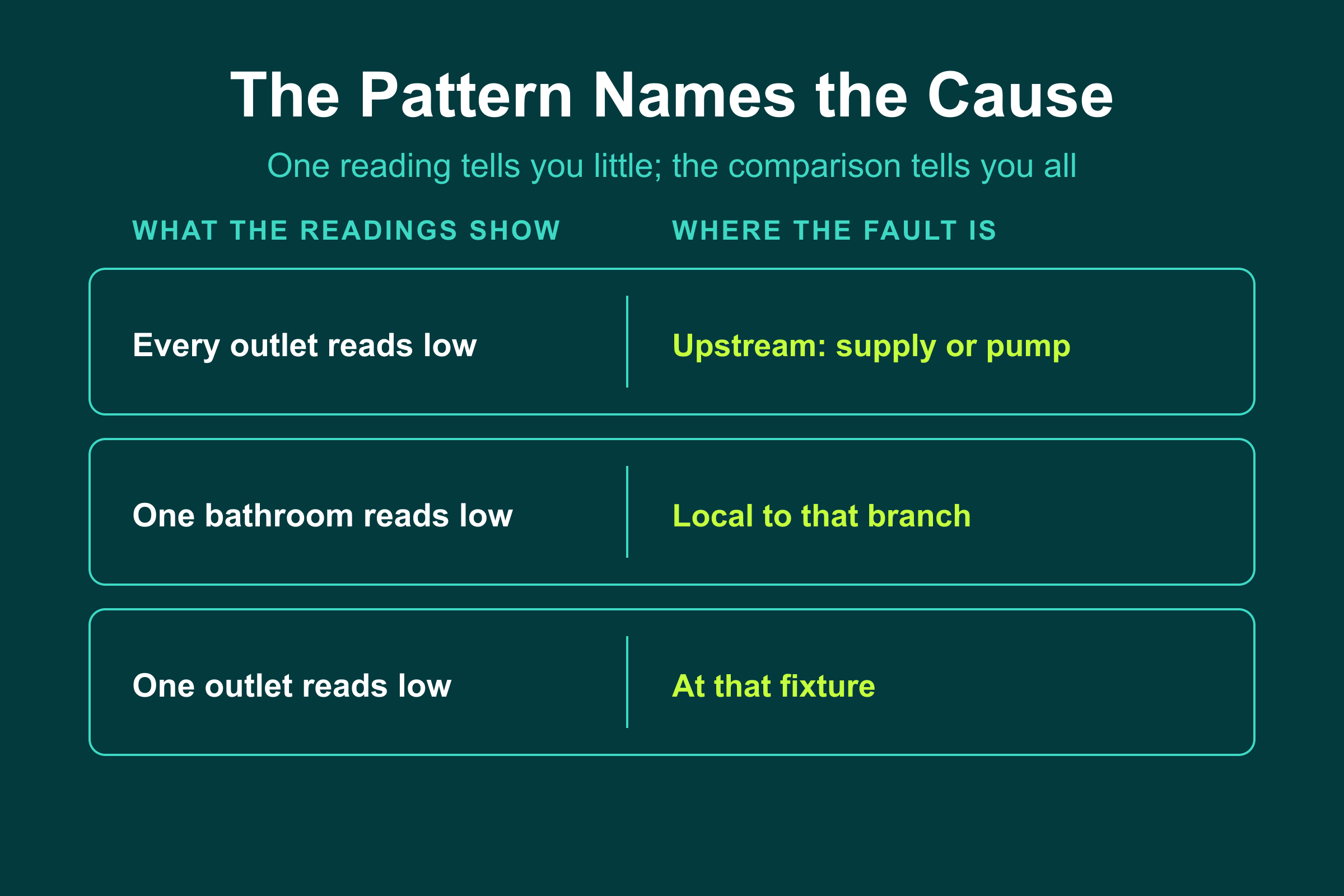
If every outlet in the property reads low, the likely cause is upstream: the supply, a booster pump that has not been commissioned correctly, or a main isolation valve not fully open.
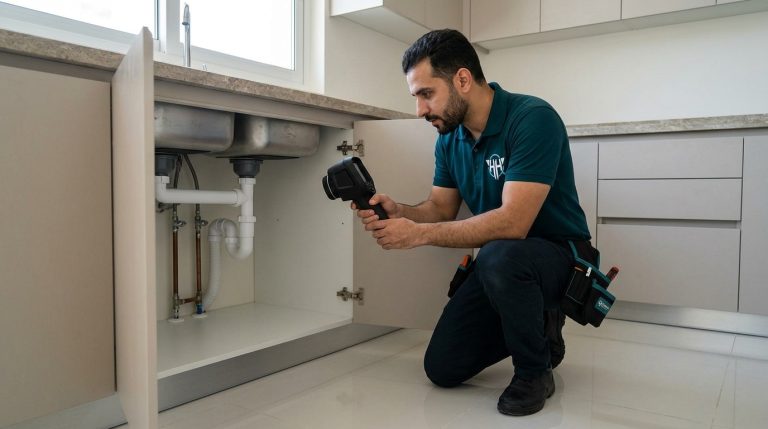
If one bathroom reads low and the rest read normally, the restriction is local to that branch. The same comparison drives our wet area inspection, where plumbing and waterproofing are checked together.
If one outlet in an otherwise normal bathroom reads low, the problem is at that fixture: a partially closed service valve, a blocked aerator, or debris caught at the fitting.
Each of those is a different instruction to the developer. A report that says “low water pressure” is easy to dismiss. A report that says this outlet reads materially below the others on the same branch is not.
What We Find Most Often
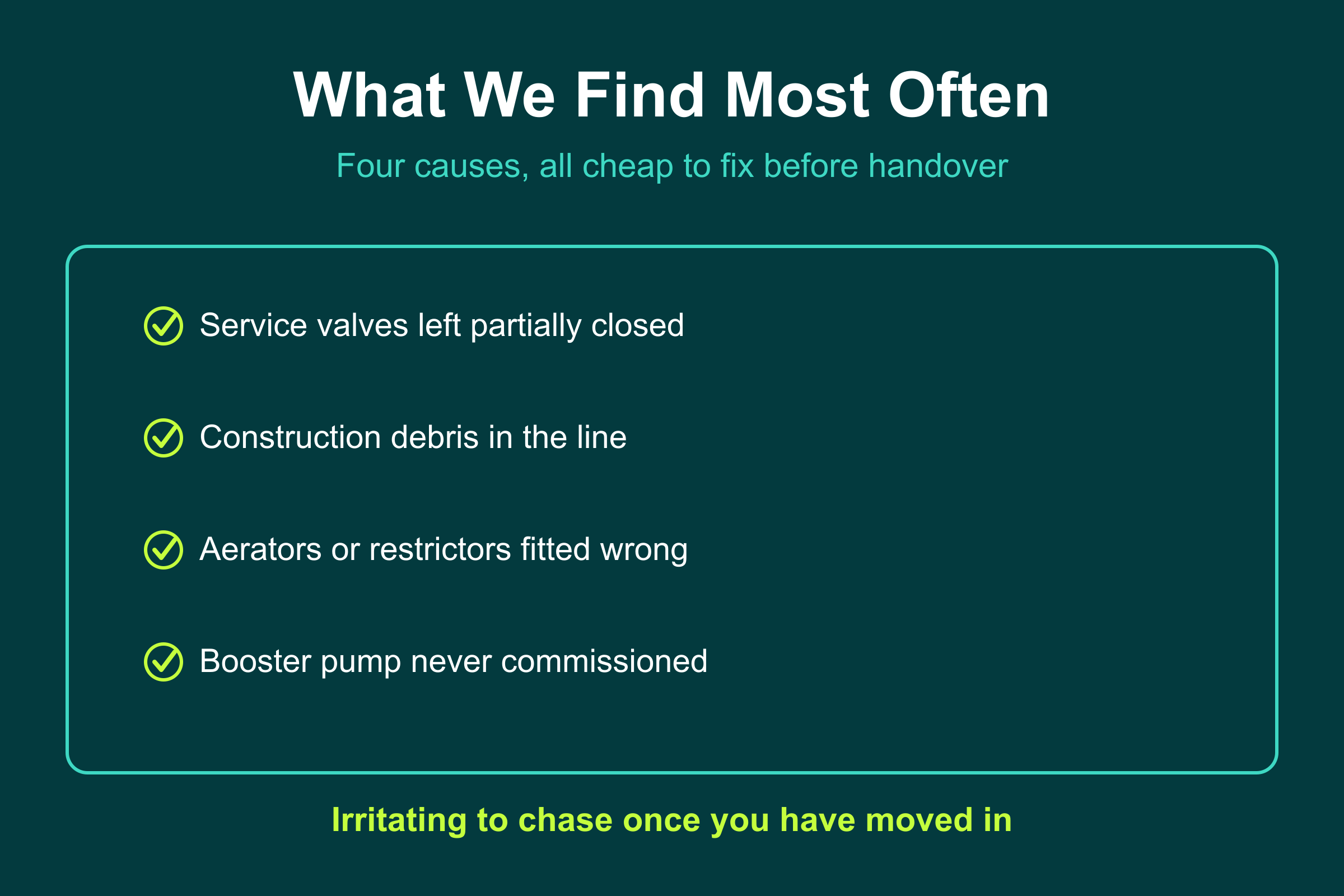
In new UAE properties, four causes account for the overwhelming majority.
Service valves left partially closed after pressure testing. Commissioning involves isolating sections, and valves do not always get returned fully open. This is the most common cause we see and the easiest to fix.
Construction debris in the line. Grout, sand and PTFE tape fragments migrate through the system during fit-out and collect at aerators, cartridges and elbows.
Aerators and flow restrictors fitted incorrectly, or two restrictors fitted in series when only one was specified.
Booster pump settings that were never adjusted for the property after installation, most often in villas where the pump serves upper floors.
None of these is expensive to correct before handover. All of them are irritating to chase afterwards.
The Instrument, and Why It Matters
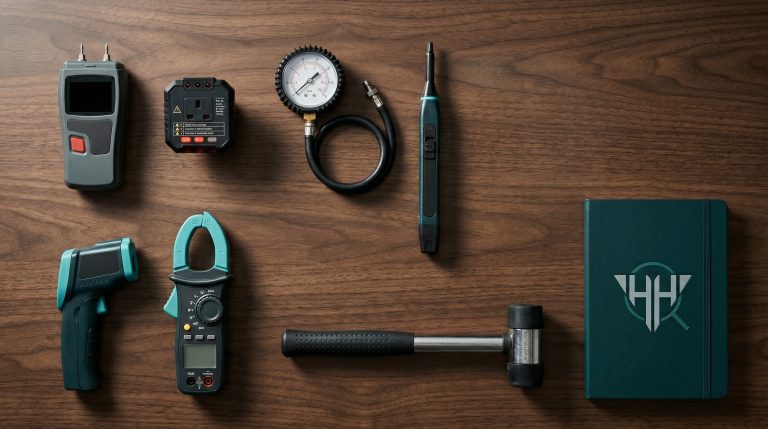
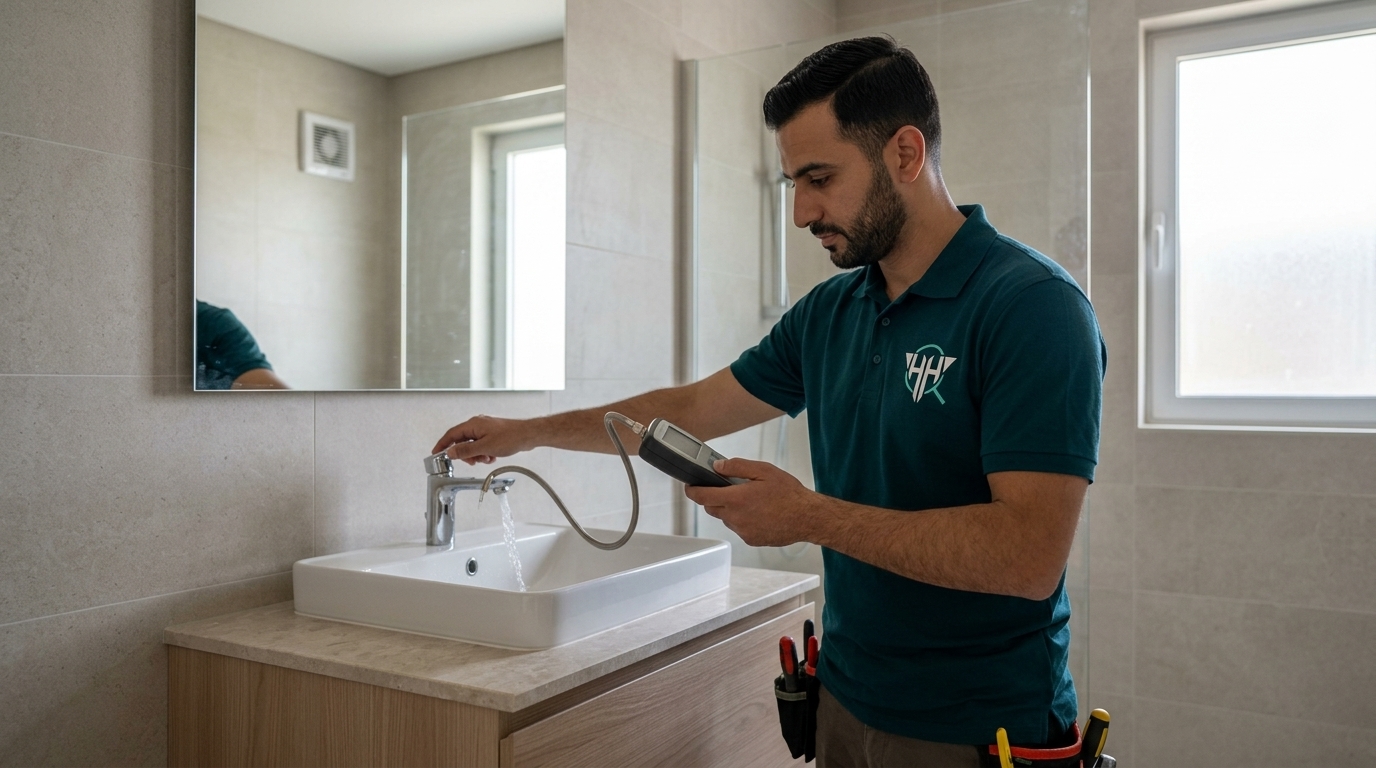
We measure with a manometer connected directly at the outlet. It gives a number.
That distinction sounds pedantic until you are in a conversation with a developer’s snagging team. “The shower feels weak” invites an opinion in response. A recorded figure at a specific outlet, compared against the other outlets in the same property, does not.
This is the general principle behind water pressure snagging and every engineering-led inspection rather than a walkthrough: the objective is not to notice problems, it is to produce evidence that cannot be waved away.
What To Check Yourself Before You Book
You can do a rough version of this in ten minutes at your handover viewing, and it is worth doing.
Run each shower and each basin tap in turn, one at a time, and note anything that feels noticeably weaker than the rest. Then run two outlets simultaneously in the same bathroom and see whether the first one drops away sharply. A large drop suggests the branch is struggling.
This will not give you numbers, and it will not find a partially closed valve behind a panel. But it will tell you whether there is something worth documenting properly.
Our Honest Advice
Do not accept “that is normal for the building” without a comparison. It may well be true, and in some towers it is. But it is a conclusion, not a starting assumption, and the only way to reach it honestly is water pressure snagging that measures every outlet and looks at the pattern.
If the pattern is uniform, you have your answer and you can plan around it. If it is not, you have a defect, and you have it documented while somebody else, under the Real Estate Regulatory Agency (RERA) framework, is still responsible for fixing it.
Handover Heroes carries out water pressure snagging at every outlet as part of a full property snagging, alongside all 13 systems and 500+ checkpoints, with a documented report and video proof within 24 hours. You can estimate the scope and cost with our snagging cost calculator.
WhatsApp +971 58 580 4376 or visit handoverheroes.ae.