Water Pressure Problems in UAE Properties: What Snagging Finds
You only notice water pressure when it is wrong. A weak shower, a slow-filling sink, or a tap that trickles instead of flows. By the time you experience it day to day, you have already moved in, and getting it fixed becomes far harder. A professional snagging catches it before you sign.
This guide explains why water pressure problems happen in UAE properties, how a professional inspection tests for them, and what the readings reveal about the plumbing hidden inside your walls. For broader handover guidance, the UAE Government housing information portal is a useful reference.
Why Water Pressure Matters
Water pressure affects nearly every daily use of the property: showers, taps, appliances, and irrigation. But weak pressure is rarely just an inconvenience. It is often a symptom of something larger hidden in the plumbing system.
Low pressure at an outlet can point to a blockage in the pipes, a supply restriction, an installation error, or a problem with a booster pump. The weak shower is the symptom. The cause is inside the walls, where you cannot see it. Identifying it before handover means the developer fixes the underlying issue, an obligation backed by the Real Estate Regulatory Agency (RERA), rather than you living with it.
How Snagging Tests Water Pressure
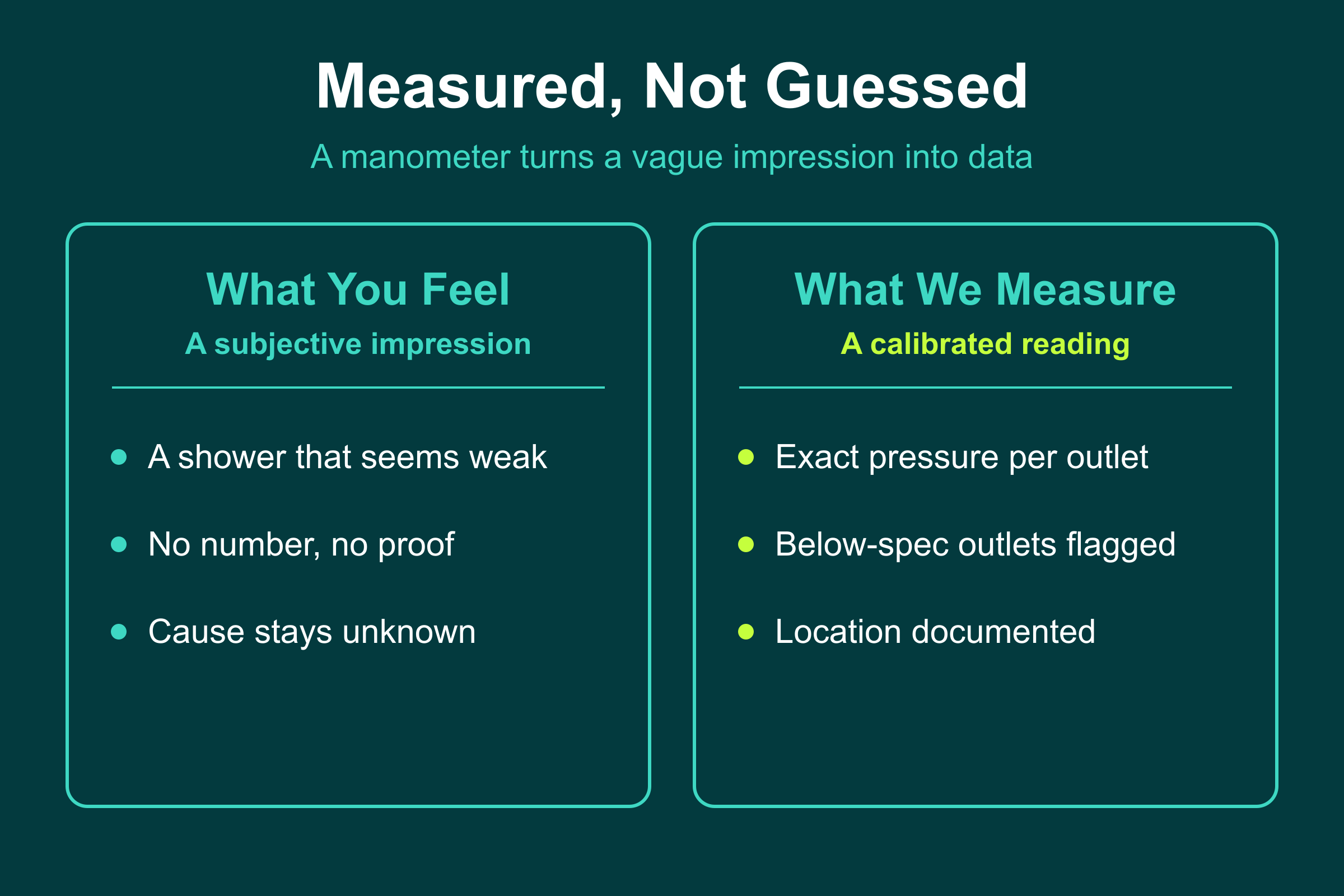
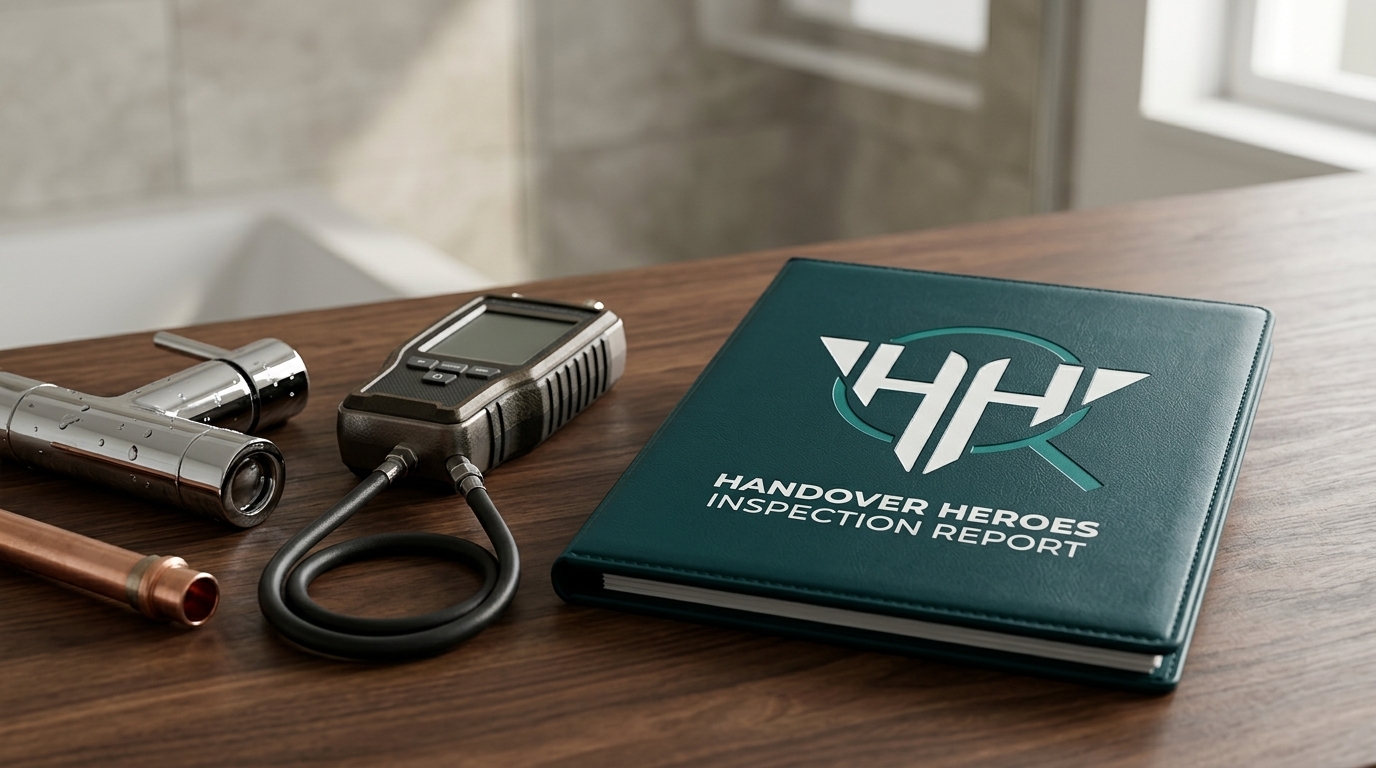
A professional snagging assesses water flow and pressure at all outlet points in the property: showers, basins, sinks, and external taps. This is done with a manometer, a calibrated instrument that measures water pressure precisely, one of the calibrated tools in a full snagging kit.
Rather than relying on a subjective sense of whether the flow feels weak, the manometer gives an actual reading at each outlet. This turns a vague impression into measured data. If an outlet falls below acceptable pressure, the reading shows it clearly, and the location is documented so the cause can be traced.
The inspection identifies areas with noticeably reduced flow that may indicate supply restrictions or installation issues, and where a booster pump is installed, it assesses the pump for operational condition and pressure delivery.
The Wider Plumbing Inspection
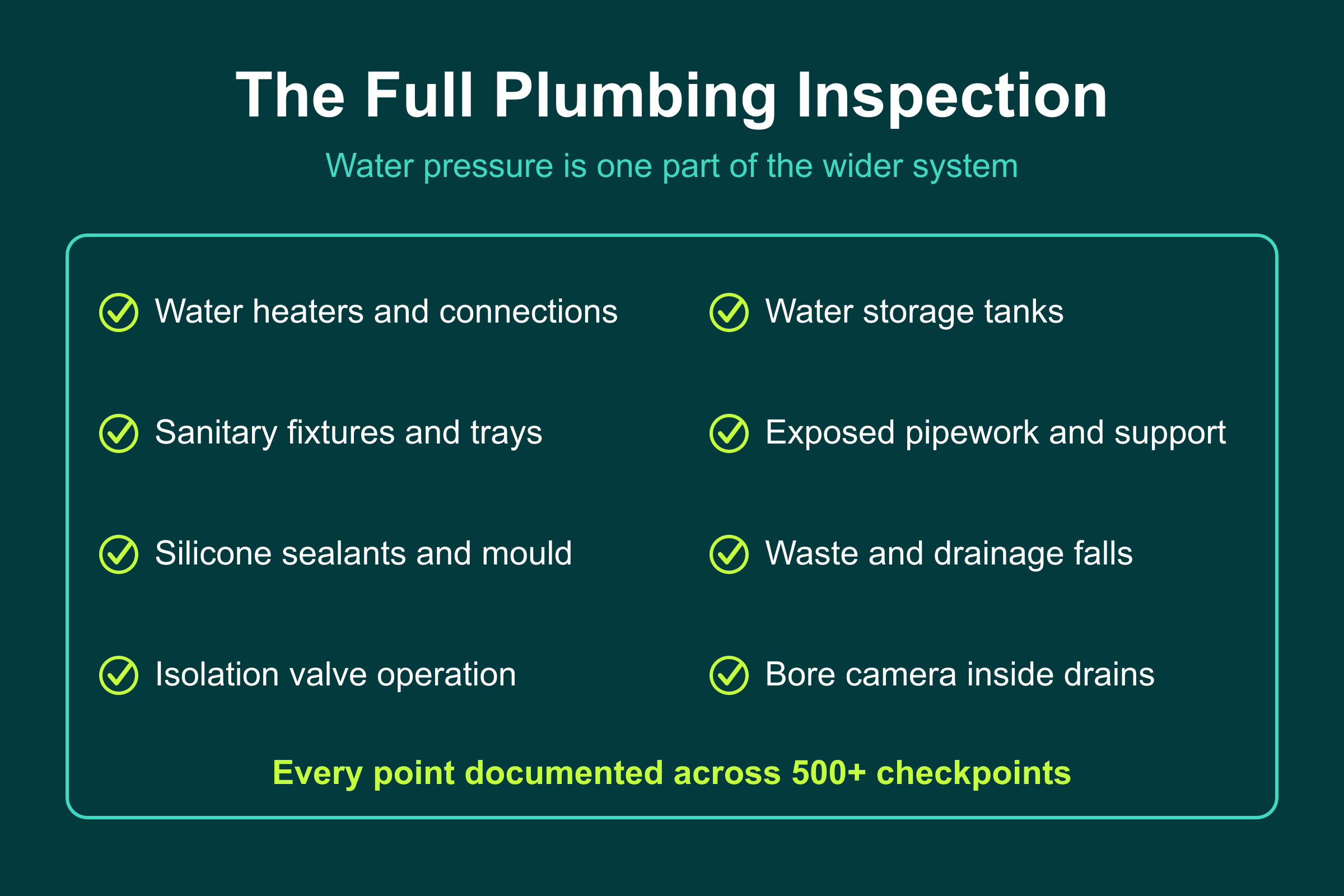
Water pressure is one part of a complete plumbing assessment. A professional snagging also inspects the systems that water pressure depends on and interacts with, alongside the water pressure and full plumbing checks in a complete snagging.
Water heaters are checked for installation condition, connections, and any signs of corrosion or leakage. Water storage tanks are inspected for structural condition, cover integrity, and inlet and outlet connections. All sanitary fixtures, basins, sinks, bathtubs, and shower trays, are checked for cracks, chips, and secure installation.
Exposed pipework is inspected for correct routing, support, and signs of corrosion. Silicone sealants around fixtures are checked for completeness, adhesion, and signs of mould. Waste and drainage connections are assessed for correct falls and secure jointing, and isolation valves are checked for accessibility and operation.
For the hidden parts of the system, a bore camera goes into inaccessible areas to find hidden drain blockages and check pipe condition from the inside, revealing problems no surface inspection could reach.
What the Findings Mean for You
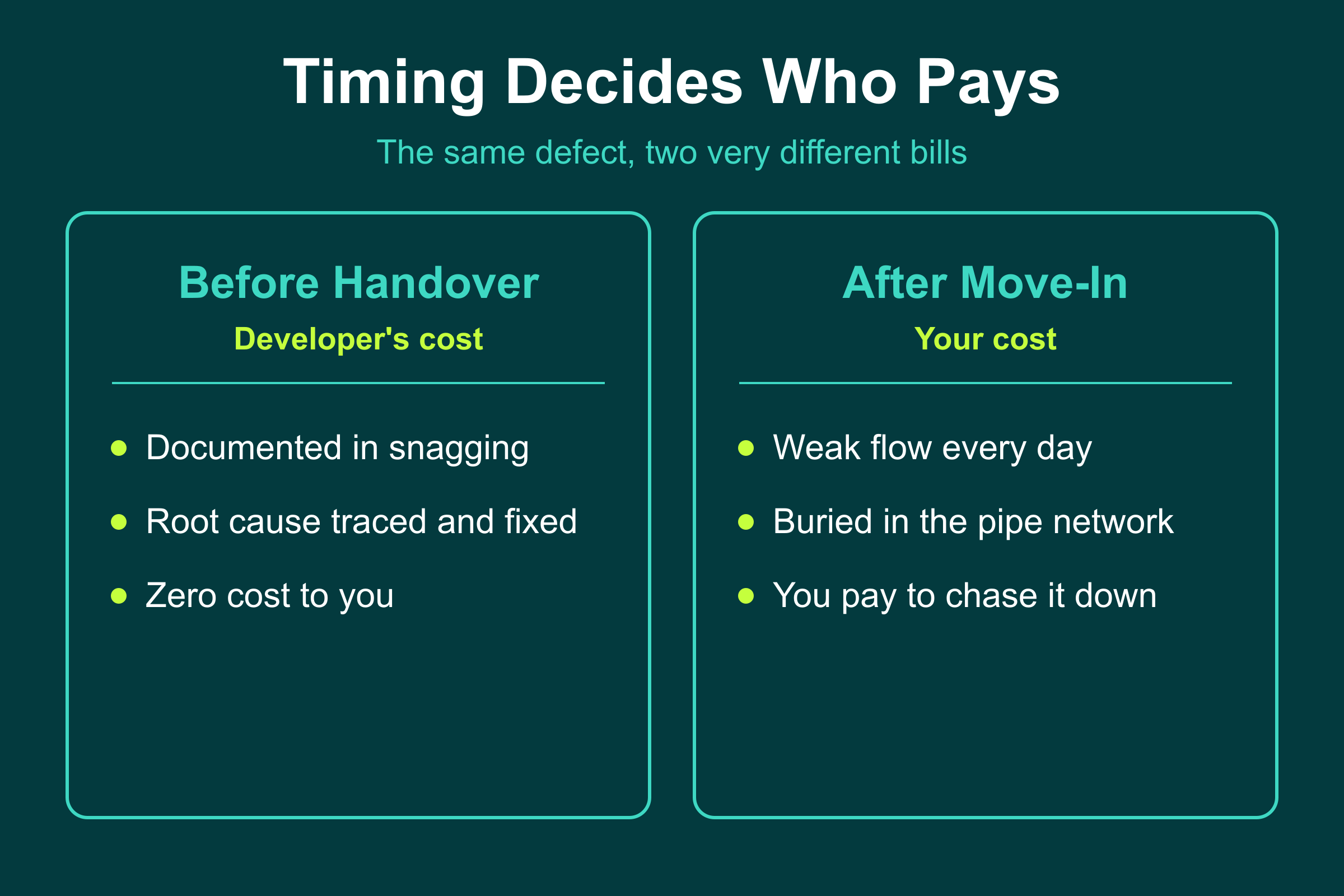
A water pressure problem documented before handover is the developer’s responsibility to resolve. Because the manometer pinpoints which outlets are affected, the developer can trace and fix the root cause, whether that is a blockage, a restriction, or a pump issue.
Discovered after you have moved in, the same problem becomes a frustrating and potentially expensive thing to chase down, especially if the cause is buried in the plumbing network. The difference is documentation and timing, recorded while the property still sits with the developer under the Dubai Land Department handover framework.
A complete snagging covers water pressure and the full plumbing system as part of 500+ checkpoints across all 13 property systems, so you know the plumbing works before you rely on it.
Frequently Asked Questions
What causes low water pressure in a new property?
Low water pressure in a new build can result from pipe blockages left during construction, supply restrictions, installation errors, or an incorrectly configured booster pump. A manometer reading at each outlet identifies which outlets are affected, helping trace the underlying cause.
Can low water pressure be fixed?
Yes, but the fix depends on the cause. If the issue is documented before handover, the developer is responsible for diagnosing and resolving it. This is why testing water pressure during a pre-handover snagging matters, it puts the responsibility on the developer rather than you.
How is water pressure measured in a snagging?
A professional snagging uses a manometer, a calibrated instrument that measures water pressure at each outlet. This gives an objective reading rather than relying on whether the flow subjectively feels weak, and the readings are documented in your report.
Does snagging check the drains too?
Yes. Beyond water pressure, the plumbing inspection covers drainage connections, falls, and jointing, and a bore camera is used to check inside drains and pipes for hidden blockages that a surface inspection cannot reach.
Book Your Snagging
Have your water pressure and full plumbing system tested with calibrated tools across 500+ checkpoints. Apartments from AED 500. Villas and townhouses from AED 1,400. Report within 24 hours.
Book your snagging on WhatsApp, estimate the price with our snagging cost calculator, or visit our pre-handover snagging service for details.
Handover Heroes is the UAE’s trusted property inspection service. We measure what you cannot see, so you know the plumbing works before you sign.