What Happens During a 3 to 5 Hour Villa Snagging
When buyers hear that a villa snagging takes 3 to 5 hours, the reaction is often surprise. What could possibly take that long in an empty house?
The short answer is 500+ checkpoints across 13 systems, each one measured rather than glanced at. This guide walks through what actually happens during that visit. The UAE Government housing information portal is a useful reference on the handover process.
Why It Is Not a Walkthrough
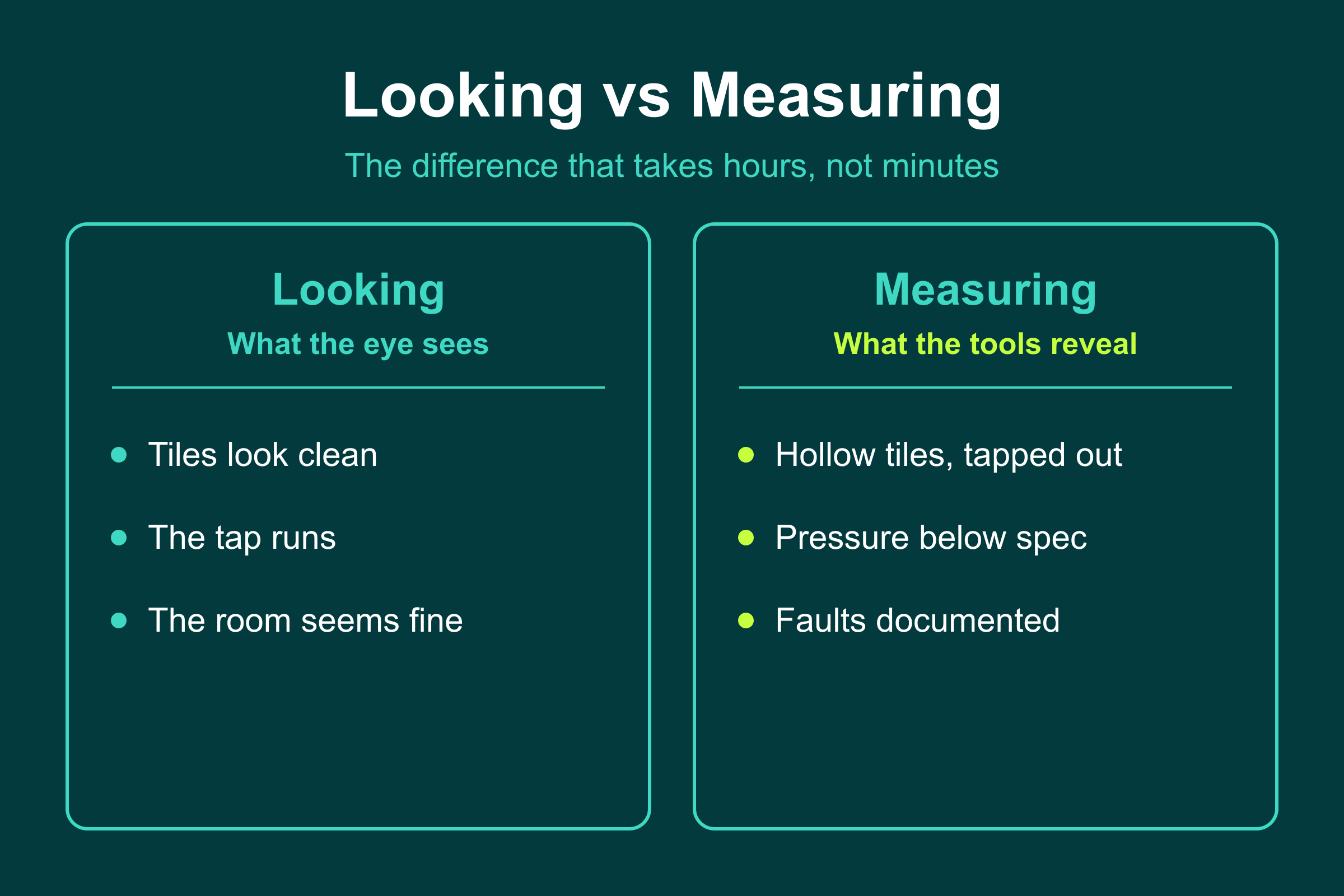
The distinction that matters is between looking and measuring.
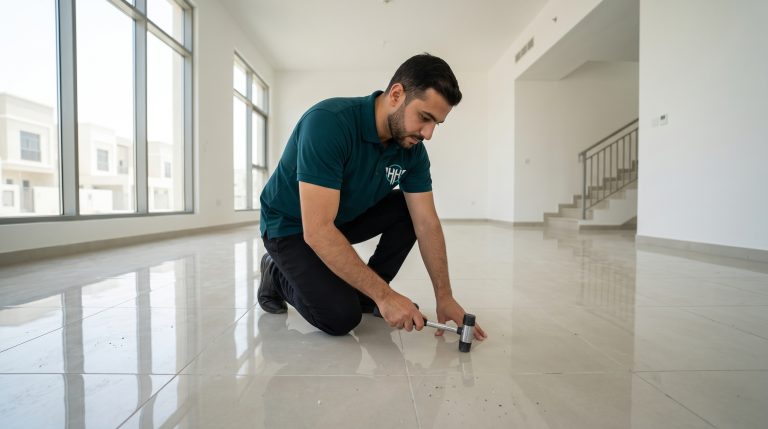
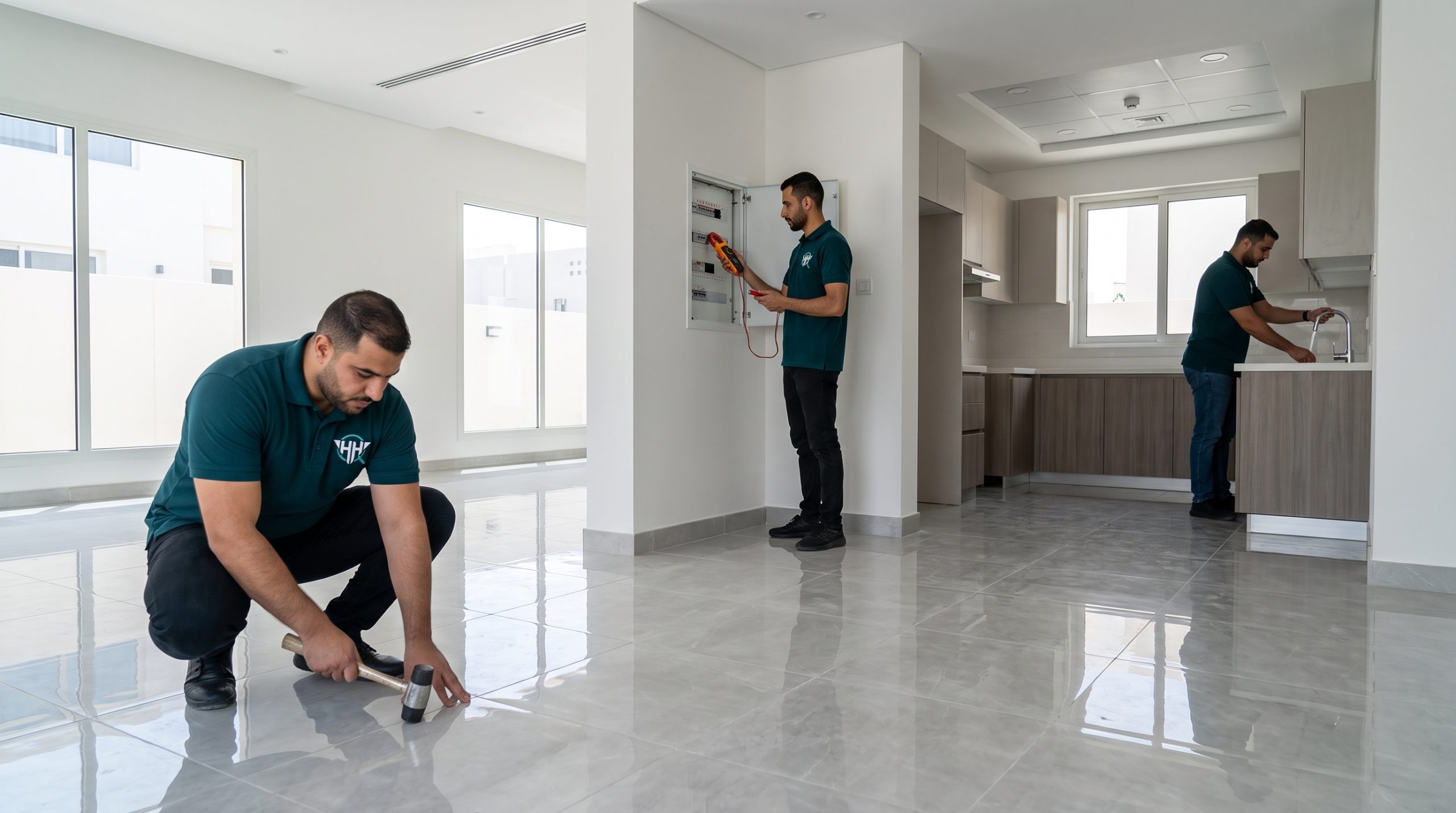
Looking at a floor tells you whether the tiles are clean and level. Tapping every tile with a drum hammer tells you which ones have not bonded to the substrate and will crack once furniture sits on them. Looking at a tap tells you water comes out. Measuring with a manometer tells you whether the pressure meets specification or whether something is restricting it inside the wall.
Every reading uses one of the 14 calibrated instruments built for the job. Multiply that difference across an entire property and you have the reason a proper inspection takes hours rather than minutes.
The Systems Covered
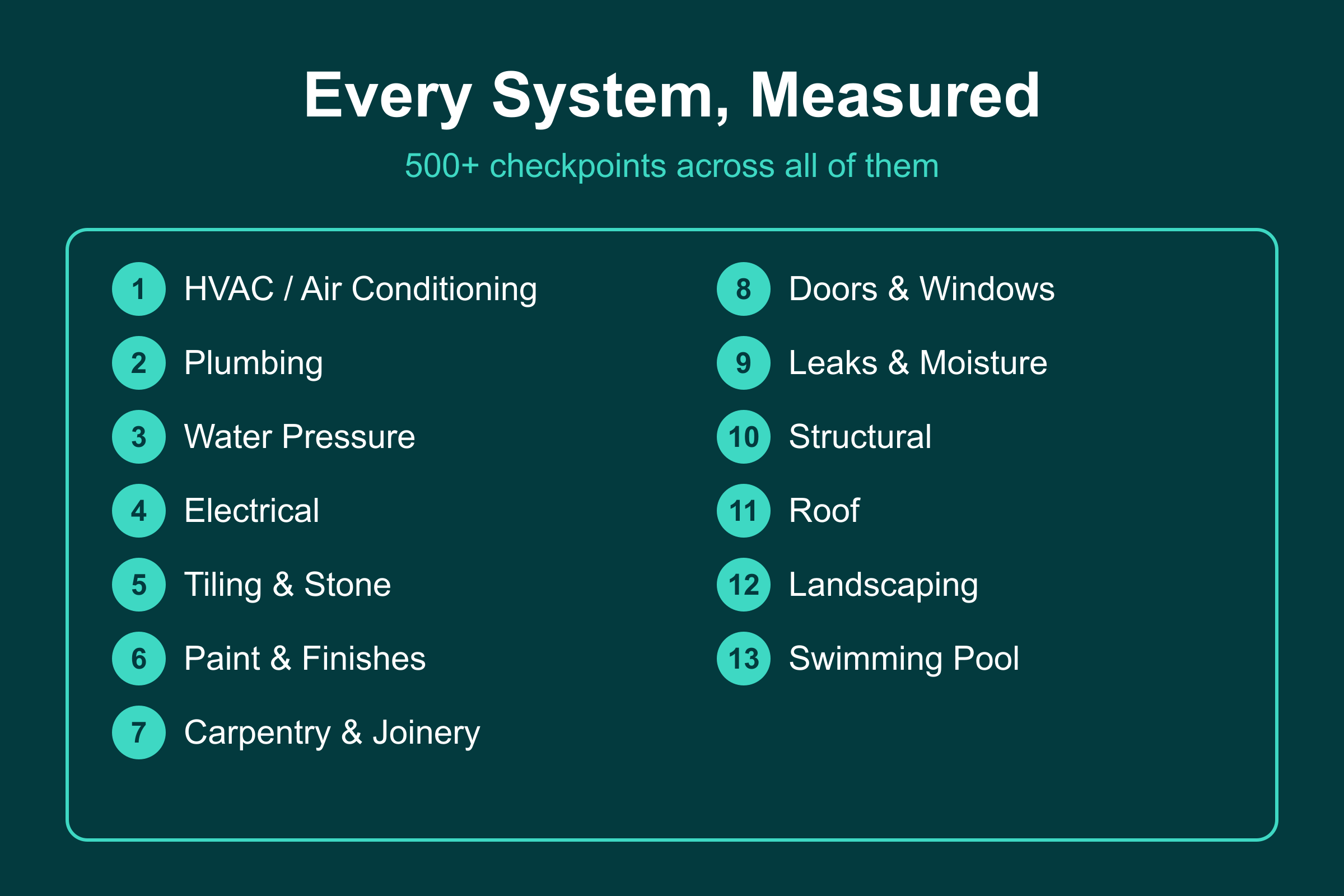
A full villa snagging covers all 13 systems of the property.
1. HVAC. Every fan coil unit for cooling output and airflow, pipework for leaks and condensation, insulation on refrigerant lines and ductwork, supply and return grilles, thermostat responsiveness, condensate drains and drip trays, and outdoor condenser units.
2. Plumbing. Water heaters, toilets, sanitary fixtures, exposed pipework, silicone sealants, waste and drainage connections, isolation valves and utility areas.
3. Water pressure. Measured at every outlet in the property including showers, basins, sinks and external taps.
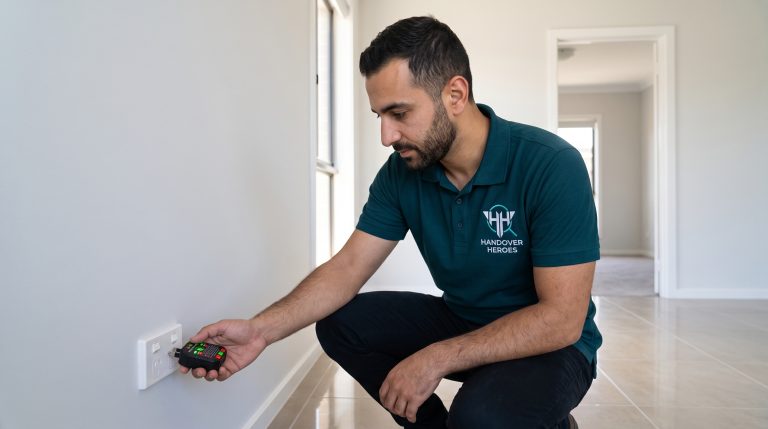
4. Electrical. The main distribution board and sub-boards, circuit breakers and RCDs, every power socket, every light switch and fixture, external and landscape lighting, cable containment, earthing, and data and telecommunications outlets.
5. Tiling and stone. Every floor and wall tile sounded for hollow areas, plus grouting, lippage, slopes in wet areas, skirting and silicone expansion joints.
6. Paint and surface finishes. Across every wall and ceiling, plus external facade and rendered surfaces.
7. Carpentry and joinery. Fitted wardrobes, cabinetry, worktops, hinges, runners, soft close mechanisms and any missing components.
8. Doors and windows. Alignment, locking mechanisms, hinges, seals, glazing condition, sliding tracks and fly screens.
9. Leaks, dampness and moisture. Surveying walls, ceilings and floors for concealed moisture and classifying findings as active or passive.
10. Structural observation. Walls, columns, beams, floor levels, staircases, expansion joints, retaining walls and boundary structures.
11. Roof. Waterproofing, drainage outlets and falls, parapets, flashings, penetrations and any roof-mounted equipment.
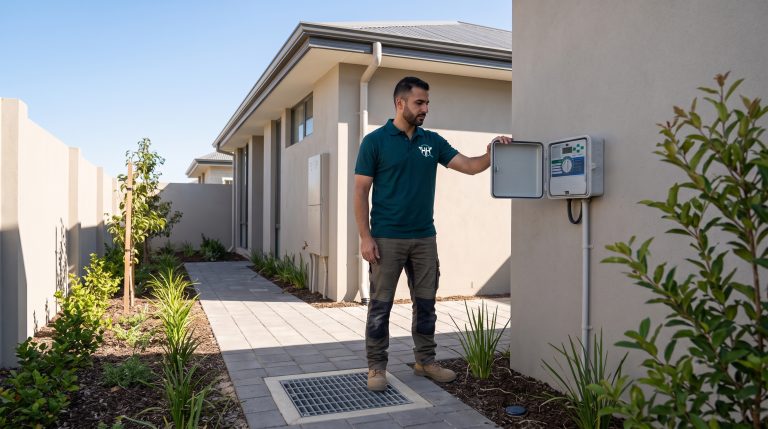
12. Landscaping. Irrigation pipework and controllers, external drainage channels and gully grates, boundary and garden walls, paving, pergolas, outdoor lighting and gate mechanisms.
13. Swimming pool systems. Where present, the shell, coping, filtration equipment, lighting, skimmers, electrical bonding and safety provisions.
Why We Staff It Properly
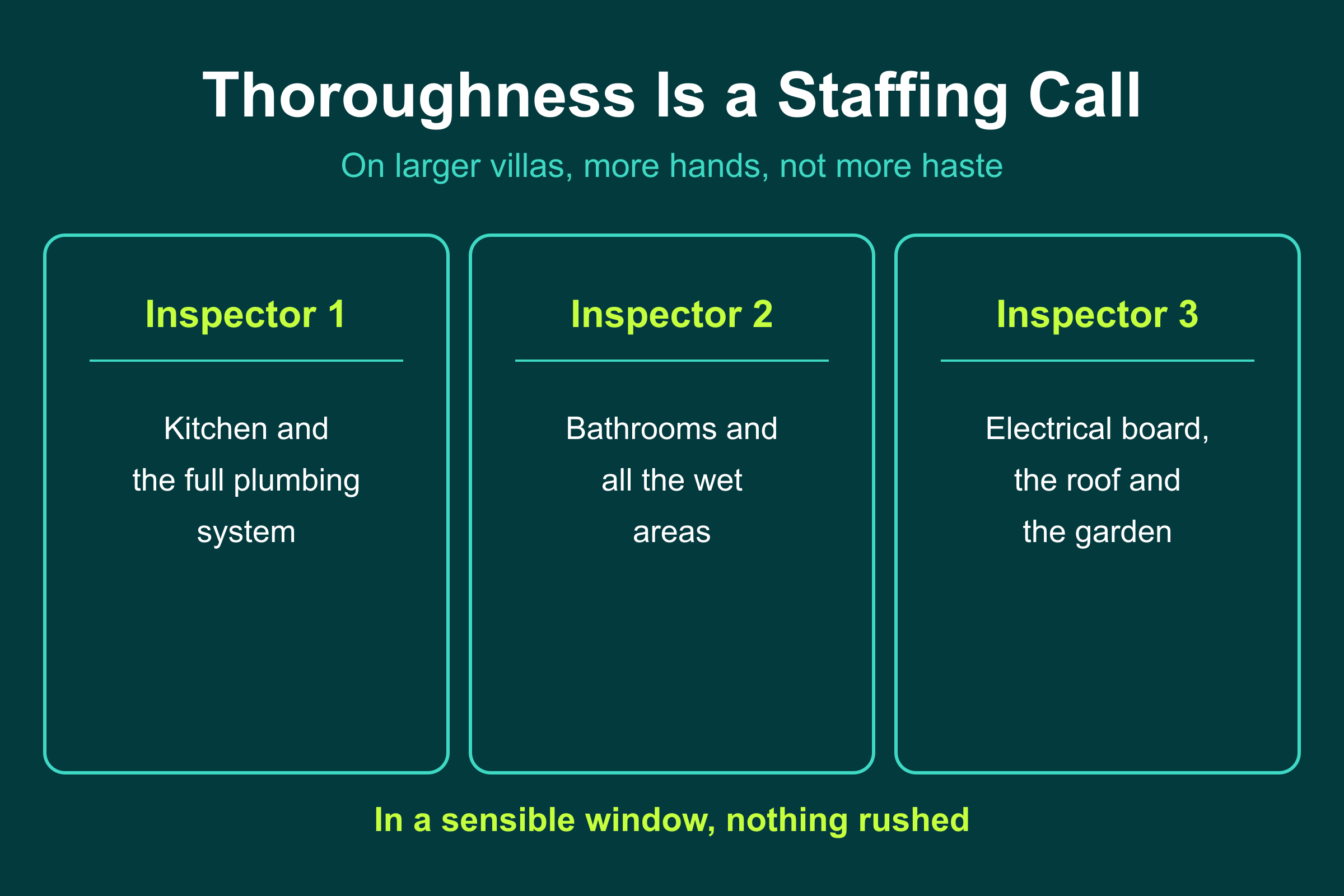
On larger properties we send more than one inspector, because 500+ checkpoints completed properly is a function of time and hands, not enthusiasm.
While one inspector works through the kitchen and plumbing, another covers the bathrooms and wet areas, and a third takes the electrical board and the roof and the garden. The visit stays within a sensible window without anything being rushed to save time.
Thoroughness is a staffing decision rather than a promise.
What You Get at the End
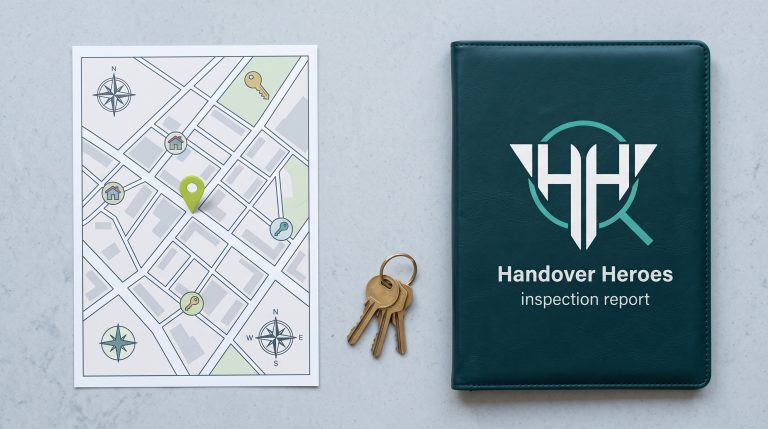
A detailed report delivered within 24 hours, with photographic and video evidence for every finding, the location of each defect, and the calibrated reading where one applies.
That report goes to the developer as a clear, specific list, the kind of documented record the Real Estate Regulatory Agency (RERA) framework expects. And because our work is backed by Unlimited Re-Inspections, we return as many times as needed to verify that each item has actually been resolved.
Frequently Asked Questions
Why does a villa snagging take 3 to 5 hours?
Because 500+ checkpoints across all 13 systems are individually measured rather than visually scanned. Every tile is tapped, every socket tested, every outlet measured and every vent checked against specification. That volume of hands-on, instrument-based work across an entire villa simply takes time to do properly.
Do I need to be present during the inspection?
You are welcome to attend but it is not required. The detailed report, with photographic and video evidence, gives you a complete record of every finding regardless, which is particularly useful for overseas owners who cannot be present on the inspection day.
Does an apartment take as long?
No. Apartments have fewer systems, with no private roof or landscaping for example, so the visit is shorter and often takes a couple of hours. The same measurement-based approach applies to everything that is present in the property.
What happens after the report?
The report goes to the developer as a documented, photographed defect list they can work from. Once they have carried out the repairs, our Unlimited Re-Inspections mean we return to verify each item has actually been resolved, rather than taking it on trust.
Book Your Villa Snagging
Villas and townhouses from AED 1,400, apartments from AED 750. Every snagging covers 500+ checkpoints, 14 calibrated tools, and a detailed report within 24 hours, with Unlimited Re-Inspections.
Book your snagging on WhatsApp, estimate your villa snagging cost, or visit our pre-handover snagging service for details.
Handover Heroes is the UAE’s trusted property inspection service. Every villa snagging is measured, documented and verified, so the developer fixes what we find, not you.